
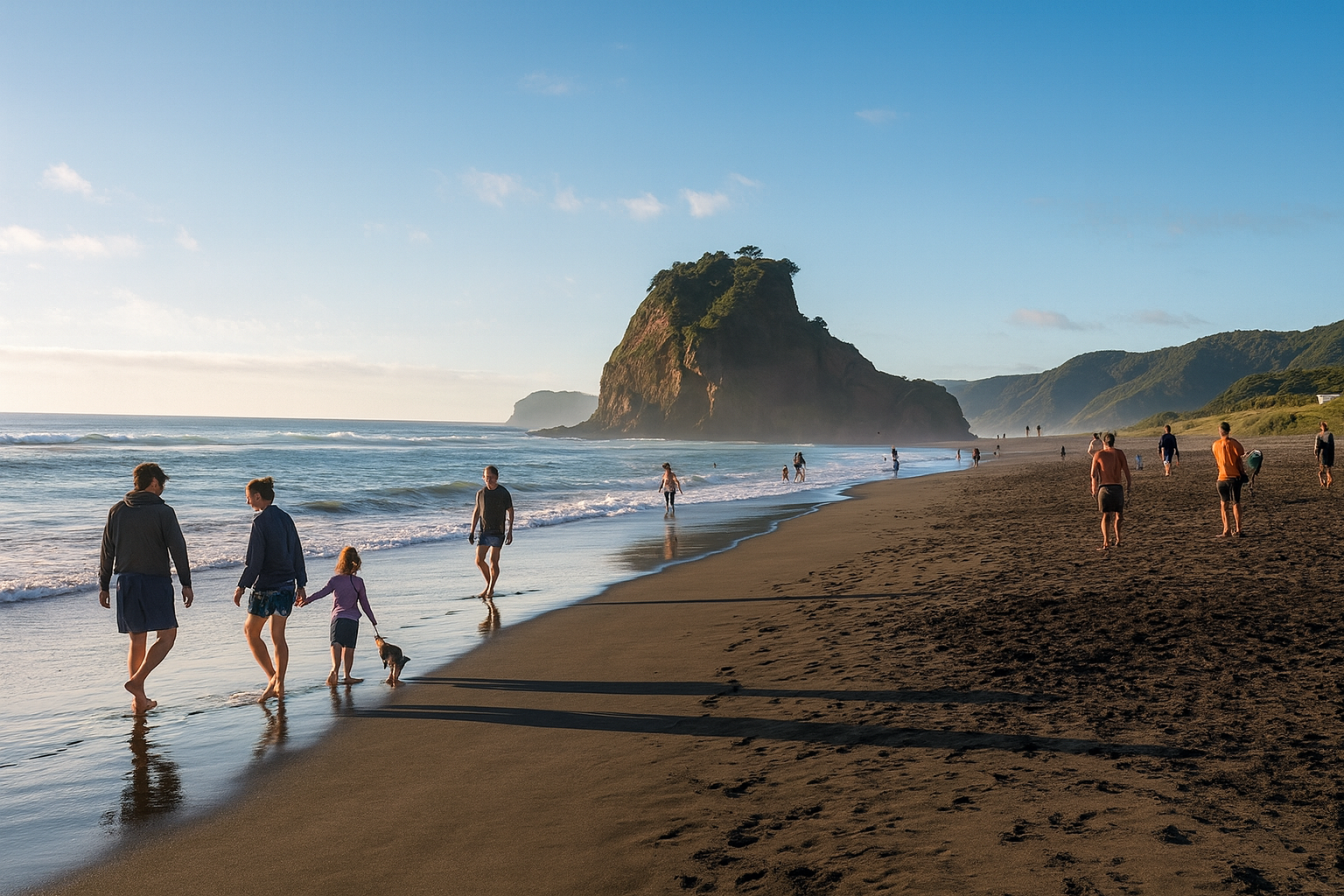
Piha Beach is not Auckland’s most convenient beach, and that is exactly why it stands out.
While many city beaches are designed for quick visits and easy access, Piha demands time, attention, and respect. Located on Auckland’s wild west coast within the Waitākere Ranges, Piha Beach offers a very different summer experience. It is raw, powerful, and deeply connected to the natural landscape of Aotearoa.
For many Aucklanders, a trip to Piha feels less like a beach outing and more like stepping into another world.
Where Piha Beach is located
Piha Beach sits about 40 kilometres west of Auckland’s CBD, surrounded by native bush and steep coastal cliffs. The drive itself sets the tone. Narrow, winding roads take visitors through dense forest before opening suddenly onto a wide black sand beach and the open Tasman Sea.
Once you arrive, the city feels far away. Mobile reception is unreliable, shops are limited, and nature takes centre stage.
What makes Piha Beach different
The first thing most people notice is the sand.
Piha’s black sand was formed by volcanic activity over millions of years. On hot summer days, it heats up quickly and can be uncomfortable to walk on without footwear. Locals know this well. First-time visitors usually learn it the hard way.
The ocean here is also very different from Auckland’s east coast beaches. The Tasman Sea is colder, deeper, and far more unpredictable. Waves are stronger and the water is constantly moving. This is not a gentle swimming beach. It is a serious surf coast.
Lion Rock and the natural landscape
Standing in the middle of the beach is Lion Rock, known as Te Piha. This towering volcanic formation splits the beach into two sections and dominates the view from almost every angle.
Lion Rock is more than a landmark. It holds cultural significance for local iwi and serves as a constant reminder that Piha is shaped by forces much older than the city nearby.
Swimming safety at Piha Beach
Locals are clear about one thing. Piha is beautiful, but it is not forgiving.
Strong rip currents are common throughout the year, especially in summer. Surf Life Saving patrols operate during peak season, and swimming is safest only between the red and yellow flags.
Every summer, rescue crews respond to incidents involving confident swimmers who underestimate the power of the water. Respecting conditions and following safety advice is essential at Piha.
Popular summer activities at Piha
Despite its challenges, Piha is one of Auckland’s most popular summer destinations.
Surfing is the main attraction. The consistent swell draws beginners, experienced surfers, and surf schools throughout the warmer months. Early mornings are often the calmest, with surfers making the most of clean conditions before the wind picks up.
Bodyboarding is also common, particularly among teenagers and young adults. It is easier to learn and still delivers plenty of excitement.
At low tide, visitors explore rock pools around Lion Rock, take photographs, or walk along the shoreline. Piha sunsets are another major draw. The light changes quickly, colours deepen, and the sky often puts on a dramatic display over the Tasman Sea.
Many people also combine their beach visit with short bush walks in the surrounding Waitākere Ranges, making Piha a full-day outdoor experience.
Interesting facts about Piha Beach
Piha’s black sand contains iron-rich minerals, which explains why it heats up so quickly in summer.
The beach has appeared in international films and television productions due to its dramatic landscape.
The area has deep Māori cultural significance, with Te Piha and surrounding lands historically important to local iwi.
Limited mobile coverage makes Piha one of the closest digital detox spots to Auckland.
Why Piha Beach matters to Aucklanders
In summer, Piha attracts west Auckland locals, city families escaping screens, surfers chasing waves, and visitors looking for something authentic.
This is not a beach built for comfort or convenience. It is a towel, sunscreen, and awareness kind of place.
Piha works as a summer story because it reminds Aucklanders that wild spaces still exist on the city’s doorstep. It is a place that strips things back, slows people down, and lets nature take the lead.
For many, that is exactly what summer should feel like.