Courts, Democracy, and Public Trust Under the Spotlight
By Webfit News Desk
Opinion and Analysis
A Year Defined by Exposure, Not One Event
The year 2025 will not be remembered for a single defining moment. Instead, it marked a broader shift in how New Zealanders view power, authority, and the institutions that shape public life.
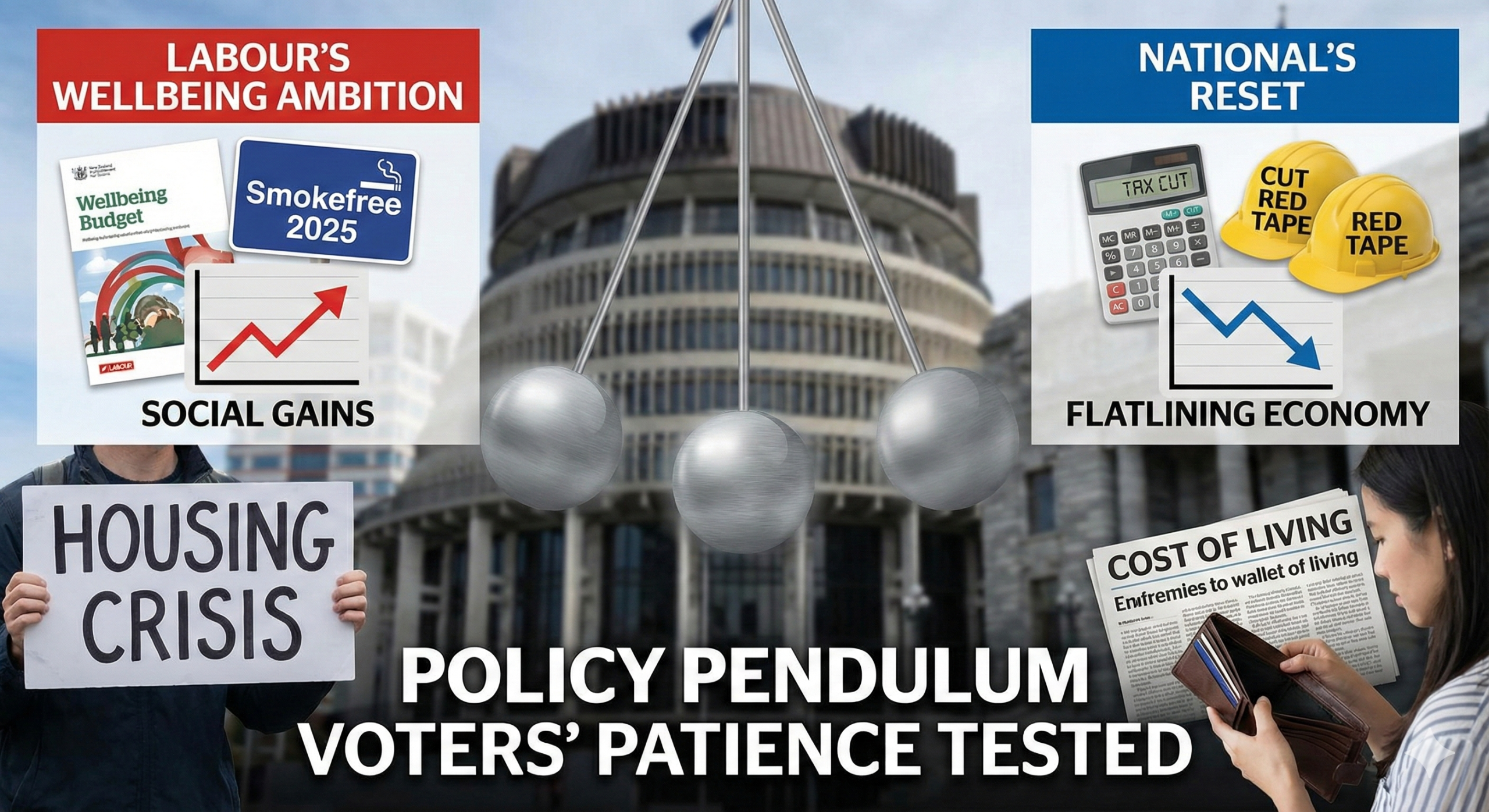
Across politics, the courts, media, and education sectors, long-standing assumptions were questioned more openly than in previous years. This was not driven by one ideology or movement, but by a growing public willingness to scrutinise systems that had traditionally operated with limited challenge.
At its core, the year was about trust and whether it is still earned or simply assumed.
Institutions Under Growing Scrutiny
Throughout the year, several high-profile decisions brought renewed attention to the role of the judiciary and other influential institutions. Critics argued that certain rulings and policy directions reflected narrow ideological thinking, while supporters maintained that decisions remained grounded in law and process.
Regardless of where one stands, the significance lies in the response. Public debate around institutional neutrality moved from the margins into the mainstream. Questions once dismissed as fringe were openly discussed across political and social lines.
Transparency, once resisted, became unavoidable.
Electoral Reform and the Democracy Debate
This tension was clearly visible toward the end of the year when Parliament passed changes to New Zealand’s electoral rules ahead of the 2026 election.
The reforms include ending same-day voter enrolment, requiring voters to be enrolled at least 13 days before election day, setting the advanced voting period at 12 days, reinstating a full ban on prisoner voting, and allowing larger anonymous political donations.
Supporters argue the changes are necessary to improve the efficiency, timeliness, and integrity of elections. They point to the growing number of special votes created by same-day enrolments, which take significantly longer to process and delay final election results.
Critics, however, warn that the changes could prevent tens of thousands of people from voting, particularly younger, mobile, or disengaged citizens. Concerns have also been raised that aspects of the legislation are inconsistent with the Bill of Rights Act.
Both arguments reflect a broader dilemma facing modern democracies. How to balance administrative order with inclusive participation.
Efficiency Versus Access
As more New Zealanders vote early, aligning enrolment deadlines and voting windows offers clarity for election administrators. From an operational standpoint, the reforms address genuine logistical challenges.
From a democratic perspective, any reform that risks lowering participation invites scrutiny. Voting is not only a process but a right, and even well-intended efficiency measures can have unintended social consequences.
The debate itself reflects a healthy tension rather than a failure of democracy.
Global Events and Local Reflection
Beyond New Zealand’s borders, international events also shaped public conversation in 2025. Tragic incidents overseas highlighted how social fragmentation, ideological rigidity, and neglect of mental health can intersect with devastating outcomes.
These events resonated locally, reinforcing the idea that political and cultural debates are not abstract. The choices societies make around values, speech, and responsibility have real-world consequences.
At the same time, responses from diverse communities demonstrated that unity and empathy remain possible, even amid polarisation.
What 2025 Ultimately Revealed
More than anything, 2025 exposed a shift in public attitude. Deference to authority is no longer automatic. Institutions are expected to explain themselves, justify decisions, and accept scrutiny.
This transition carries risks. Poorly handled, it can deepen division and mistrust. Handled well, it offers an opportunity to rebuild confidence through openness and accountability.
The year did not provide clear answers.
But it made the questions unavoidable.
And in doing so, it reshaped the conversation New Zealand will carry into the years ahead.