By Webfit News
December 15, 2025
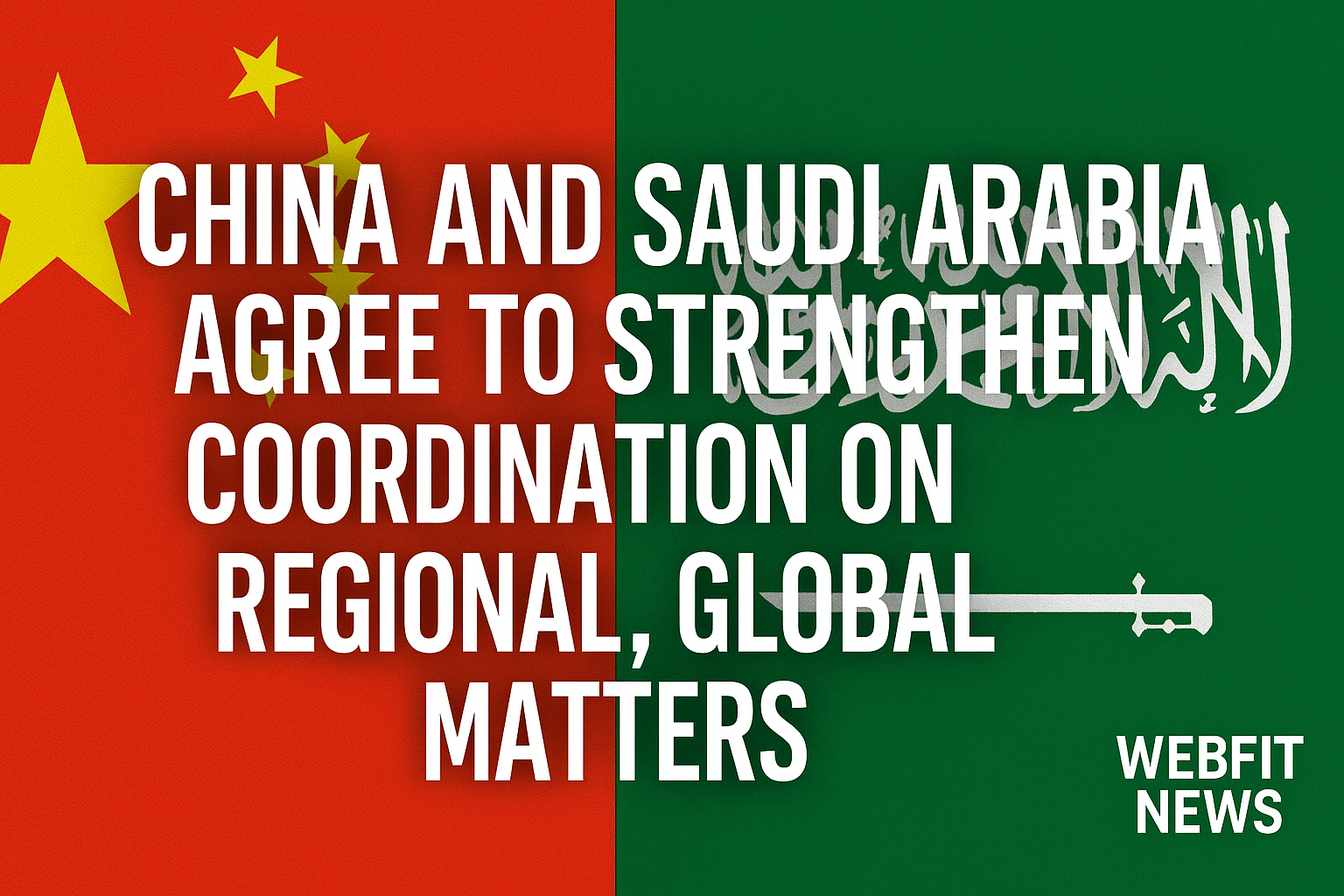
China and Saudi Arabia have agreed to strengthen communication and coordination on regional and international matters, signalling a closer diplomatic alignment between two of the world’s most influential players in energy, geopolitics, and the Middle East.
The agreement followed high-level talks in Riyadh between Chinese Foreign Minister Wang Yi and Saudi Foreign Minister Prince Faisal bin Farhan Al-Saud. The meeting forms part of Wang’s wider diplomatic tour of the Middle East, which includes stops in the United Arab Emirates and Jordan.
A Growing Strategic Partnership
In official statements released after the meeting, both sides highlighted the importance of regular dialogue and cooperation at a time of heightened global uncertainty. China described Saudi Arabia as a key partner in Middle East diplomacy, while also praising Riyadh’s role in promoting regional stability.
Beijing reiterated its support for diplomatic efforts aimed at easing tensions in the region, including improved relations between Saudi Arabia and Iran. China previously played a facilitation role in helping the two rivals restore diplomatic ties, a move widely seen as a major diplomatic breakthrough.
Saudi Arabia, in turn, acknowledged China’s growing influence in regional and global affairs and expressed interest in expanding cooperation beyond traditional economic ties.
Focus on Energy, Investment, and Green Transition
Energy cooperation remains a central pillar of the China-Saudi relationship. Saudi Arabia is China’s largest oil supplier, while China is one of the kingdom’s most important trading partners.
During the talks, both foreign ministers discussed expanding collaboration in:
- Energy security and long-term supply agreements
- Infrastructure investment
- New energy technologies
- Green development and low-carbon transition
China has increasingly positioned itself as a partner in renewable energy projects across the Middle East, aligning with Saudi Arabia’s Vision 2030 strategy to diversify its economy beyond oil.
Shared Positions on Key Global Issues
The joint discussions also covered major international concerns, including the ongoing conflict in Gaza. Both China and Saudi Arabia reaffirmed their support for a comprehensive and fair resolution to the Palestinian issue, including the establishment of an independent Palestinian state.
China has consistently called for dialogue and political solutions rather than military escalation, while Saudi Arabia has played a growing diplomatic role in advocating for ceasefires and humanitarian access.
The two countries also agreed to maintain close coordination within international forums, reflecting a shared interest in shaping global governance structures and balancing Western influence.
Diplomatic and Travel Cooperation
As part of the agreement, China and Saudi Arabia confirmed a mutual visa exemption arrangement for holders of diplomatic and special passports. The move is expected to facilitate smoother official exchanges and enhance institutional cooperation between the two governments.
While the visa policy does not apply to ordinary travellers, analysts see it as a symbolic step that reflects growing trust and political alignment.
What This Means for the Region
China’s expanding engagement in the Middle East marks a shift from its traditionally cautious diplomatic posture. Rather than focusing solely on trade and energy, Beijing is now positioning itself as a diplomatic player capable of mediating regional disputes.
For Saudi Arabia, closer ties with China offer strategic diversification at a time when global power dynamics are changing. Riyadh continues to maintain strong relations with Western allies, but is increasingly engaging with emerging powers to broaden its diplomatic options.
Observers say the strengthening China-Saudi partnership could have long-term implications for Middle East diplomacy, energy markets, and global geopolitics.
As regional tensions remain high and global alliances continue to evolve, the agreement signals a shared intent by Beijing and Riyadh to coordinate more closely in shaping the international landscape.