Published: 15 December 2025
Webfit News Desk
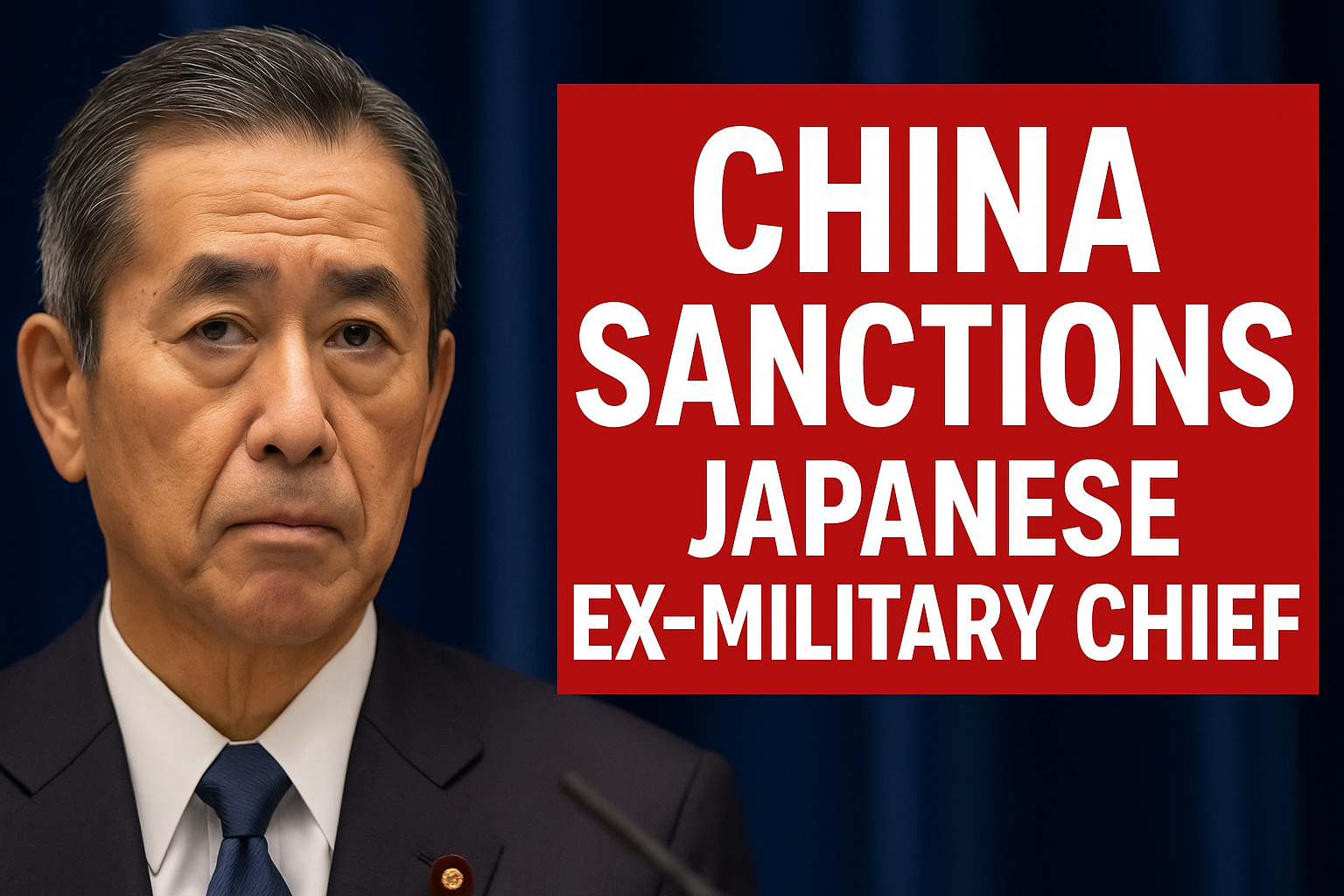
China has imposed sanctions on Shigeru Iwasaki, a former senior military leader of Japan, accusing him of supporting what Beijing calls “Taiwan separatist activities”. The move marks a rare escalation in tensions between China and Japan at a time of growing regional security concerns.
China’s Ministry of Foreign Affairs announced the sanctions on Monday. It described the action as a response to Iwasaki’s recent engagement with Taiwan’s government.
Who Is Shigeru Iwasaki?
Shigeru Iwasaki served as the chief of the Joint Staff of the Japan Self-Defence Forces, the highest military advisory position in Japan. He retired several years ago after a distinguished career in the Japanese Air Force.
Earlier this year, Taiwan appointed Iwasaki as an honorary adviser to its Executive Yuan, the island’s top administrative authority. That decision triggered strong objections from Beijing, which views Taiwan as part of its territory.
China lodged a diplomatic protest with Japan in March after the appointment became public.
Sanctions Imposed by China
The Chinese government said the sanctions take effect immediately and include several restrictive measures.
| Measure | Description |
|---|---|
| Asset freeze | All assets linked to Iwasaki within China |
| Business restrictions | Chinese entities barred from cooperation or transactions |
| Travel ban | Entry prohibited to mainland China, Hong Kong, and Macau |
| Visa restrictions | No visas to be issued |
China also warned domestic organisations against any form of engagement with Iwasaki.
China’s Position on Taiwan
Beijing considers Taiwan an inseparable part of China and insists on eventual reunification. It has not ruled out the use of force if necessary.
Most countries, including Japan and the United States, do not recognise Taiwan as an independent state. However, they oppose any attempt to change the status quo through military action.
China says Iwasaki’s advisory role violates the one-China principle and damages diplomatic commitments made between Beijing and Tokyo. Officials accused him of interfering in China’s internal affairs.
Rising Tensions Between China and Japan
The sanctions arrive amid wider tensions between the two countries.
Japan’s new Prime Minister Sanae Takaichi recently told parliament that a Chinese attack on Taiwan could pose a threat to Japan’s national security. She suggested that Japan might need to respond if such a situation occurred.
Beijing reacted angrily to the remarks and urged Japan to restate its position on Taiwan. China refers to a 1972 agreement signed when Japan shifted diplomatic recognition from Taipei to Beijing.
Although Takaichi later softened her tone, she did not withdraw the comments. The issue continues to strain bilateral relations.
A Pattern of Targeted Measures
China has increasingly used targeted sanctions against foreign individuals over Taiwan-related issues. Earlier this year, Beijing sanctioned a Japanese opposition lawmaker accused of making statements critical of China.
That lawmaker also faced criticism for visiting the Yasukuni Shrine, a site that honours Japan’s war dead, including convicted war criminals.
The sanctions against Iwasaki stand out due to his former senior military role. Analysts say the move sends a clear warning to retired defence officials who engage with Taiwan.
Regional Impact and Outlook
The sanctions highlight the fragile state of relations between China and Japan. They also underline the sensitivity surrounding Taiwan’s international engagement.
For Japan, the move raises concerns about diplomatic fallout from closer ties with Taiwan. For China, it reinforces a message of zero tolerance toward what it sees as foreign interference.
As tensions continue to rise in East Asia, experts warn that political rhetoric and symbolic actions could increase the risk of miscalculation. Taiwan remains at the centre of these disputes.
The situation adds another layer of complexity to regional diplomacy, with long-term implications for security and stability in the Asia-Pacific.