WELLINGTON, 3 August 2026
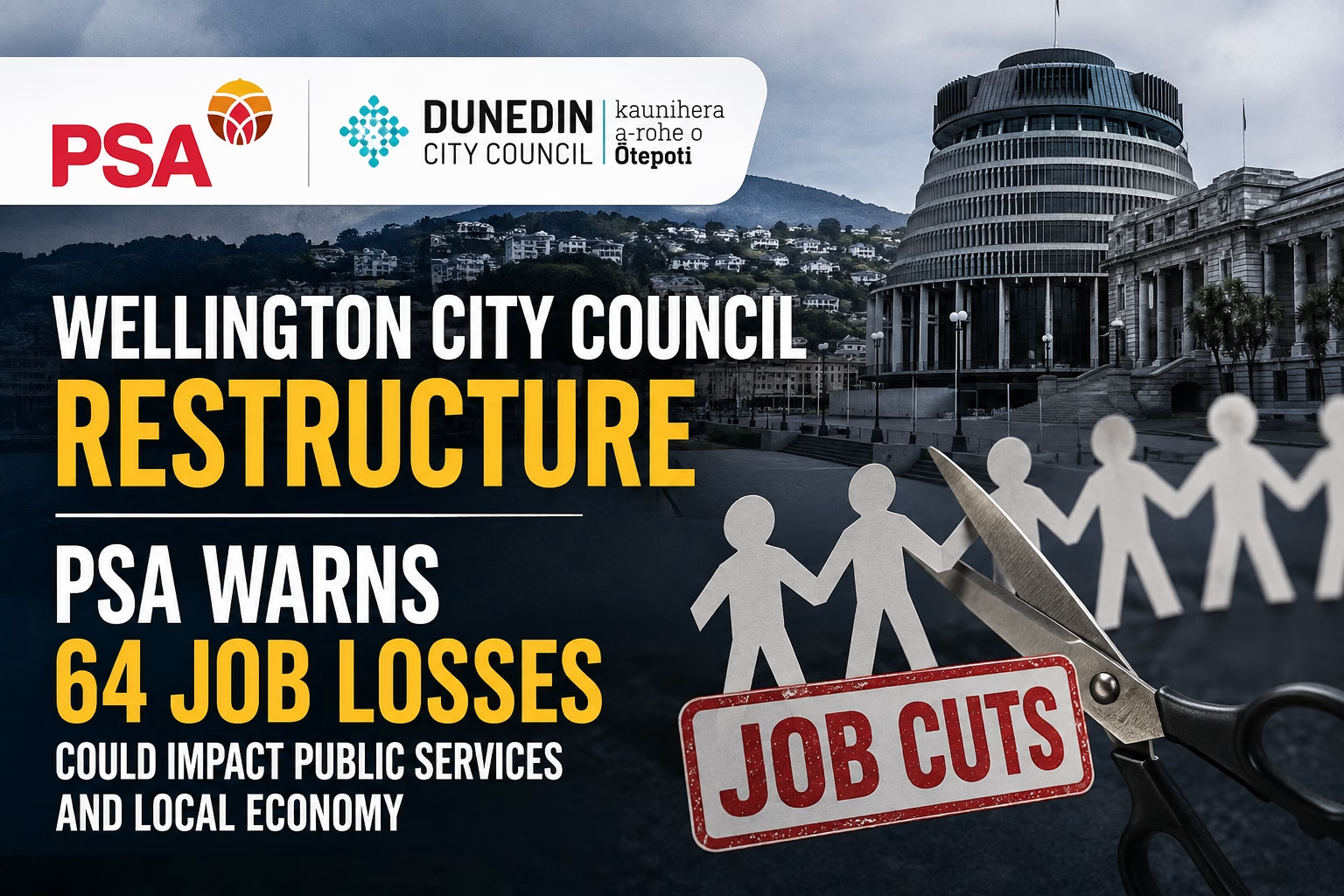
A proposed restructuring at Wellington City Council has drawn strong criticism from New Zealand’s largest trade union, with the Public Service Association (PSA) warning the changes could reduce essential public services, increase uncertainty for staff and place further pressure on Wellington’s already struggling economy.
The council has proposed disestablishing 144 positions, including five fixed-term roles, while creating 80 new positions, resulting in a net loss of 64 jobs across several key departments.
The proposal affects staff working in Property, Planning and Environment, Creative Capital, and Economic and Engagement.
The PSA says the scale of the restructure comes at the wrong time, particularly as discussions continue around possible local government reform and council amalgamation.
Council aims to reduce costs
Like many councils across New Zealand, Wellington City Council has been under pressure to manage rising costs while limiting rates increases for households and businesses.
The proposed organisational changes are intended to streamline operations and improve efficiency.
However, the restructuring process means many existing positions would disappear, requiring affected employees to apply for newly created roles.
Although the council has indicated existing staff will receive priority consideration, there is no guarantee every employee will secure a new position.
For many workers, that uncertainty creates weeks or months of anxiety while consultation and recruitment processes take place.
PSA calls proposal a major upheaval
PSA Assistant Secretary for Local Government Tom Buckley said the proposal represents one of the largest recent restructures affecting Wellington City Council staff.
“This is a huge upheaval, putting great stress on loyal council workers and will also impact the local economy already hit hard by the Government’s cuts to thousands of public service jobs,” Buckley said.
He said the affected employees represented experienced professionals who continued delivering vital public services despite repeated organisational changes.
“These are people with skills, with experience, and with families to support. They have more to give and deserve better, particularly at a time when the job market is tight.”
Union questions timing
The PSA also questioned whether now was the appropriate time for a major organisational restructure.
Buckley argued that uncertainty surrounding possible future local government reform made the proposal difficult to justify.
“The plan also doesn’t make much sense with amalgamation of councils on the cards. This is precisely the wrong time to be doing a restructure like this.”
While no decisions have been made regarding council amalgamation, discussions about improving local government structures have continued nationally.
The union believes councils should avoid large-scale internal changes until there is greater certainty about future governance arrangements.
Services could be affected
Beyond the impact on staff, the PSA warned Wellington residents could ultimately notice reduced organisational capacity.
Council employees work across a wide range of essential services, including urban planning, environmental management, public facilities, economic development, community engagement and property management.
Losing experienced staff may place additional pressure on remaining employees while increasing workloads during the transition.
Buckley acknowledged that councils face genuine financial challenges but said savings should not come at the expense of service quality.
“We appreciate the council needs to find savings to keep rate rises down and reduce pressure on households. But that must be balanced against the human cost, and against risk to the services Wellingtonians rely on council workers to deliver.”
Staff face another period of uncertainty
According to the PSA, many employees affected by the proposal have already experienced previous restructures.
Repeated organisational reviews can have lasting effects on staff morale, workplace confidence and employee retention.
Even workers who ultimately remain employed often face months of uncertainty while organisational charts, reporting lines and responsibilities are reviewed.
The union says employees are expected to continue delivering public services while simultaneously dealing with concerns about their own future employment.
“All of this creates great anxiety for workers who have to keep delivering services for Wellingtonians while they go through it,” Buckley said.
“The PSA is standing by and supporting everyone affected by this proposal. We will be urging the council to think again.”
Why restructures are becoming more common
Councils across New Zealand continue to face increasing financial pressure from ageing infrastructure, higher construction costs, insurance expenses, climate resilience projects and growing community expectations.
Many local authorities are reviewing staffing structures as part of wider efforts to control operating costs.
However, restructures often generate debate about whether short-term savings can lead to long-term reductions in organisational capability.
Local government organisations depend heavily on experienced planners, engineers, project managers, environmental specialists, finance professionals and community engagement staff.
Replacing institutional knowledge lost through redundancies can take years.
Balancing savings with community expectations
The proposal highlights the difficult balance councils face between maintaining public services and managing rising financial pressures.
Residents generally expect councils to keep rates affordable while also investing in roads, water infrastructure, parks, libraries, community facilities and environmental protection.
At the same time, reducing staff numbers can limit an organisation’s ability to deliver those services efficiently.
Finding that balance has become increasingly challenging as councils across New Zealand respond to inflation, infrastructure demands and changing government policies.
What happens next?
The restructuring proposal is currently subject to consultation.
During this process, employees and the PSA will have the opportunity to provide feedback before any final decisions are made.
The council will consider submissions before confirming whether the proposed structure proceeds or is amended.
For now, affected staff remain in consultation while Wellington City Council weighs financial priorities against workforce impacts and future service delivery.
The outcome is likely to influence not only the council’s internal operations but also broader discussions about how local government organisations can adapt to growing financial pressures without losing the experience and expertise needed to serve their communities.