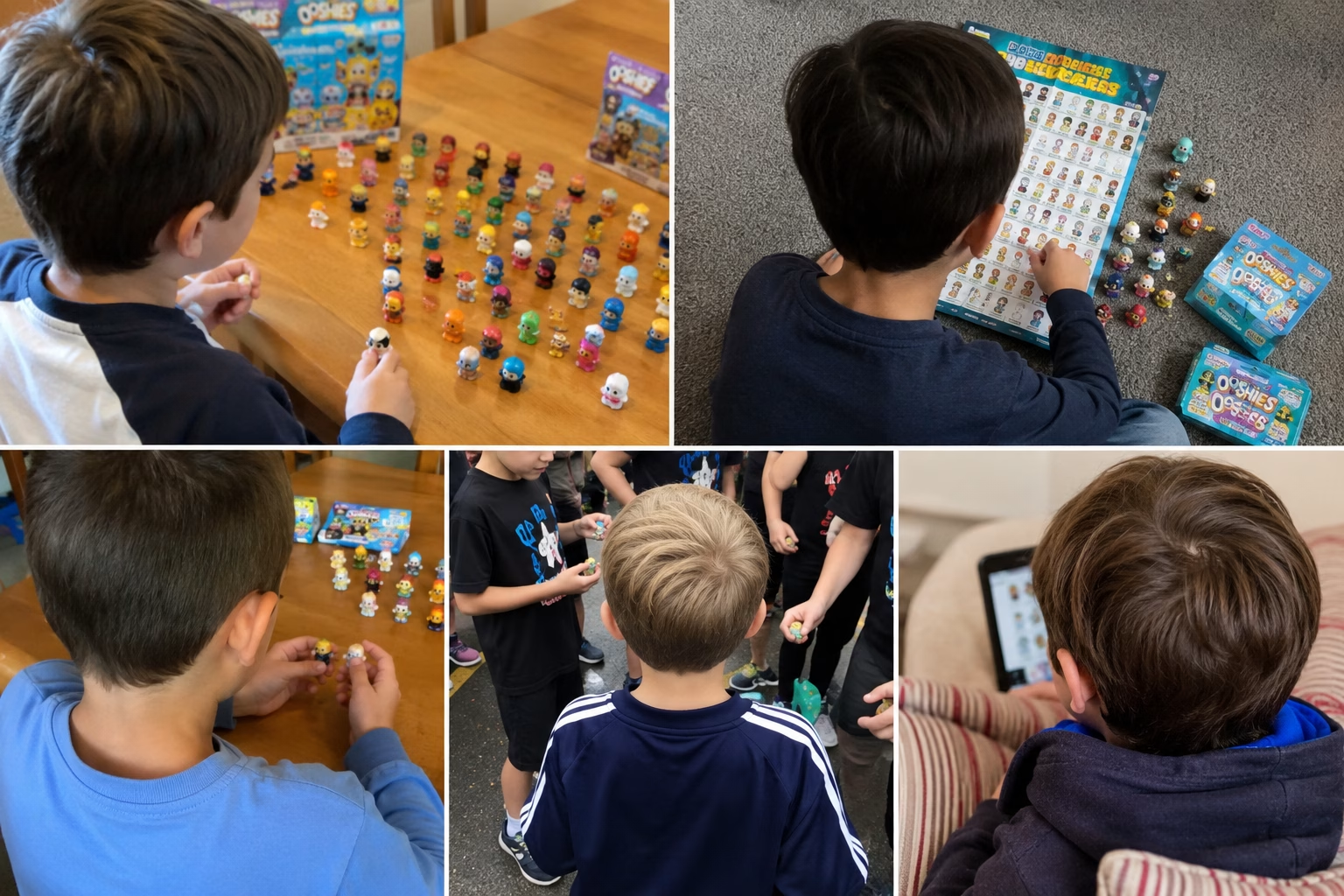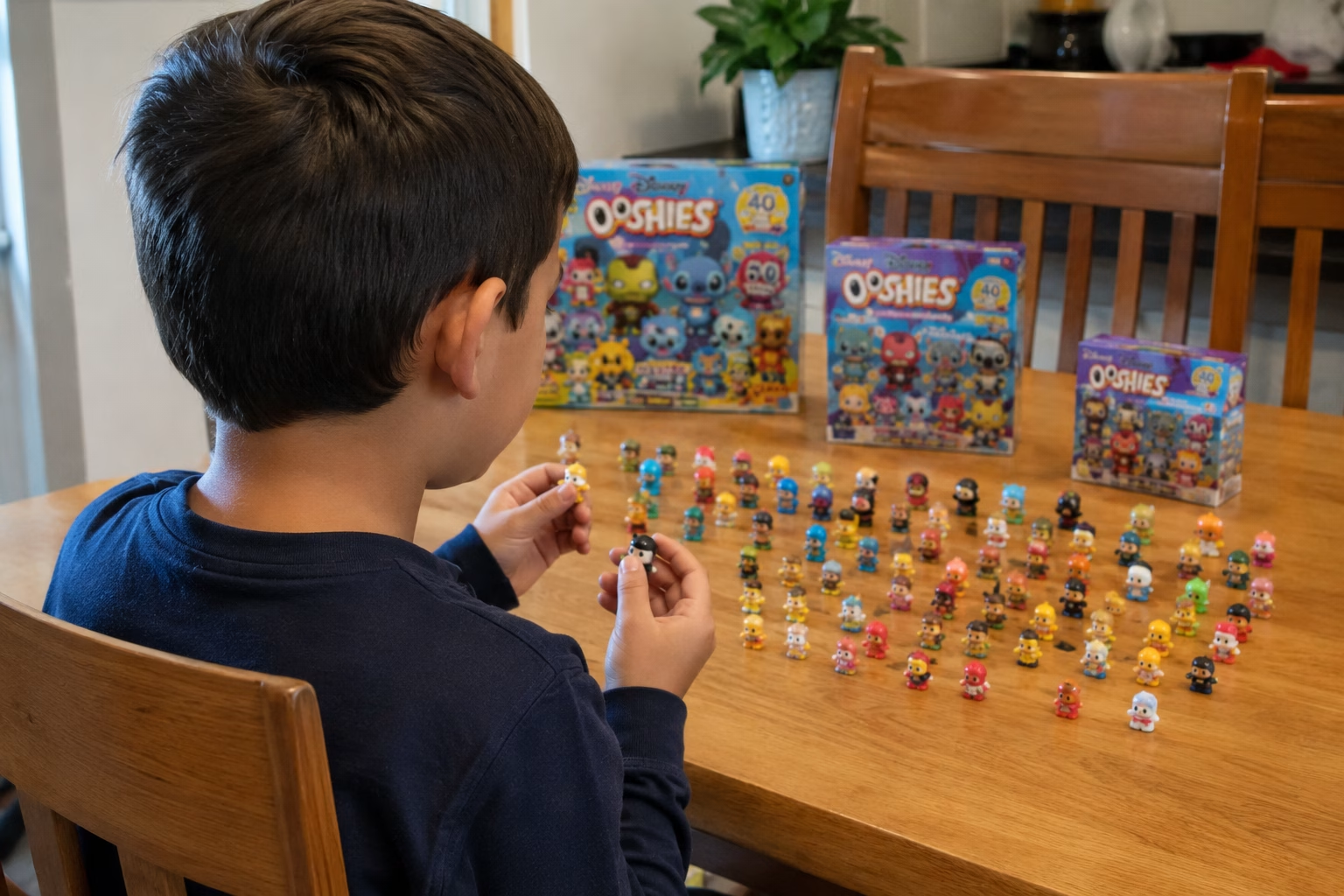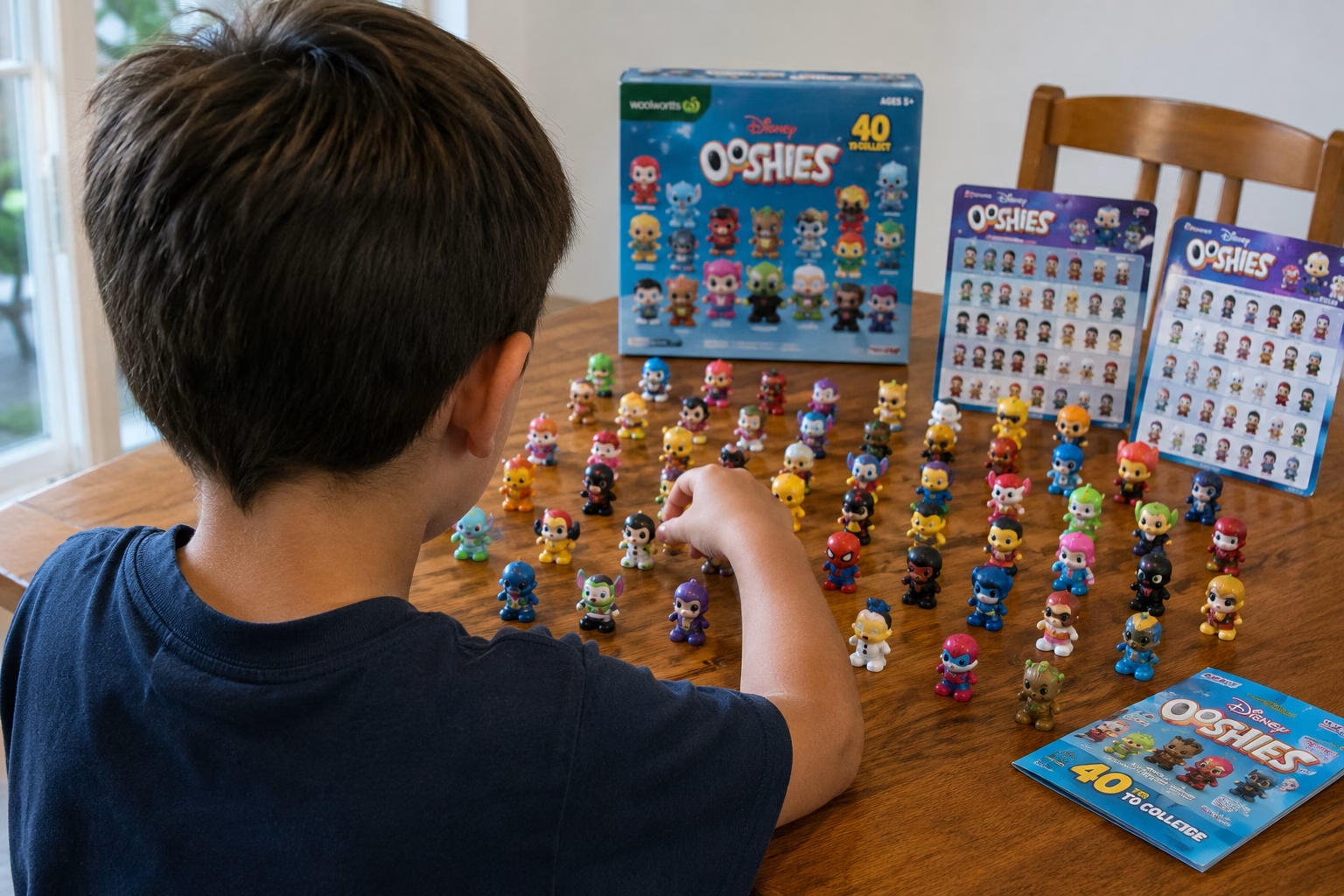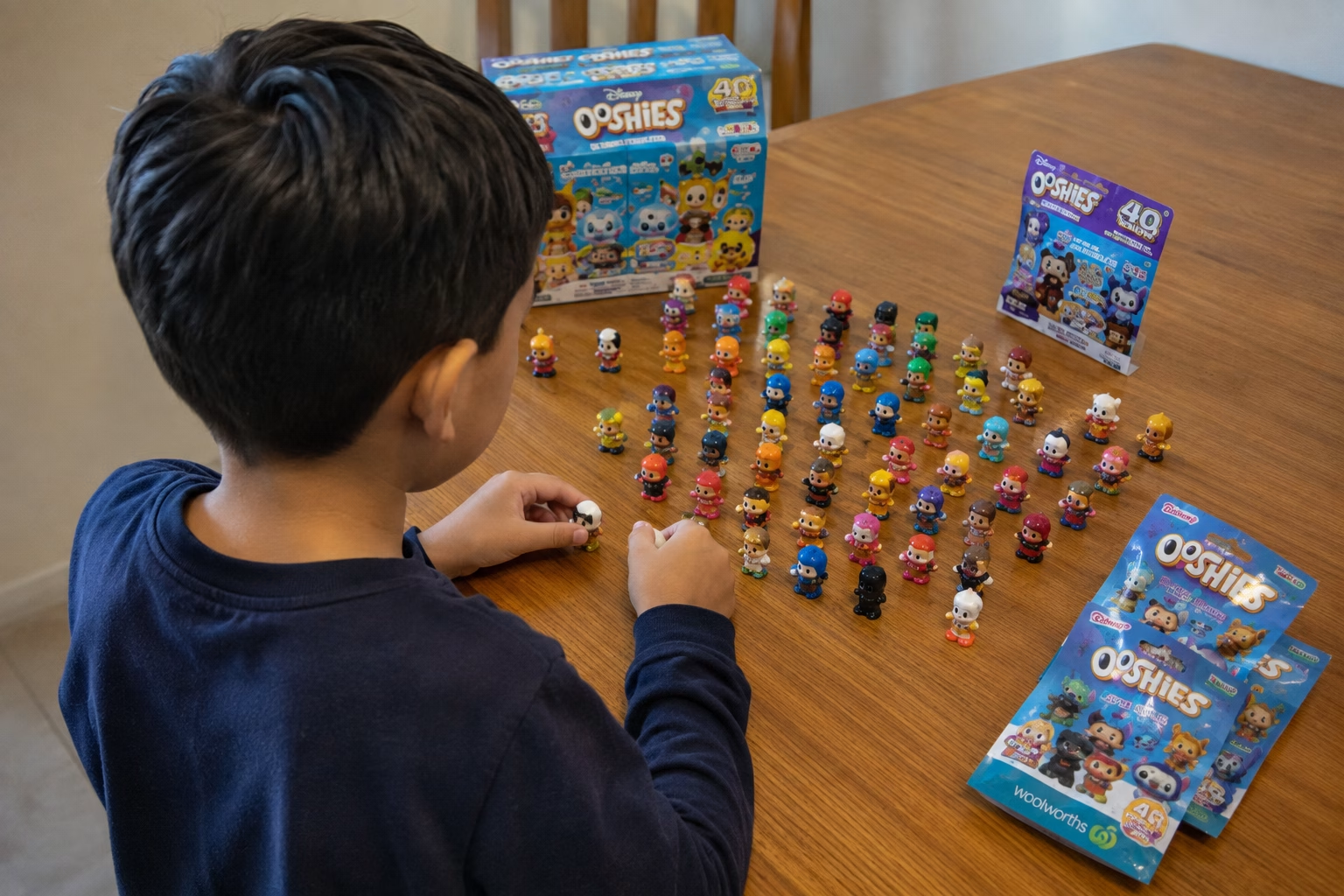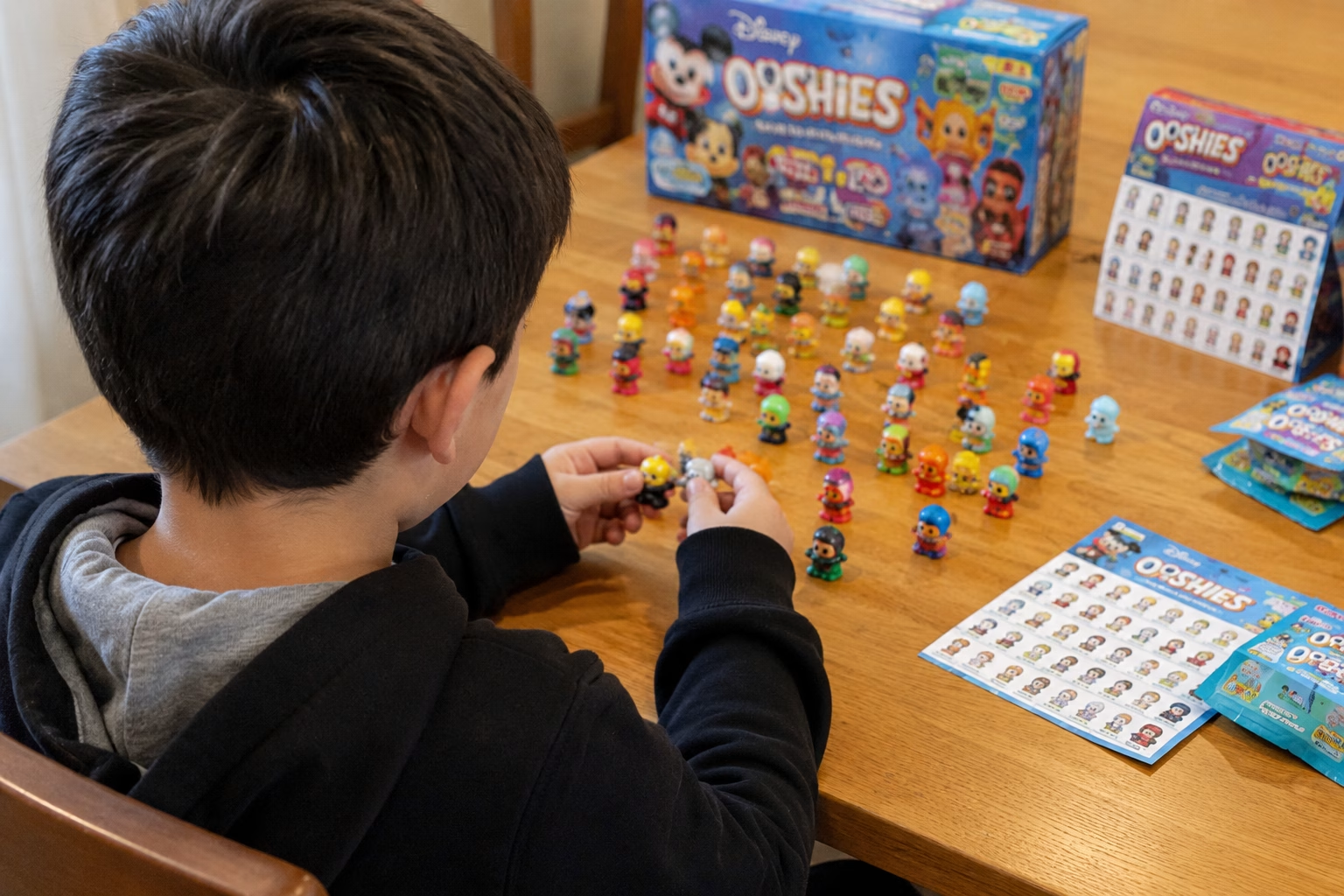
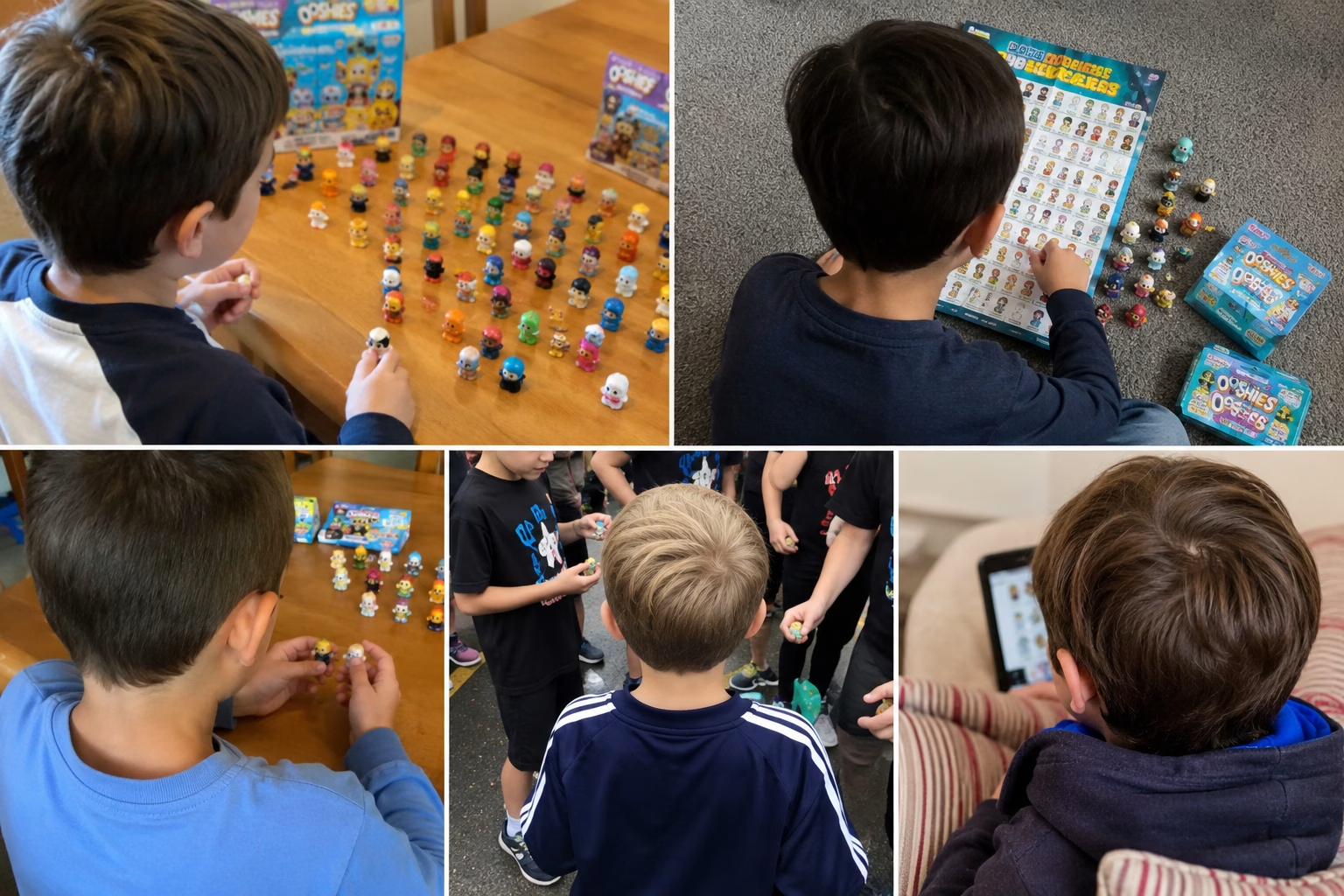
If your child has recently come home from school talking about swapping Stitch for Grogu, searching for Buzz Lightyear or negotiating two Ooshies for one, you are definitely not the only parent hearing it.
Across New Zealand, tiny Disney Ooshies have quietly become one of the biggest children’s collecting trends of the winter.
What starts with the family grocery shop can quickly move into school playgrounds, family WhatsApp groups, Facebook trading pages and conversations between parents trying to work out exactly which little plastic character their child is missing.
And this is not happening by accident.
So, what exactly is an Ooshie?
Ooshies are small collectible character figures. The current Woolworths New Zealand promotion features 40 characters drawn from Disney, Pixar, Marvel and Star Wars.
The promotion marks the tenth anniversary of Ooshies.
In New Zealand, Woolworths customers receive one Disney Ooshie for every $30 spent in a qualifying transaction, while stocks last. The current promotion began on 13 July and is scheduled to run until 23 August 2026. Customers can collect up to 25 Ooshies in a transaction under the promotion’s conditions.
Characters come from franchises children already know well, including Toy Story, Moana, Spider-Man and Star Wars.
That familiarity matters.
A child is not simply opening an unidentified toy. They might be hoping for their favourite character, trying to complete a particular group or searching for the one figure their friends already have.
And because nobody knows exactly which character they will receive before opening the packet, duplicates are inevitable.
That is where the trading begins.
The playground has become a miniature trading floor
For many parents, the fascinating part of the Ooshies phenomenon is not collecting them. It is watching children trade them.
A duplicate character suddenly has value.
One child may have three of the same figure but desperately want another character. Another child has exactly what they need.
Negotiations begin.
“Which ones do you have?”
“I already have that one.”
“I’ll give you these two for that one.”
To adults it can look like a few children swapping toys. But underneath it, children are practising some very recognisable social and economic behaviours.
They are learning about scarcity, perceived value, negotiation, patience, decision-making and even regret.
The supermarket itself has encouraged this swapping culture. Woolworths New Zealand held an official nationwide Disney Ooshies Swap Day on Friday, 7 August, from 3pm to 5pm, inviting families and collectors to bring duplicates into stores and trade them with others.
Online trading has grown too. A recent New Zealand report noted around 500 individual Ooshie listings on Trade Me and thousands more posts on Facebook Marketplace. One public Facebook community, Disney Ooshies NZ Trading, reportedly had more than 11,000 members.
This is considerably bigger than a playground fad.
Why do children become so hooked?
There is some clever psychology involved.
The important part of the promotion is uncertainty.
When children open an Ooshie packet, they do not know whether they will receive something new, a favourite character or another duplicate.
Queensland University of Technology marketing professor Gary Mortimer previously explained this type of supermarket collectable promotion using the concept of intermittent reward.
Sometimes the customer gets exactly what they hoped for. Sometimes they do not.
That uncertainty creates anticipation and encourages another attempt. The same research also points to what marketers call “pester power”, where children influence household purchasing decisions because they want the collectible attached to the shop.
This does not mean parents are deliberately spending hundreds of dollars buying Ooshies.
Most families are simply receiving them during grocery shopping they would have done anyway.
But there is an important distinction.
The Ooshie may be free with the qualifying purchase, but completing a random collection of 40 is another matter entirely.
One New Zealand analysis calculated that even in the impossible scenario of receiving a different character with every $30 purchase, collecting 40 would correspond to $1,200 of qualifying supermarket spending. With duplicates, completing an entire random set could theoretically require far more.
Trading therefore becomes the sensible part of the game.
Australia shows just how big the craze can become
Across the Tasman, Ooshie fever has become even more intense.
Australia’s 2026 Disney Ooshies campaign also contains 40 characters. Woolworths Australia expanded distribution beyond supermarkets to BIG W and MILKRUN, with one Ooshie available for every A$30 qualifying spend.
Official Australian swap events have attracted large queues of children, parents and grandparents.
Some adults have admitted they have become more invested in completing collections than their children.
Videos of one Australian swap event spread widely on social media, with one clip receiving more than 2.4 million views within days.
Then there are the rare characters.
A particularly scarce flocked Bullseye Ooshie, reportedly limited to 125 figures in Australia, sparked extraordinary eBay listings and bidding activity.
Some online prices reached ridiculous levels, including bids that appear unlikely to represent genuine market value. Parents should therefore be cautious about interpreting an online asking price or sensational bid as proof that a child’s Ooshie is suddenly worth thousands of dollars.
That is where collecting fun can turn into collector speculation.
New Zealand does not appear to have reached quite the same level of mania, but the Australian experience provides a useful glimpse of where intense scarcity and social media attention can take a children’s promotion.
There is also an environmental question
Older supermarket collectible campaigns faced significant criticism because millions of small plastic objects could eventually become waste.
Australian children themselves were among those questioning the environmental message of earlier Ooshie promotions in 2019.
Woolworths has clearly responded to that criticism.
The company says the 2026 Disney Ooshies are made from 97 percent recycled material.
In New Zealand, customers can also return unwanted Ooshies through dedicated recycling collection points in Woolworths stores until 13 September 2026.
It does not completely end the debate about whether supermarkets need collectible toys to encourage shopping, but it is a significant improvement compared with simply producing disposable collectables with no recovery programme.
One thing parents of toddlers should remember
There is another issue that tends to disappear underneath all the excitement: small objects and young children do not mix particularly well.
New Zealand’s Product Safety authorities warn that children under three are at particular risk of choking on small objects because they frequently put things in their mouths and may struggle to cough them back up.
Parents with both school-aged collectors and toddlers at home should therefore keep small collectible figures away from younger siblings and follow any age guidance supplied with the product.
The Ooshie sitting harmlessly in an eight-year-old’s collection box can become something very different in the hands of an 18-month-old.
Should parents stop the trading?
Probably not.
For most children, swapping Ooshies with friends is harmless fun.
In fact, managed properly, there are some useful lessons hiding inside the craze.
Children can learn that they do not need to own everything immediately. They can negotiate fairly, deal with disappointment, understand that something another person values may not be valuable to them, and discover that cooperation often works better than endlessly trying their luck.
Parents can help by establishing a few simple rules:
- Do not pressure another child into a trade.
- Once a fair trade is agreed, respect the agreement.
- Do not attach unrealistic cash values to playground swaps.
- Never take another child’s Ooshie without permission.
- Avoid buying unnecessary groceries purely to chase one missing character.
- Keep the figures away from babies and toddlers.
And perhaps the best lesson is knowing when a collection is good enough.
Because there will always be one more character.
From pocket money economics to childhood memory
Every generation seems to have its collectible.
There have been marbles, Pokémon cards, football cards, Tazos, supermarket miniatures and countless schoolyard crazes before them.
For New Zealand children in 2026, Ooshies may simply be the latest version.
What makes this one particularly interesting is the ecosystem surrounding it.
A supermarket loyalty campaign has become a children’s social activity. Duplicates have created a barter market. Facebook groups connect thousands of collectors. Rare figures create speculation. Official swap days transform supermarket aisles into community trading spaces.
For parents watching all this unfold, perhaps the smartest response is neither to dismiss the craze nor get completely consumed by it.
Let the kids swap.
Let them negotiate.
Let them experience the excitement of finally finding the character they wanted.
Just don’t accidentally turn the weekly grocery shop into a $5,000 mission to find Baby Yoda.
Sometimes the best part of collecting is the chase, and sometimes the smartest trade is simply knowing when to stop.
References
Woolworths New Zealand, Disney Ooshies promotion and FAQs, 2026.
Woolworths New Zealand, nationwide Disney Ooshies Swap Day information, July 2026.
Woolworths Group Australia, Disney Ooshies return announcement, July 2026.
Product Safety New Zealand, Toy Safety guidance.
New Zealand Commerce Commission, Children’s Toys product safety guidance.
ABC News Australia, reporting on supermarket collectables, consumer behaviour and environmental concerns.
1News New Zealand, reporting on the business and resale market surrounding Ooshies, August 2026.