By Webfit News
Almost half of New Zealand consumers experienced a problem with a product or service during the past two years, according to the newly released 2026 New Zealand Consumer Survey.
The findings show that 44 per cent of consumers encountered an issue, reinforcing the importance of understanding consumer rights and knowing where to seek help when something goes wrong.
The survey also found that consumers who understood their rights were more likely to take action and achieve a positive outcome.
Of those who tried to resolve a problem, three-quarters reached a resolution.
Awareness Is High, but Understanding Remains Limited
Consumer protection awareness remains strong across New Zealand.
The survey found that 95 per cent of New Zealanders were aware that consumer protection laws exist.
A record 61 per cent of respondents also agreed that New Zealand has adequate laws to protect consumers from being misled or cheated by businesses.
However, the results exposed a significant gap between knowing that consumer laws exist and understanding how those laws work in practice.
Only half of respondents said they had a moderate or good understanding of their consumer rights.
Tested knowledge of consumer rights had also declined since the previous survey in 2024.
Consumer Services Manager Simon Gallagher said the gap between awareness and practical understanding was one of the survey’s most important findings.
“While most consumers know these protections exist, only half say they have a moderate or good understanding of their rights, and tested knowledge of consumer rights has declined since 2024,” Gallagher said.
Taking Action Improves the Chance of a Resolution
The survey suggests that consumers who act when they experience a problem are more likely to reach a satisfactory outcome.
Among consumers who took steps to resolve an issue, 75 per cent achieved a resolution.
This could include contacting the business directly, asking for a repair or replacement, requesting a refund, or using a formal dispute resolution service.
Awareness of dispute resolution services also increased compared with 2024.
Gallagher said consumers who understand their rights are better placed to challenge poor service or faulty products.
“When problems occur, consumers who understand their rights are more likely to take action and achieve a resolution,” he said.
The findings indicate that knowing what to ask for, which law may apply and which organisation can help can make a meaningful difference.
Consumer Confidence Continues to Strengthen
Despite the high number of people reporting problems, the survey found that confidence in New Zealand businesses remained relatively strong.
Seventy per cent of respondents agreed that businesses would generally do the right thing and would not try to mislead or cheat consumers.
Trust in information provided by salespeople also increased compared with the 2024 survey.
Gallagher said the results suggest that most consumers continue to participate confidently in New Zealand markets.
“The findings suggest most consumers continue to feel confident participating in New Zealand markets, and most businesses are meeting consumers’ expectations,” he said.
This creates a mixed picture.
Many consumers are experiencing problems, but most still believe businesses generally behave fairly.
The key issue is whether consumers are properly equipped to respond when expectations are not met.
Common Consumer Problems Can Have Real Costs
Problems with products and services can range from minor inconvenience to significant financial loss.
Examples may include:
• Faulty or unsafe products
• Services that do not match what was promised
• Delayed or incomplete work
• Misleading pricing or advertising
• Difficulty obtaining refunds, repairs or replacements
• Disputes over warranties or guarantees
• Subscription or cancellation problems
For households already facing cost-of-living pressures, even a relatively small unresolved consumer issue can have a serious impact.
A faulty appliance, poor-quality repair or disputed charge can leave families out of pocket and unsure about what to do next.
The survey highlights why practical consumer knowledge matters, particularly when people are making major purchases or entering service agreements.
Knowing Your Rights Before a Problem Occurs
New Zealand consumers are protected by several laws covering the sale of goods and services, misleading conduct and unfair business practices.
However, legal protections are only effective when consumers understand how to use them.
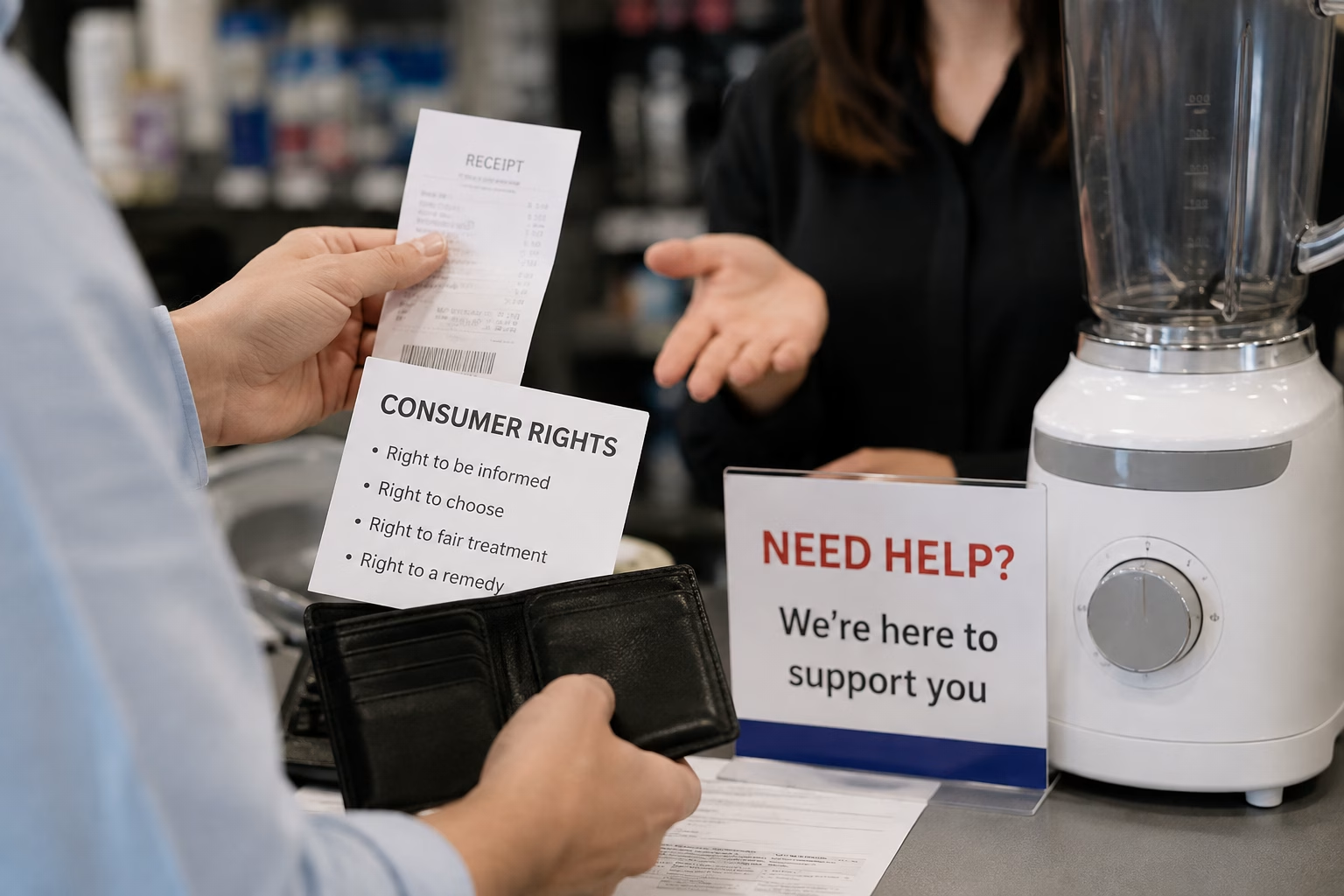
Consumers should keep receipts, invoices, written agreements, emails and other records connected to a purchase.
When raising an issue, it is usually helpful to contact the business promptly and clearly explain:
• What went wrong
• When the product or service was purchased
• What outcome is being requested
• What supporting evidence is available
Keeping written records of conversations and responses may also help if the dispute needs to be escalated.
The survey suggests that more work is needed to help consumers move from general awareness to confident action.
Government Agencies to Improve Consumer Information
Gallagher said the survey provides useful information about how people are navigating an increasingly complex marketplace.
He said the results would be used to improve the information and tools available to consumers.
“We will be using the results to work with our partners like the Commerce Commission and others in consumer sector organisations, to continue improving the information and tools we have available,” he said.
The focus will be on helping people understand their rights, make informed decisions and respond effectively when problems arise.
Strong Foundations, but More Education Needed
The survey presents New Zealand’s consumer protection system as having strong foundations.
Awareness of consumer laws is very high, confidence in legal protections has increased and most people continue to trust businesses.
However, the decline in tested knowledge shows that awareness alone is not enough.
Consumers need clear, accessible and practical information that explains what protections apply and what steps to take.
Gallagher said the next challenge was turning awareness into action.
“The challenge now is helping more people translate that awareness into practical knowledge, so they feel confident making decisions, understanding their rights and taking action when something goes wrong,” he said.
Why the Survey Matters
The 2026 New Zealand Consumer Survey provides a valuable snapshot of how consumers experience the marketplace.
Its key findings include:
| Survey finding | Result |
|---|---|
| Consumers who experienced a problem in the past two years | 44 per cent |
| Consumers aware that protection laws exist | 95 per cent |
| Consumers who believe New Zealand has adequate protection laws | 61 per cent |
| Consumers who believe businesses generally do the right thing | 70 per cent |
| Consumers who achieved a resolution after taking action | 75 per cent |
| Consumers with moderate or good understanding of their rights | About 50 per cent |
The message from the survey is straightforward.
New Zealanders generally trust the marketplace and know consumer protections exist, but too many remain uncertain about what those protections mean in practice.
Improving practical knowledge could help more people resolve problems quickly, reduce financial harm and hold businesses to appropriate standards.