BLENHEIM, 30 July 2026
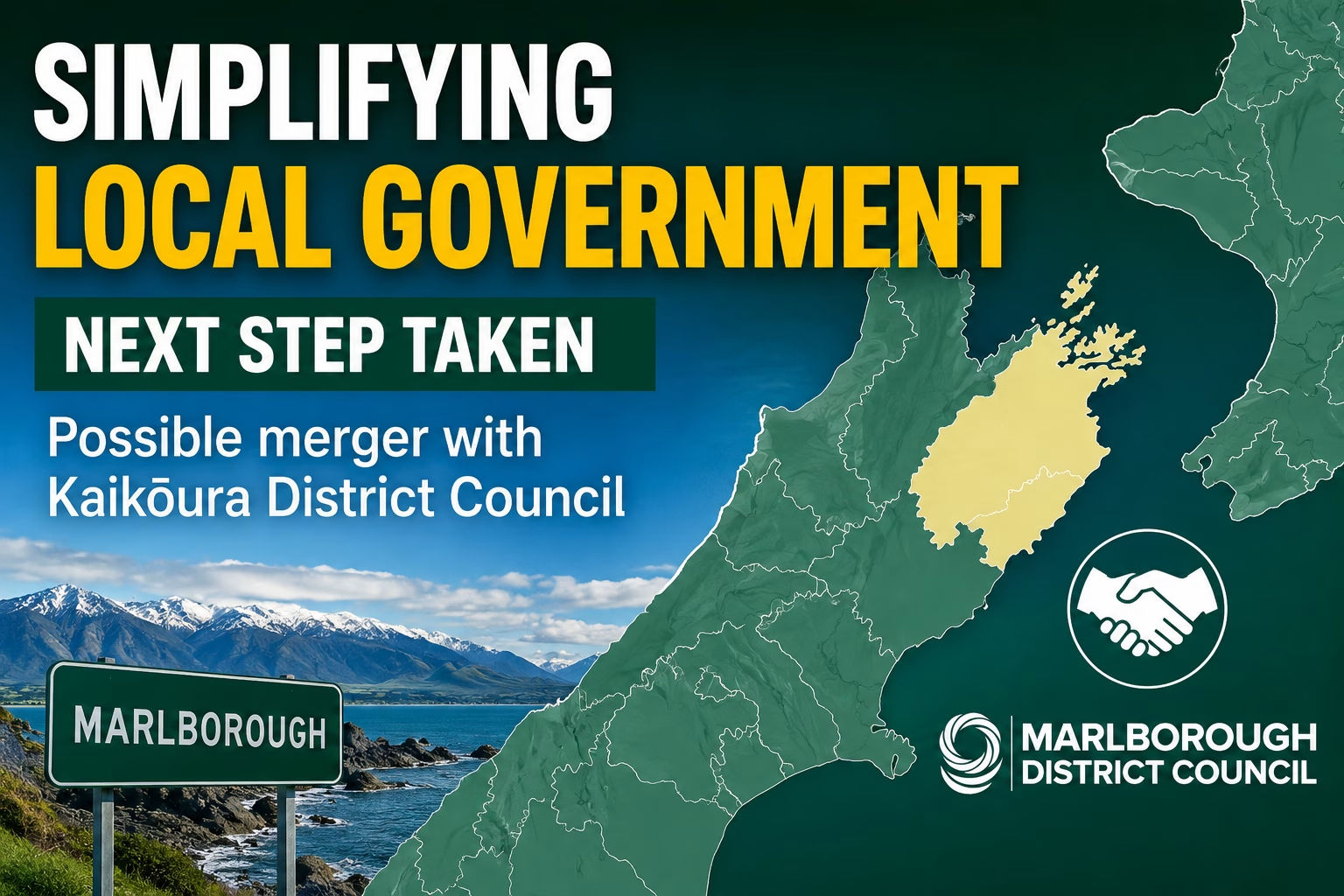
Marlborough District Council has voted to move forward with the next stage of exploring a possible local government merger with Kaikōura District Council, but says the decision does not mean amalgamation has been approved.
At an extraordinary council meeting on Wednesday, councillors agreed to jointly develop a Head Start Outline Proposal with Kaikōura District Council. The document will help determine whether a formal proposal should be submitted to the Government under its Simplifying Local Government programme.
A final decision on whether Marlborough will submit the proposal is scheduled for Thursday, 6 August.
Why Marlborough is considering the proposal
The move follows Kaikōura District Council’s decision to identify Marlborough as its preferred partner for a possible future amalgamation.
Mayor Nadine Taylor stressed that Wednesday’s vote was about gathering information rather than approving a merger.
“Today’s decision does not commit Marlborough to amalgamation with Kaikōura,” Mayor Taylor said.
“It simply allows us to continue preparing the information we need to properly assess the potential opportunities and challenges, which would be subject to full public consultation in the future.”
She said developing the outline proposal would allow councillors to better understand the possible impacts before making any long-term decisions.
These include governance arrangements, financial implications, representation, council services and operational efficiency.
What is the Government’s Head Start programme?
The proposal is part of the Government’s Head Start initiative under its Simplifying Local Government programme.
The initiative allows neighbouring councils to voluntarily explore new governance structures, including the creation of new unitary authorities or council mergers.
Councils wishing to participate must submit an outline proposal during August 2026. If accepted, a detailed proposal would then be prepared by March 2027.
Mayor Taylor said participating in the process would ensure Marlborough had a stronger voice in shaping any future arrangements rather than responding to decisions made by central government.
“Developing the Head Start document gives us the opportunity to examine the issues in more detail and to help shape any potential future arrangements, rather than having to react to future decisions made in Wellington,” she said.
Public feedback shows cautious support
Council also released the results of its second community pulse survey, conducted between 20 and 29 July.
A total of 268 residents responded.
The survey found:
| Response | Number | Percentage |
|---|---|---|
| Support preparing a joint proposal | 177 | 66% |
| Oppose the proposal | 66 | 25% |
| Unsure | 23 | 9% |
While a majority supported continuing the investigation, respondents also highlighted several issues they want council to examine before any final decision.
Key concerns included:
- Future rates and council costs
- Local representation and community identity
- Infrastructure investment
- Council debt levels
- Organisational capability
- Emergency management
Councillors discussed many of these issues during Wednesday’s meeting.
Why a merger is being explored
Supporters argue that combining neighbouring councils could improve efficiency, reduce duplicated administration and strengthen long-term planning across the two districts.
A larger combined council may also have greater capacity to deliver infrastructure projects, attract investment and manage increasingly complex regulatory responsibilities.
However, mergers also raise important questions.
Residents often worry about losing local representation, reduced community identity, differing financial positions between councils and whether promised savings actually materialise.
These are among the issues the Head Start proposal will examine before any further decisions are made.
What happens next?
Council staff will now work with Kaikōura District Council to prepare the draft Head Start Outline Proposal.
That document will return to Marlborough District Council on 6 August, when elected members will decide whether to formally submit it to the Government.
If submitted, it would mark the beginning of a much longer assessment process rather than the completion of one.
Any detailed proposal would still require further development and future public consultation before any structural changes could occur.
Why this matters for local government
The proposal comes as councils across New Zealand continue facing increasing pressure from rising infrastructure costs, ageing assets, climate resilience requirements and growing expectations for local services.
The Government’s Simplifying Local Government programme is encouraging councils to consider whether existing structures remain fit for purpose or whether greater collaboration could improve service delivery.
For Marlborough and Kaikōura, the current process is about evaluating those possibilities, not making a final decision.
The outcome of next week’s council meeting will determine whether the proposal moves to the next stage or whether the idea ends before being formally submitted to the Government.