LOWER HUTT, 3 August 2026
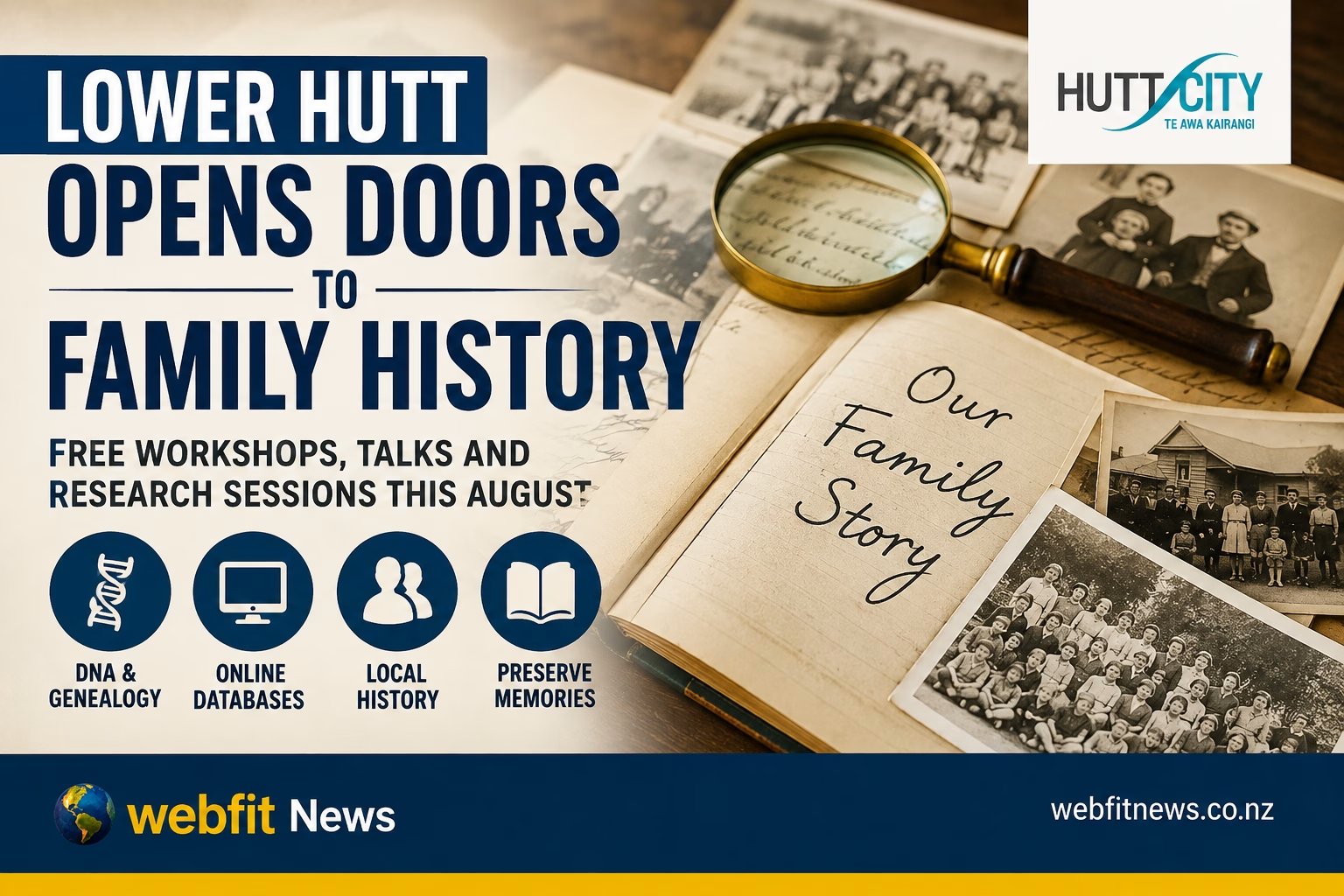
Lower Hutt residents are being invited to trace their roots, solve long-standing family mysteries and preserve stories for future generations during a citywide programme marking Family History Month this August.
Hutt City Council is hosting talks, workshops, research sessions and practical activities at the Heritage Centre at Walter Nash Centre, War Memorial Library and neighbourhood hubs across the city.
The programme is designed for everyone from complete beginners who do not know where to start, through to experienced researchers trying to break through a stubborn gap in their family tree.
Council’s Neighbourhood Hubs and Library Services Family History Specialist Tricia Meehan said family history offered much more than a list of names and dates.
“It helps us understand where we come from, the journeys our families have taken and how our whānau stories connect with Lower Hutt and the wider world,” Meehan said.
“There is something for people beginning their research through to experienced researchers trying to solve a long-standing family mystery.”
$2 Million South Otago Riverworks Project Nears Completion – WebfitNews
Free research tools available through local hubs
A major part of the programme will introduce residents to family history databases available free through Hutt City Council’s neighbourhood hubs and libraries.
These include Ancestry.com, Findmypast and the British Newspaper Archive.
Sessions will show people how to search census information, birth and death records, passenger lists, military documents, newspapers and other historical sources.
Participants will also learn how to assess the reliability of information they find.
Online family trees often contain mistakes that can be copied repeatedly across different accounts. Workshops will help researchers distinguish between verified records, family tradition and unsupported claims.
Several sessions will focus on tracing ancestors outside New Zealand and using local and international databases together.
DNA and AI among the modern research tools
Family history research is no longer limited to dusty archives and handwritten records.
The August programme will also examine how DNA testing may help identify unknown relatives or provide clues about family origins.
Another session, titled “Research Partner, Not Researcher: AI in Family History”, will explore how artificial intelligence can assist with organising information, transcribing records and identifying possible research leads.
The title reflects an important warning: technology can support family history work, but it cannot replace careful checking.
AI tools may misread names, dates or historical handwriting and can sometimes produce information that appears convincing but is wrong. Researchers will still need to confirm findings against credible records.
Lower Hutt stories take centre stage
The programme also looks closely at the history of Lower Hutt and its place within wider New Zealand history.
Residents will be able to hear about Redcoat soldiers in colonial New Zealand, the work of the New Zealand Remembrance Army and stories connected with the old monumental section of Taitā Cemetery.
Local speakers will share personal and professional experiences, including accounts linked to Petone and Wellington newspapers.
A historical class photograph from Petone Central School in 1945 is among the types of records showing how local images can preserve details about schools, neighbourhoods and families.
These records may appear ordinary when first created, but they often become valuable decades later when descendants begin searching for connections.
History Unlocked research day planned
One of the month’s main events will be the History Unlocked: Research and Discovery Day at Walter Nash Centre on Sunday, 23 August.
The free event will run from 10am to 3pm and does not require booking.
It will give visitors an opportunity to explore resources, ask questions and hear from guest speakers.
Dawn Chambers will speak at 11am about genealogical connections in the Hutt, followed by Adrian Broad at 12.30pm discussing his experience working at the Evening Post during the 1980s.
The event will be held at Walter Nash Centre on Taine Street in Taitā.
August event highlights
The Family History Month programme includes a wide range of sessions across Lower Hutt.
Selected events include:
| Event | Date and time | Location |
|---|---|---|
| Restoring Honour: Simon Strombom and the NZ Remembrance Army | 5 August, 1pm | Walter Nash Centre |
| Redcoat Soldiers in Colonial New Zealand | 6 August, 11am | Walter Nash Centre |
| Scrapbooking Your Family History | 7 August, 10.30am | Eastbourne Neighbourhood Hub |
| AI in Family History | 10 August, 11am | Wainuiomata Neighbourhood Hub |
| Stories Behind Taitā Cemetery | 10 August, 1pm | Naenae Neighbourhood Hub |
| Navigating Ancestry.com | 11 August, 10am | Eastbourne Neighbourhood Hub |
| Genealogy Research Beyond Aotearoa | 13 August, 1pm | War Memorial Library |
| New Zealand Genealogy Databases | 19 August, 1pm | War Memorial Library |
| History Unlocked Research and Discovery Day | 23 August, 10am to 3pm | Walter Nash Centre |
| Findmypast and British Newspaper Archive | 25 August, 10am | Eastbourne Neighbourhood Hub |
Additional drop-in sessions and workshops will be held at Kōraunui Stokes Valley, Moerā, Wainuiomata and other neighbourhood hubs.
Preserving photographs, documents and keepsakes
The programme is not limited to researching the past. It also focuses on protecting family material that already exists.
Residents can bring treasured photographs, documents and keepsakes to a preservation session and receive practical guidance on how to care for them.
Old photographs can fade, tear or suffer damage from moisture and unsuitable storage. Letters, certificates and newspaper clippings can also deteriorate quickly if exposed to light, heat or acidic materials.
Creative workshops will show participants how to turn photographs, documents and memories into scrapbook pages that can be shared with children and grandchildren.
Meehan said every family had stories worth protecting.
“Sharing and preserving these stories keeps memories alive, strengthens connections between generations and adds to the rich history of our city,” she said.
A chance to begin before stories are lost
Family history often depends on conversations that are easy to postpone.
Names, places, migration stories and personal memories can disappear when older relatives are no longer available to tell them.
Family History Month gives Lower Hutt residents a practical reason to begin recording those stories now.
Whether the goal is finding an unknown ancestor, understanding a family’s arrival in New Zealand or simply preserving photographs before they deteriorate, the council’s programme offers a starting point.
For some participants, the result may be a new branch on a family tree.
For others, it may be something more personal: a clearer understanding of how their whānau became part of Lower Hutt’s story.