In a world where diplomacy is often measured in trade figures and treaties, one quiet academic proved that language can be just as powerful as geopolitics.
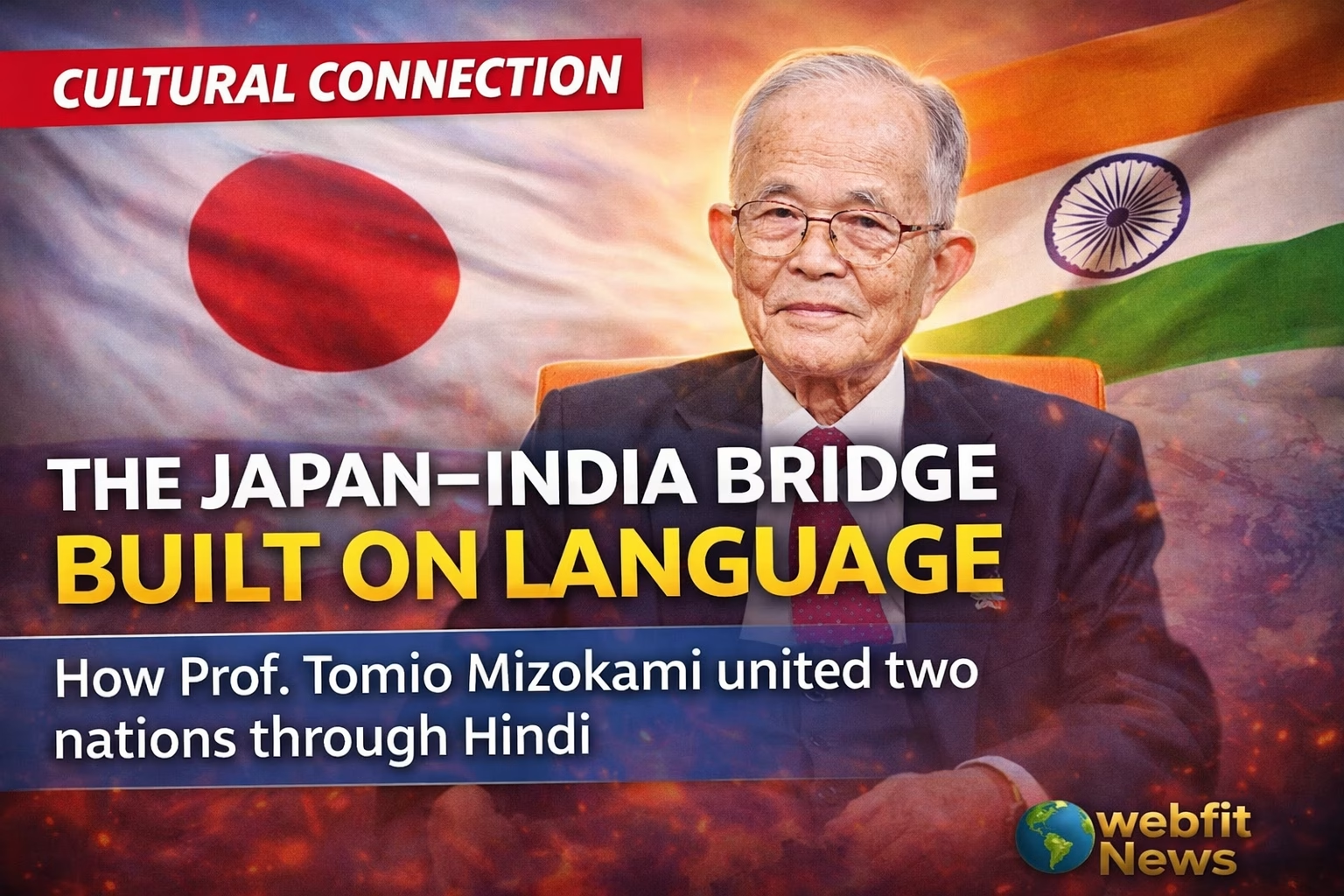
For more than six decades, Prof. Tomio Mizokami, a Japanese scholar of Indian languages, has built one of the deepest cultural bridges between Japan and India. Not through policy papers or official summits, but through Hindi, Punjabi, Bengali, cinema, literature, and an unwavering emotional connection to India’s living culture.
Today, as India and Japan strengthen their strategic partnership in the Indo-Pacific, Prof. Mizokami stands as a reminder that true international relationships are sustained not only by governments, but by people who understand each other’s words, stories, and soul.
This is the story of a man, and a movement, that turned language into cultural diplomacy.
From Kobe to Kashi: The Making of a Cultural Bridge
Born in 1941 in Kobe, Japan, Tomio Mizokami grew up in a port city with a visible Indian trading community. That early exposure planted a curiosity that would later become a lifelong academic pursuit.
Unlike many scholars of his generation who focused only on classical Sanskrit or ancient texts, Mizokami chose to engage with living Indian languages, especially Hindi and Punjabi, spoken on the streets, in films, and in everyday life.
Academic Timeline and Key Milestones
| Year / Period | Institution or Location | Key Focus or Achievement |
|---|---|---|
| 1961–1965 | Osaka University of Foreign Studies | Undergraduate in Indian Studies |
| 1965–1968 | Allahabad, India | Deep immersion in Hindi language |
| 1965–1968 | Visva-Bharati University, Santiniketan | Bengali language studies |
| 1968 | Osaka University | Joined as Research Assistant (Hindi Dept) |
| 1972 | University of Delhi | Master’s degree in Hindi |
| 1983 | University of Delhi | PhD in Hindi |
| 1989–1990 | UC Berkeley and University of Chicago | Visiting scholar, taught Punjabi |
| 1999 | London | Awarded Vishwa Hindi Samman |
| 2001 | Uttar Pradesh Government | Hindi Ratna |
| 2007 | Osaka University | Professor Emeritus |
| 2018 | Rashtrapati Bhavan, India | Padma Shri Award |
His years in Allahabad (now Prayagraj) gave him mastery over shuddh Hindi, while Santiniketan expanded his understanding of India’s linguistic diversity. These experiences shaped the distinct clarity and cultural authenticity that later defined his work.
A Pioneer of Punjabi Studies in Japan
One of Prof. Mizokami’s most remarkable contributions lies outside mainstream narratives.
He became the first Japanese scholar to conduct extensive academic research on Punjabi, a language often overlooked in international academia despite its cultural and historical importance.
Key contributions include:
- Teaching Punjabi at UC Berkeley
- Co-authoring a Japanese–Punjabi dictionary with nearly 20,000 words
- Studying language contact between Punjabi and Hindi in post-Partition India
- Preserving linguistic documentation of Punjabi at a time when global institutions warned of decline
This work ensured that Indian studies in Japan extended beyond Hindi and Sanskrit, embracing regional realities and diaspora languages.
Translating Cinema, Translating Culture
Prof. Mizokami’s influence did not stop at universities.
He translated nearly 300 Hindi film songs into Japanese, allowing Japanese audiences to experience Indian cinema not just visually, but emotionally and linguistically.
His own words capture this journey best:
“Through Indian languages, I did not just learn words. I discovered the soul of India.”
That philosophy earned him recognition far beyond academic circles. During the G7 Summit in Hiroshima, Indian Prime Minister Narendra Modi personally acknowledged Mizokami’s role in strengthening India–Japan relations through culture and literature.
At the International Bharatiya Languages Conference in 2026, he addressed the audience in fluent Hindi, joking that people often say he is Indian who was “mistakenly born in Japan.”
From Scholars to Social Media: A New Generation of Linguistic Ambassadors
While Prof. Mizokami represents the academic foundation of this cultural bridge, a younger generation has taken Hindi fluency to digital platforms, reaching millions.
Namaste Kohei: When Hindi Goes Viral
Kohei, widely known as Namaste Kohei, gained massive popularity by surprising Indians in Japan with fluent Hindi.
Key data points:
- Over 2.6 million YouTube subscribers
- Instagram reels crossing 3 million likes
- Lived in Greater Kailash, Delhi for three years
- Fluent in Hindi, learning Tamil
- Known for welcoming Indian tourists in Hindi across Tokyo
His content turns everyday interactions into moments of belonging, making India feel closer to Japan at a human level.
Mayo Japan: Language Meets Institution
Mayo Hitomi, a Hindi graduate from Osaka University, represents a more structured approach to cultural exchange.
Her work includes:
- Teaching Hindi and Indian culture to Japanese audiences
- Teaching Japanese language to Indians
- Acting as brand ambassador for Japanese companies entering India
- Collaborating with Indian and Japanese diplomats on cultural content
Together, Kohei and Mayo demonstrate how linguistic bridges now operate across academia, business, and digital diplomacy.
Diplomacy That Speaks Hindi
Language has also reshaped formal diplomacy.
Former Japanese Ambassador to India Hiroshi Suzuki became widely respected for delivering speeches in Hindi and engaging with Indian society beyond official protocol.
Key Diplomatic Outcomes During Suzuki’s Tenure
| Area | Impact |
|---|---|
| Bilateral Trade | USD 21.96 billion in FY 2022–23 |
| Infrastructure | Oversight of Mumbai–Ahmedabad bullet train |
| Technology | Semiconductor supply chain cooperation |
| Public Diplomacy | Hindi speeches, food diplomacy, social media |
This approach built trust not through formality, but familiarity.
Beyond Language: Food, Faith, and Identity
Cultural integration also extends into cuisine and spirituality.
- Chef Takamasa Osawa, a Michelin-recognized biryani specialist, runs a Tokyo restaurant serving only biryani after 15 years of immersion across South Asia.
- Nozomu Hagihara, a Japanese yoga practitioner, promotes yoga as a way of life in India, not just physical exercise.
- Ryuko Hira, Padma Shri awardee and leader in Japan–India industrial cooperation, bridges economic and spiritual engagement through philanthropy and industry.
These stories show that cultural exchange matures when language opens the door, but lived experience deepens the bond.
Honest Admiration Includes Honest Critique
Interestingly, Japanese admiration for India is not blind.
Several Japanese vloggers have openly discussed challenges faced by NRIs in India, including:
- High tax burden
- Infrastructure gaps
- Civic management issues
- Systemic barriers to innovation
This honesty strengthens, rather than weakens, the relationship. Cultural bridges survive because they acknowledge differences, rather than denying them.
Why Prof. Tomio Mizokami Still Matters
Prof. Mizokami’s legacy goes far beyond awards.
He represents:
- Cultural diplomacy without politics
- Language as lived empathy
- Scholarship that respects everyday life
- A model of integration without appropriation
As India’s global influence grows, such linguistic bridges ensure that partnerships remain people-centric, not transactional.
From classrooms to cinema halls, from universities to YouTube, the bridge he built continues to expand.
And in that bridge, India’s voice continues to find resonance in Japan.