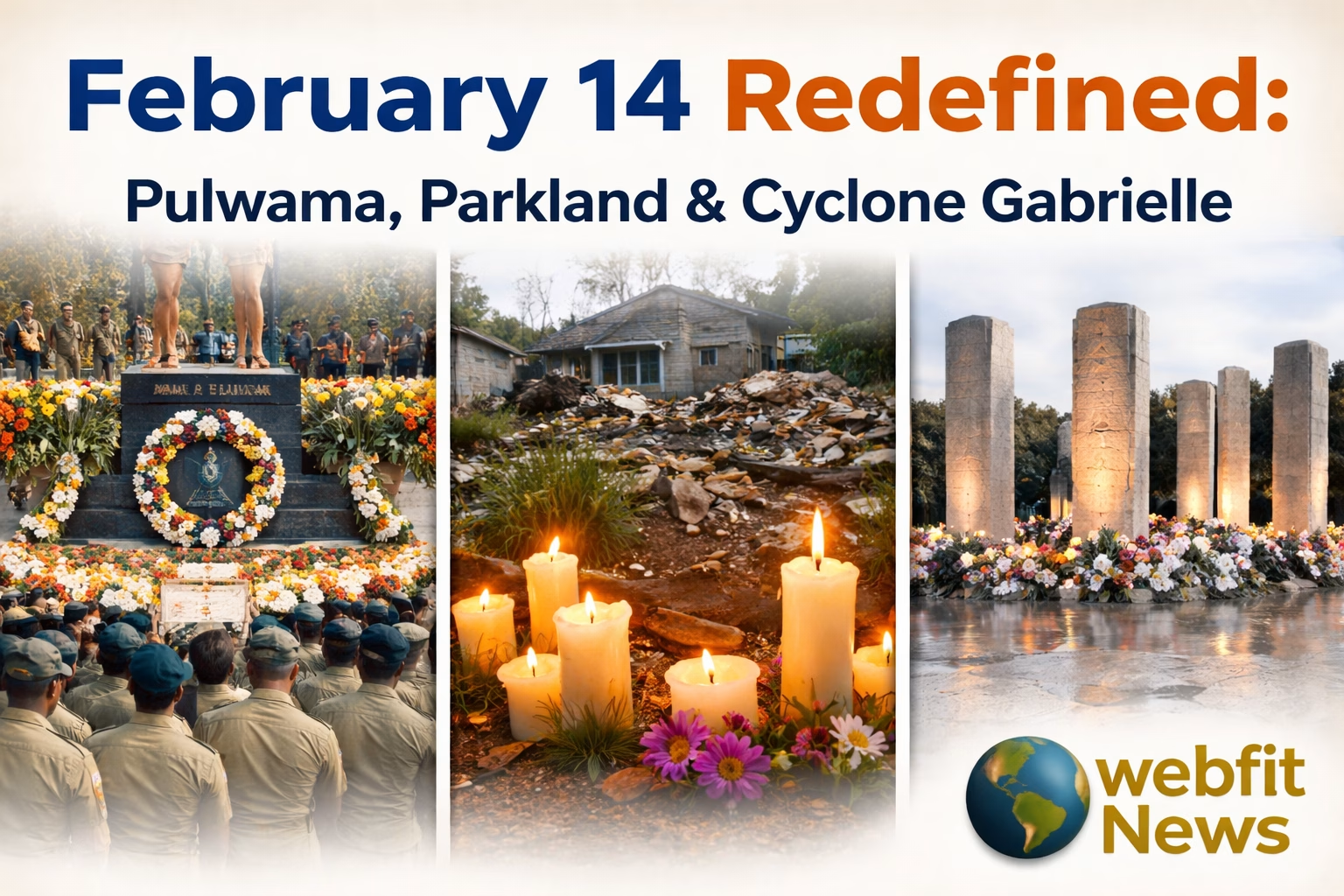
February 14 is known globally as Valentine’s Day. Flowers are sold. Restaurants fill up. Social media celebrates love.
However, in 2026, that same date carries a different meaning for millions.
In India, it has been seven years since the Pulwama terror attack.
In the United States, it has been eight years since the Parkland school shooting.
In New Zealand, it has been three years since Cyclone Gabrielle changed entire communities forever.
Over time, February 14 has evolved. It no longer represents only romance. It now represents remembrance, resilience, and national reflection.
Pulwama: A Turning Point in Indian Security
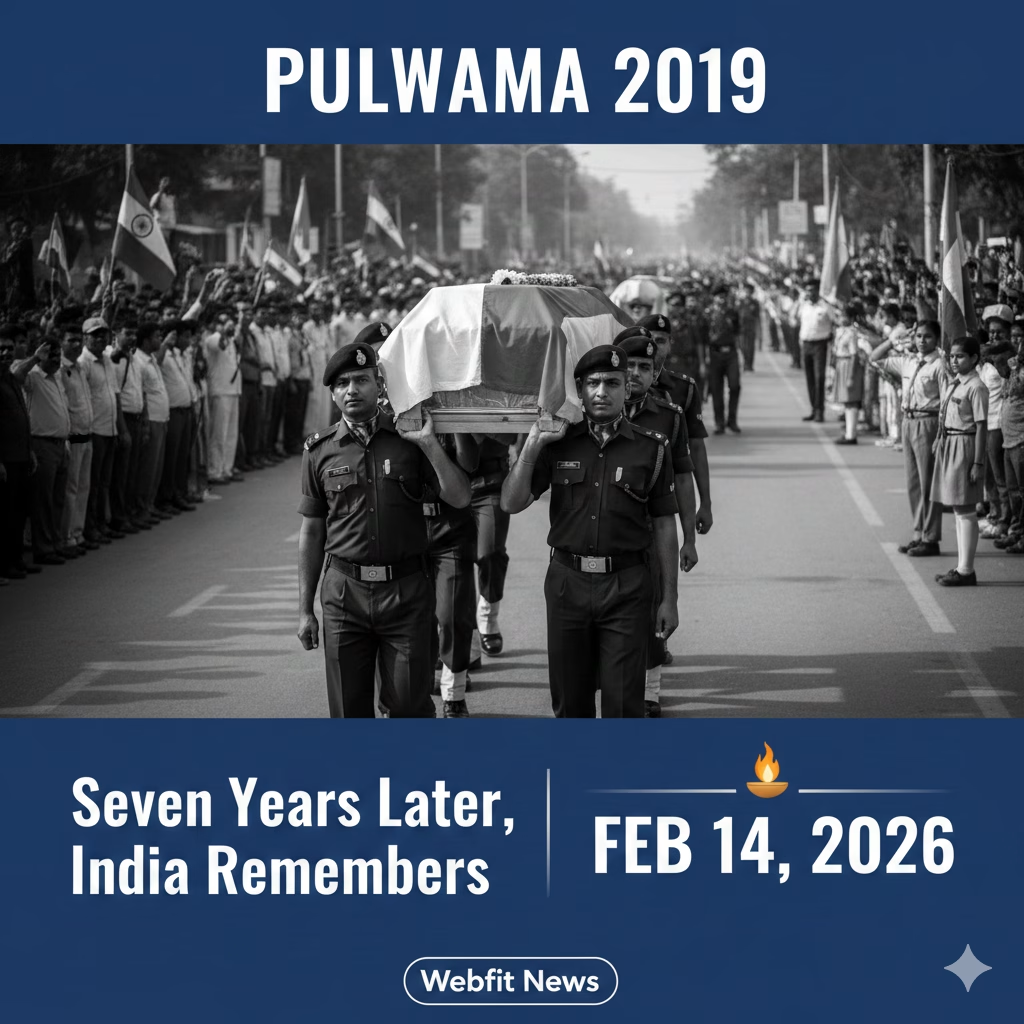
On February 14, 2019, a suicide bomber targeted a convoy of the Central Reserve Police Force in Pulwama, Jammu and Kashmir. Forty CRPF personnel lost their lives.
Investigators later confirmed that the attacker used a vehicle-borne improvised explosive device packed with high-grade explosives. The attack shocked the nation and triggered one of the most serious escalations between India and Pakistan in recent history.
In response, India carried out airstrikes in Balakot on February 26, 2019. That decision marked a strategic shift. Instead of restraint, the government adopted a doctrine of proactive deterrence.
Seven years later, the memory remains strong.
Prime Minister Narendra Modi led tributes in 2026 and reaffirmed the nation’s commitment to fight terrorism. Opposition leaders also paid respects, showing rare political unity.
Across India, citizens gathered at memorials. Schools observed moments of silence. Social media filled with tributes.
Importantly, Pulwama moved from a painful event into cultural memory. It now shapes national security debates, defense spending decisions, and diplomatic posture.
Webfit News Perspective
At Webfit News, we believe remembrance must include reflection. Honoring sacrifice means evaluating preparedness, intelligence coordination, and long-term regional strategy. True patriotism demands clarity, not just emotion.
Indian Diaspora in New Zealand: Memory Across Borders
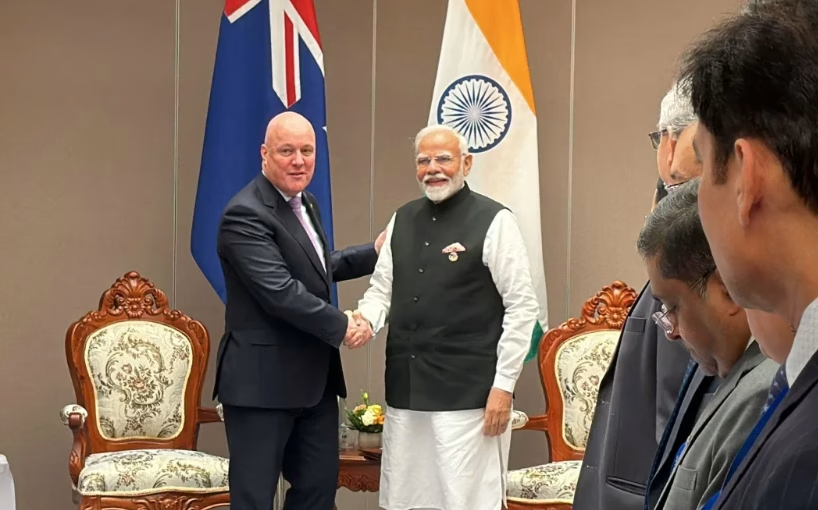
Indian communities in Auckland, Wellington, and Christchurch also marked the anniversary.
Candlelight vigils, youth discussions, and community gatherings reflected a dual identity. Diaspora communities often balance loyalty to their homeland with integration into their adopted country.
At the same time, February 14 carries a distinctly local meaning in New Zealand.
Cyclone Gabrielle: Three Years of Recovery
In February 2023, Cyclone Gabrielle devastated Hawke’s Bay and Tairāwhiti. Eleven people died. Damages reached approximately NZ 14.5 billion.
Entire roads collapsed. Farmland disappeared under silt. Thousands lost homes.
Three years later, rebuilding continues.
On February 14, 2026, communities held remembrance services. Leaders spoke about resilience. Artists contributed to exhibitions reflecting survival and solidarity.
Unlike the rhetoric surrounding terrorism, New Zealand’s remembrance culture focuses on unity and compassion. The language centers on strength, community, and recovery.
That difference matters. It reflects national character.
Parkland: Grief Turned into Activism
On February 14, 2018, a gunman killed 17 people at Marjory Stoneman Douglas High School in Parkland, Florida.
Students did not remain silent. Instead, they organized. The March for Our Lives movement pushed gun reform into global conversation.
Eight years later, commemorations continue. Memorial construction progresses. Art therapy programs support survivors. Youth activism remains active.
In this case, remembrance evolved into political engagement. The anniversary does not simply mourn. It mobilizes.
Why February 14 Feels Different Now
Historically, February 14 has intersected with several major events across centuries. Yet today, digital platforms amplify anniversaries in real time.
Now, grief travels instantly.
Hashtags trend globally. Tributes cross borders. Memorial speeches reach millions within minutes.
As a result, cultural memory strengthens faster than in previous eras.
Sociologists explain this shift by distinguishing between communicative memory and cultural memory. Communicative memory fades as generations pass. Cultural memory, however, becomes institutionalized through monuments, textbooks, and annual rituals.
Pulwama, Parkland, and Cyclone Gabrielle now sit firmly within cultural memory.
Different Nations, Different Responses
India channels remembrance into national security resolve.
New Zealand channels it into community rebuilding.
Parkland channels it into civic activism.
Although the tragedies differ, each society uses February 14 to reinforce identity.
India emphasizes sovereignty and deterrence.
New Zealand emphasizes solidarity and resilience.
American youth activists emphasize reform and accountability.
These approaches reveal how collective trauma shapes national direction.
The Convergence of Memory
In 2026, February 14 represents more than a calendar date.
For some, it still means romance.
For others, it means reflection.
For many, it means honoring lives lost.
Importantly, remembrance does not weaken a nation. It can strengthen it.
When societies pause to reflect, they clarify values. When communities gather, they rebuild trust. When citizens demand accountability, they reinforce democracy.
Final Takeaway
The transformation of February 14 shows how collective memory evolves.
Pulwama reshaped the security doctrine.
Parkland reshaped youth activism.
Cyclone Gabrielle reshaped climate resilience planning in New Zealand.
Different tragedies. Different responses. One shared lesson.
Resilience defines modern nations more than celebration ever could.
And perhaps that is the deeper meaning February 14 now carries.