By Geet G | Webfit News
The 2026 Assam Assembly election was not just another state election. It became a political statement.
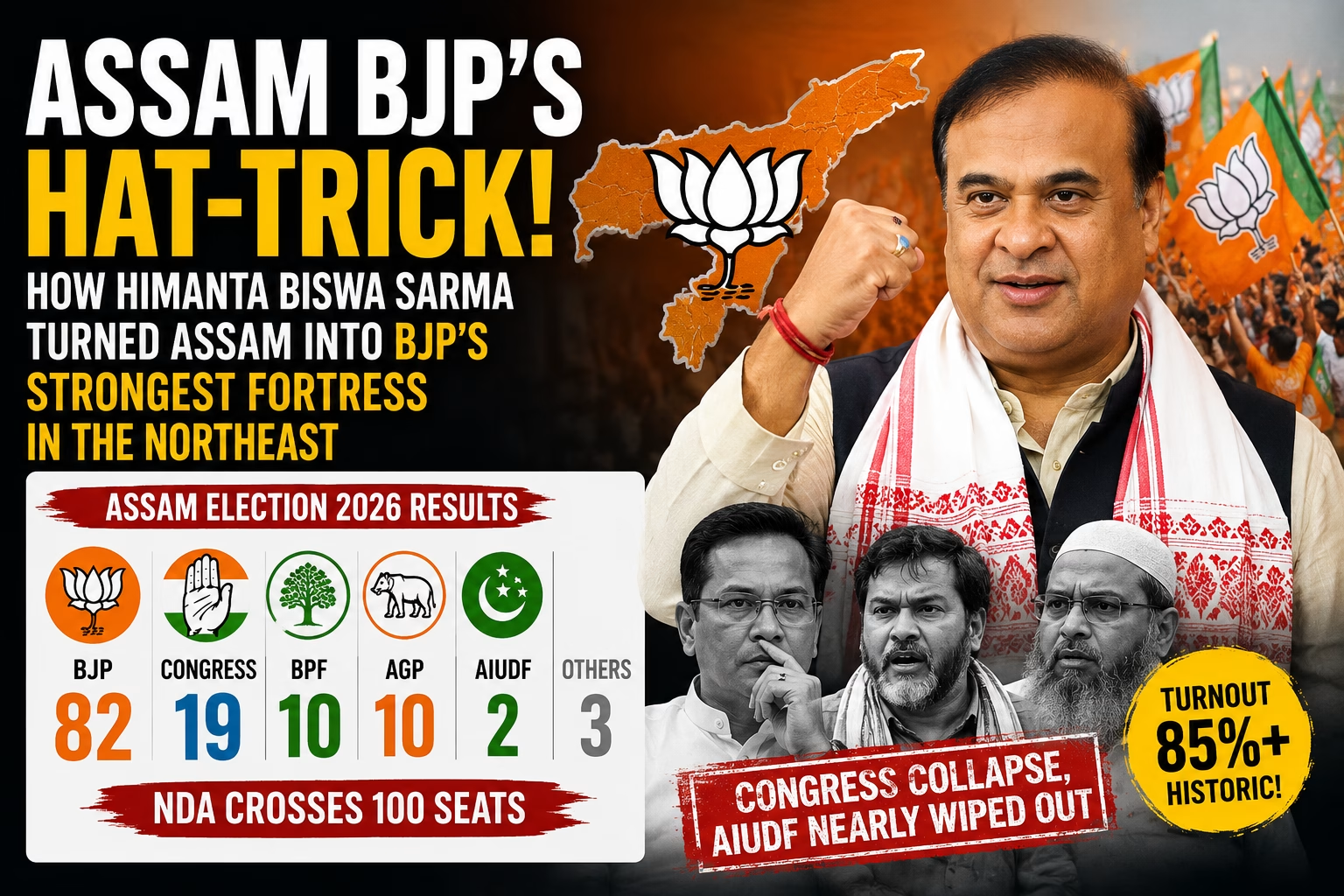
With 82 seats on its own and more than 100 seats together with allies, the BJP-led NDA has now secured a historic third consecutive term in Assam. For Chief Minister Himanta Biswa Sarma, this was more than victory. It was dominance.
The numbers tell a brutal story for the opposition.
Congress failed to cross even 20 seats. AIUDF nearly collapsed. Regional forces were squeezed. The NDA expanded across urban Assam, tea belt regions, tribal areas, and large sections of Upper Assam.
And perhaps the biggest signal of all: Assam recorded one of the highest voter turnouts in its history, crossing 85%.
This was not voter apathy. This was active endorsement.
Could National Lose Power in 2026 Despite Labour’s Collapse? – WebfitNews
Final Assam 2026 Results
Out of 126 Assembly seats:
| Party | Seats Won |
|---|---|
| BJP | 82 |
| INC (Congress) | 19 |
| BPF | 10 |
| AGP | 10 |
| AIUDF | 2 |
| RJD | 2 |
| AITC | 1 |
The NDA tally crossed 100 seats comfortably, giving the alliance a near two-thirds majority.
For comparison:
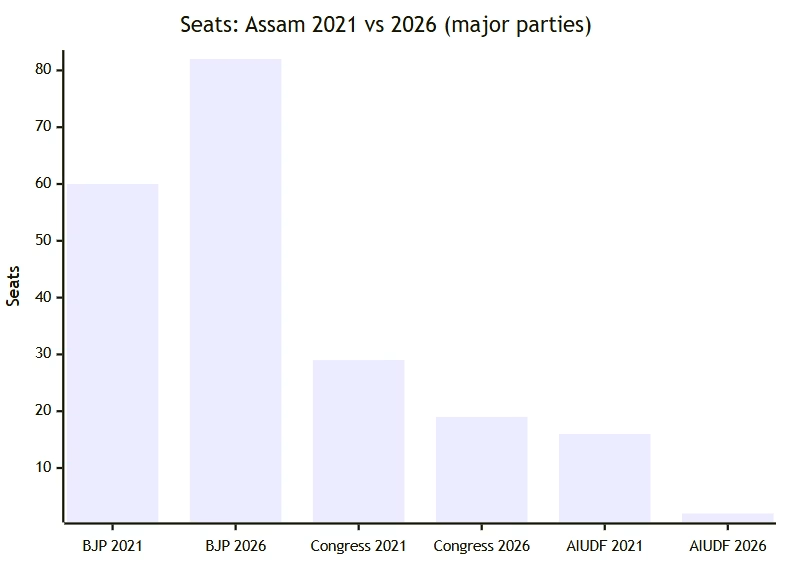
- BJP won 60 seats in 2021
- BJP won 82 seats in 2026
- Net gain: +22 seats
That is massive after already being in power for two terms.
Usually, anti-incumbency weakens governments in India. Assam did the opposite.
The Voter Turnout Changed Everything
One of the most important stories of this election was turnout.
Assam saw nearly 85-86% voter participation, among the highest in the state’s electoral history.
Female turnout reportedly crossed 86%, showing unusually high engagement from women voters.
That matters politically.
Because high turnout in India does not automatically mean anti-government anger. Sometimes it means strong voter mobilisation and emotional investment in leadership.
The BJP machinery understood this better than the opposition.
The party ran an extremely disciplined campaign focused on:
- Welfare delivery
- Roads and infrastructure
- Law and order
- Assamese identity
- Border and immigration politics
- Stability under Himanta Biswa Sarma
Congress, meanwhile, struggled to convert dissatisfaction over inflation and unemployment into a statewide emotional narrative.
That was the real failure.
| Party (Alliance) | Seats 2026 | Seats 2021 | Change | Vote % 2026 | Vote % 2021 | Swing |
|---|---|---|---|---|---|---|
| BJP (NDA) | 82 | 60 | +22 | 38.61% | 33.21% | +5.40 pp |
| Indian National Congress (ASM) | 19 | 29 | –10 | 29.24% | 29.67% | –0.43 pp |
| Asom Gana Parishad (NDA) | 11 | 9 | +2 | 6.47% | 7.91% | –1.44 pp |
| BPF (NDA) | 10 | 12 | –2 | 3.73% | 3.39% | +0.34 pp |
| AIUDF (Opposition) | 2 | 16 | –14 | 5.46% | 9.29% | –3.83 pp |
| NDA Total (BJP+AGP+BPF) | ~102 | ~75 | +27 | — | — | — |
| Opposition Total (inc. ASM) | ~21 | 50 | –29 | — | — | — |
Table: Assam 2026 vs 2021 – Seats, vote shares and changes (ECI data).
BJP’s Vote Share Growth Is the Bigger Story
The seat count alone does not fully explain what happened.
The vote share swing matters more.
| Party | Vote Share 2021 | Vote Share 2026 | Swing |
|---|---|---|---|
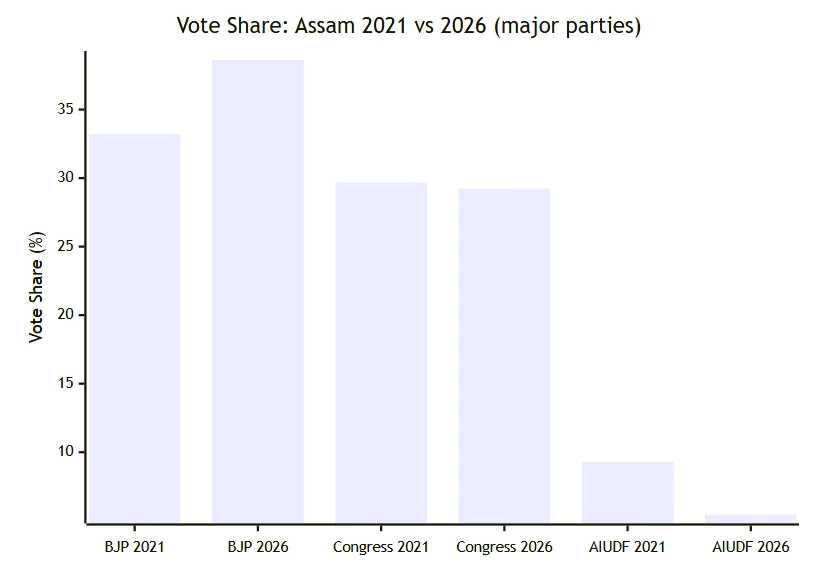
| BJP | 33.21% | 38.61% | +5.40% |
| Congress | 29.67% | 29.24% | -0.43% |
| AIUDF | 9.29% | 5.46% | -3.83% |
The BJP did not just benefit from opposition collapse.
It genuinely expanded its voter base.
A 5.4 percentage point increase for a ruling party after two terms is politically significant.
Congress vote share remained almost flat, which is actually bad news for Congress. Why?
Because BJP surged while Congress stayed stuck.
In politics, standing still while your opponent grows is effectively decline.
AIUDF’s Collapse Completely Changed Assam Politics
One of the biggest shocks was the destruction of AIUDF.
In 2021:
- AIUDF won 16 seats
In 2026:
- AIUDF won only 2 seats
This collapse reshaped Muslim-majority constituencies across Lower Assam and Barak Valley.
The opposition vote fragmented.
Some Muslim voters shifted tactically toward Congress. Others stayed home. Some local dynamics helped NDA allies indirectly.
But the bigger political truth is uncomfortable for Congress.
Even after AIUDF weakened massively, Congress still failed to capitalise enough statewide.
That suggests the anti-BJP coalition lacked coherence beyond arithmetic.
And arithmetic alone rarely wins Indian elections anymore.
Himanta Biswa Sarma Became the Central Story
This election became highly presidential in style.
Instead of BJP versus Congress, it increasingly became:
“Himanta versus the rest.”
The BJP projected Himanta Biswa Sarma as a decisive administrator who could deliver both development and strong governance.
Supporters credit him for:
- Faster infrastructure execution
- Aggressive policing
- Flood response visibility
- Expansion of welfare schemes
- Strong media communication
- Political clarity
Critics accuse him of:
- Polarising politics
- Identity-driven campaigning
- Excessive centralisation of power
But elections are about voter perception.
And the perception clearly favoured him.
Winning a third term with a bigger mandate than before is not luck. It reflects political consolidation.
Urban Assam Fully Shifted Toward BJP
The BJP dominated urban constituencies, especially Guwahati.
All major Guwahati city seats reportedly stayed with the BJP-led alliance.
This matters because urban voters are often more volatile and issue-driven.
The BJP retained support despite:
- Inflation pressures
- Rising costs
- Youth job frustrations
That indicates voters may have prioritised governance stability over economic dissatisfaction.
Congress failed to build a strong urban counter-narrative.
Tea Garden Communities Played a Huge Role
Tea garden workers and associated communities remain electorally crucial in Assam.
The BJP has spent years building networks inside these belts through:
- Welfare targeting
- Identity outreach
- Organisational expansion
- Women-focused schemes
That long-term strategy continued paying dividends in 2026.
Congress once dominated these regions historically. That old advantage has largely disappeared.
Major Political Casualties
Several high-profile defeats became symbolic.
Reports suggest:
- Congress leader Gaurav Gogoi lost in Jorhat
- Akhil Gogoi lost in Sivasagar
- Veteran AIUDF-linked figures were defeated in key Muslim-majority zones
Meanwhile, BJP allies held critical Bodo-region influence areas.
The BPF’s 10 seats ensured the NDA maintained deep tribal-region penetration.
That alliance management was strategically important.
Why Congress Could Not Recover
Congress made a classic opposition mistake.
It assumed dissatisfaction would automatically convert into votes.
But modern Indian elections increasingly require:
- Narrative control
- Ground mobilisation
- Strong leadership projection
- Welfare credibility
- Digital messaging
- Emotional voter connection
The BJP machine delivered all of those.
Congress largely campaigned reactively.
And reactive politics rarely defeats a highly organised ruling structure.
The Webfit News Perspective
Assam’s 2026 election was not simply a BJP win. It was evidence that the Northeast has structurally changed politically.
For decades, the Congress ecosystem dominated much of the region through legacy networks and regional balancing. Today, the BJP has built its own durable ecosystem through alliances, welfare politics, identity positioning, and aggressive organisation-building.
The dangerous assumption for the opposition is believing this result was temporary.
It may not be.
If a ruling party increases both seats and vote share after two terms, that signals something deeper than election-cycle momentum. It signals voter realignment.
Congress now faces a serious strategic question in Assam:
Should it rebuild around local Assamese identity politics, or continue relying mainly on anti-BJP positioning?
Because right now, anti-BJP politics alone is not enough to stop the BJP in Assam.