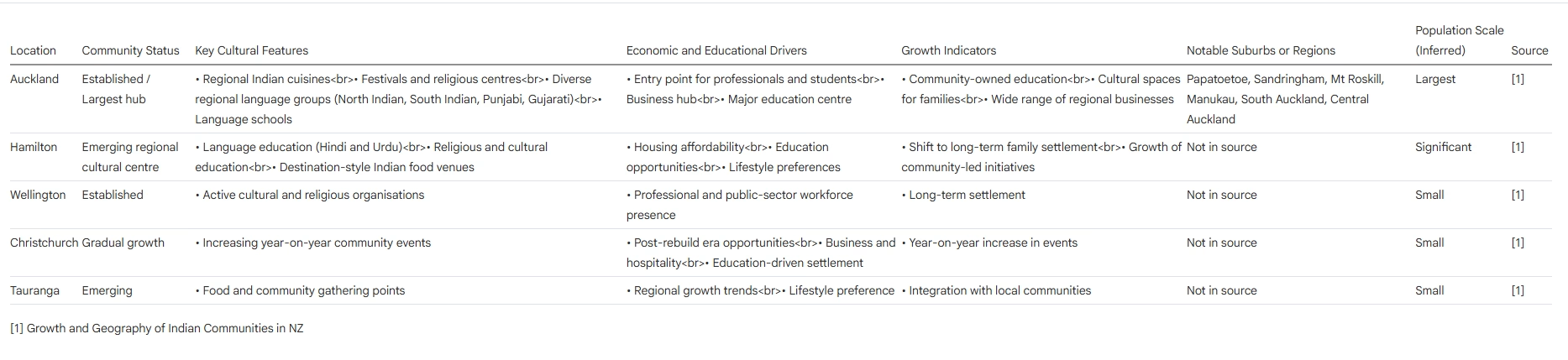
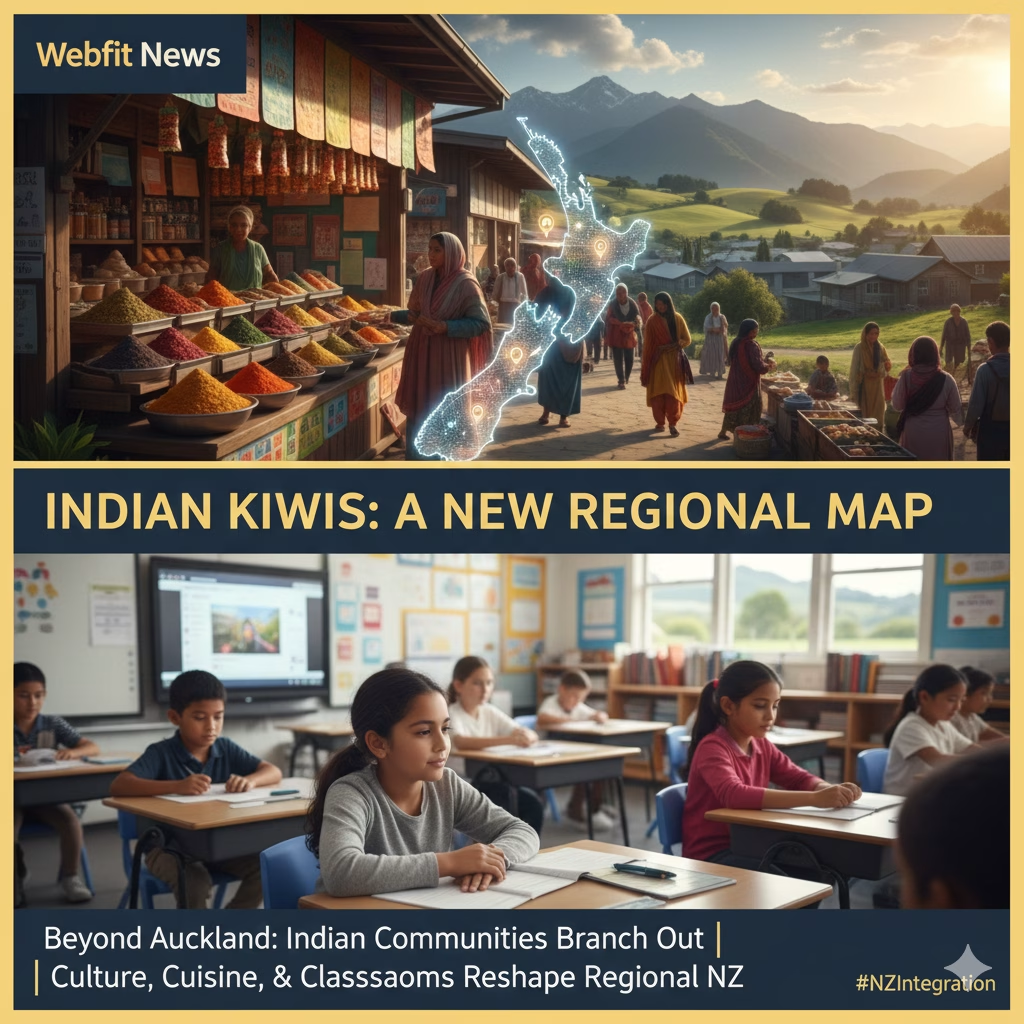
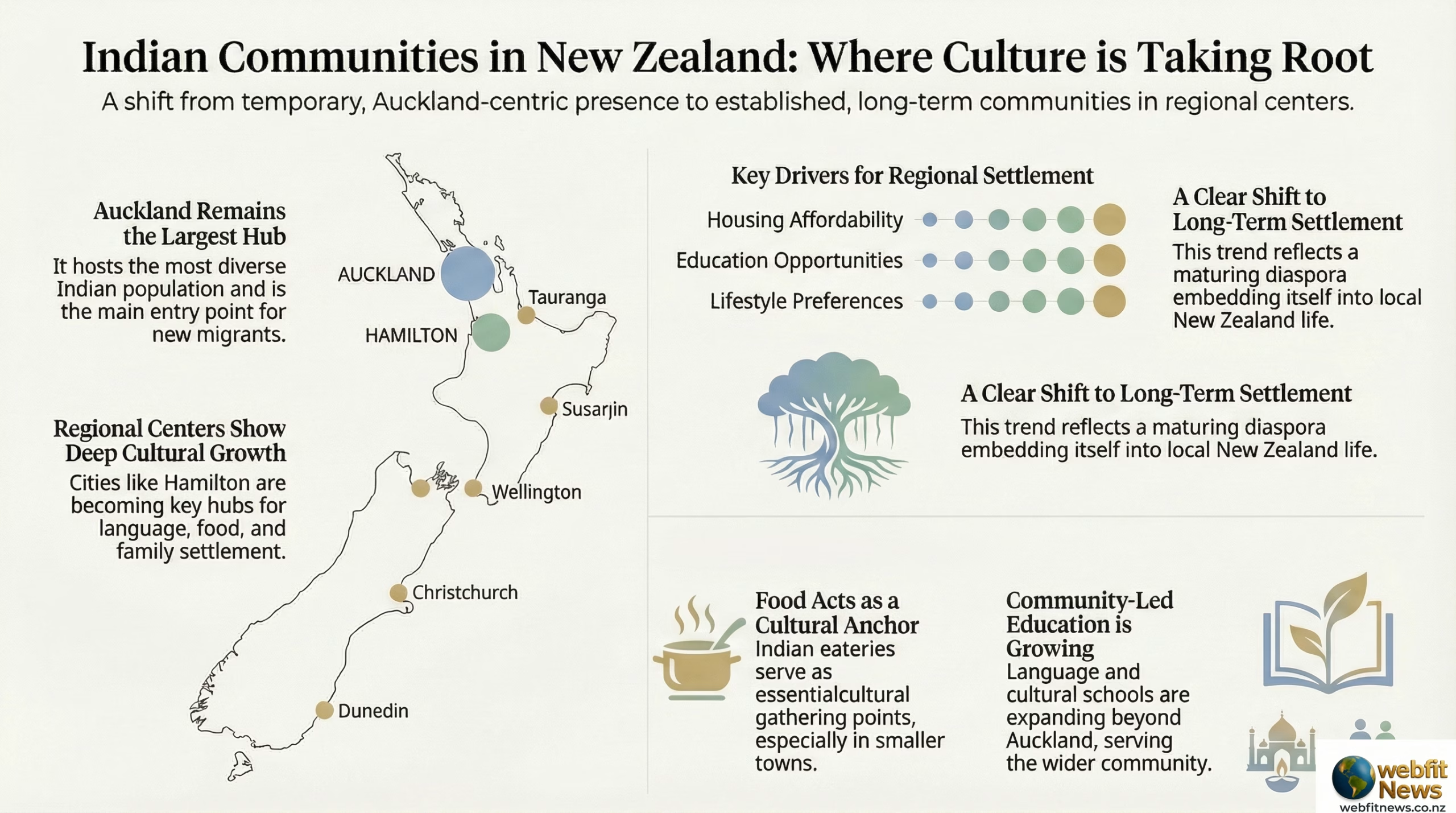
Indian communities have become an established and visible part of New Zealand’s social and cultural landscape. While Auckland remains the largest hub, several regional centres are emerging as important cultural anchors, offering language education, food traditions, and community-led initiatives that reflect deeper settlement rather than short-term migration.
Auckland Remains the Largest Centre
Auckland continues to host the largest Indian population in New Zealand, with strong community presence in suburbs such as Papatoetoe, Sandringham, Mt Roskill, and Manukau. These areas support Indian grocery stores, religious centres, cultural festivals, and a wide range of restaurants offering regional Indian cuisines.
Auckland’s size allows for diversity within the Indian community itself, including North Indian, South Indian, Punjabi, Gujarati, and regional language groups. It also serves as the main entry point for new migrants, students, and professionals.
Hamilton’s Quiet Cultural Growth
Hamilton has steadily developed into a significant regional centre for Indian culture, despite having a much smaller population than Auckland. What stands out is not scale, but depth.
Community-led initiatives in Hamilton include language education in Hindi and Urdu, as well as religious and cultural education, and informal learning environments that foster cross-cultural understanding. These initiatives often serve not only Indian families but also New Zealanders interested in South Asian languages, religions, and traditions.
Hamilton also reflects a broader trend of Indian communities settling beyond major cities, driven by factors such as affordability, educational opportunities, and lifestyle preferences.
Food as a Cultural Anchor
Across New Zealand, food plays a central role in how Indian communities maintain cultural connections. Outside major cities, authentic Indian-style eateries are fewer, making those that exist important gathering points.
Highway-side restaurants, family-run kitchens, and destination-style Indian eateries in regional towns often attract visitors from surrounding areas. These locations serve as cultural touchpoints for Indian families who may otherwise lack access to familiar food, spices, and dining traditions.
For many migrants, food becomes a key link to home, particularly when traditional home-style cooking differs significantly from mainstream restaurant offerings.
Language and Cultural Education Beyond the Home
Language retention is a growing focus within Indian communities, particularly among second-generation families. Community-run language schools teaching Hindi, Urdu, and related subjects are appearing in regional centres as well as major cities.
These schools often go beyond language instruction, offering broader education on religion, history, and cultural practices. Importantly, they also attract non-Indian learners, contributing to wider cultural literacy and mutual understanding within New Zealand society.
A Shift From Temporary to Settled Communities
The patterns emerging across Auckland, Hamilton, and other centres suggest a shift from temporary migration toward long-term settlement. Indicators include:
- Community-owned education initiatives
- Cultural spaces designed for families and children
- Regional spread beyond Auckland
- Integration with local communities rather than isolation
This reflects a maturing diaspora that is embedding itself into local life while retaining cultural identity.
What This Means for New Zealand
From a Kiwi perspective, these developments represent a familiar New Zealand story: communities forming organically, contributing economically, and enriching cultural diversity without dramatic disruption.
As Indian communities continue to spread into regional centres, the focus appears less on visibility and more on sustainability. Education, food, language, and cultural continuity are becoming defining features of settlement patterns.
The growth is gradual, localised, and largely community-driven, aligning with New Zealand’s broader multicultural evolution rather than challenging it.