WELLINGTON, 6 August 2026
Two years after New Zealand’s landmark Royal Commission of Inquiry into Abuse in Care delivered its final report, the Human Rights Commission is calling on every political party to commit to fully implementing all 233 recommendations, warning that survivors have already waited far too long for justice.
Launching its new #HonourThePromise campaign, Te Kāhui Tika Tangata Human Rights Commission says the recommendations represent the country’s best opportunity to transform care systems and ensure the abuse suffered by thousands of children, young people and vulnerable adults is never repeated.
The Commission is urging political leaders to place survivors at the centre of decision-making and make the Inquiry’s recommendations a national priority.
A painful chapter in New Zealand’s history
The Royal Commission of Inquiry into Abuse in Care was established in 2018 following years of advocacy by survivors, community organisations and the Human Rights Commission.
Its investigation examined decades of abuse experienced by people in state care and faith-based institutions between 1950 and 1999, although evidence also covered incidents outside those years.
The Commission heard from thousands of survivors who described physical abuse, sexual abuse, emotional abuse, neglect, racism, forced labour, medical mistreatment and institutional failures across children’s homes, psychiatric hospitals, foster care, disability facilities, youth justice institutions and religious organisations.
The final Whanaketia Report, released in July 2024, concluded that abuse in care had been widespread and systemic, affecting an estimated hundreds of thousands of New Zealanders over several decades.
The report made 233 recommendations covering redress, accountability, oversight, survivor support, education, record keeping, legislation and reforms to prevent future abuse.
Human Rights Commission renews campaign
The Human Rights Commission says those recommendations should now move beyond reports and promises into practical action.
Human Rights Commission Chief Executive Meg de Ronde said survivors had already waited too long.
“Many survivors have waited too long for justice. The recommendations provide a clear and achievable package for redress, and how we ensure such abuse does not happen again.”
She described the Inquiry’s findings as a roadmap for transforming New Zealand’s care system.
“The findings represent a clear roadmap for how we can transform our care system and lay the foundations for a thriving Aotearoa.”
The Commission originally launched its E Kore Āno (Never Again) campaign in 2017, calling for a Royal Commission of Inquiry into Abuse in Care.
That campaign, supported by survivors across New Zealand, ultimately contributed to the establishment of the Royal Commission the following year.
Now, with the inquiry complete, the Commission has shifted its focus towards ensuring its recommendations are fully implemented.
Symbolic tribute at Parliament
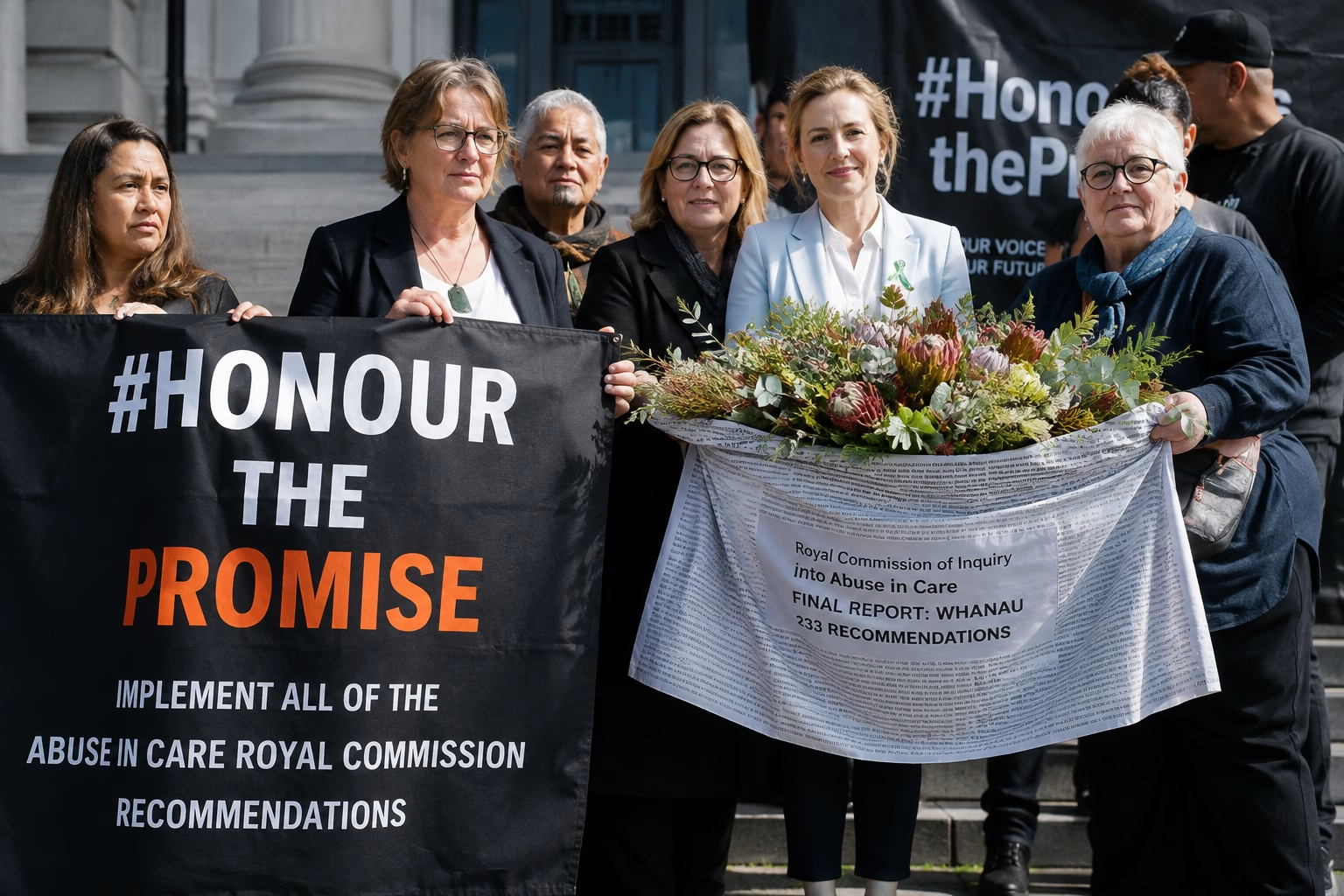
To launch the new campaign, survivors joined Human Rights Commission representatives outside Parliament in a symbolic act of remembrance and hope.
Chief Executive Meg de Ronde, together with survivors, supporters, whānau and mana whenua, presented a bouquet of flowers to Lead Coordination Minister Erica Stanford and other Members of Parliament.
The arrangement carried deep symbolic meaning.
Flowers and foliage had been collected from former sites associated with abuse, including:
- Ōwairaka Boys’ Home
- Porirua Psychiatric Hospital
- Marylands School in Christchurch
The bouquet was wrapped in cloth printed with all 233 recommendations from the Royal Commission.
According to the Commission, the arrangement represented the lives, experiences, resilience and hope of survivors, while reminding political leaders of their responsibility to deliver meaningful change.
The presentation took place ahead of the second anniversary of the Whanaketia Report.
What is the #HonourThePromise campaign?
The Human Rights Commission says the new campaign is designed to keep public attention focused on implementing the Inquiry’s recommendations rather than allowing momentum to fade.
The campaign encourages New Zealanders to support survivors and remind decision-makers that the recommendations should not remain simply words on paper.
Through public awareness, community engagement and social media, the Commission hopes to build nationwide support for completing the reforms.
The campaign’s central message is straightforward: promises made to survivors must now be honoured.
Why implementation matters
While the Royal Commission has completed its work, many recommendations still require legislative changes, policy reforms, funding decisions and coordination across multiple government agencies.
Several recommendations involve:
| Area | Purpose |
|---|---|
| Survivor redress | Improving compensation, apologies and recognition |
| Care system reform | Creating safer care environments |
| Independent oversight | Monitoring institutions and preventing abuse |
| Record access | Helping survivors obtain historical records |
| Accountability | Ensuring agencies accept responsibility |
| Education and training | Preventing future abuse through improved practice |
The Commission argues that delaying implementation risks prolonging harm for survivors who have already waited decades to have their experiences acknowledged.
Survivors remain at the heart of the process
Meg de Ronde said the Human Rights Commission has a continuing responsibility to ensure survivors are not forgotten.
“The Commission has a long record of involvement with advocating for justice for survivors of abuse and we have a responsibility to ensure that their experiences and their hopes and aspirations for redress are not forgotten.”
She said the recommendations provide an opportunity to ensure abuse in care never happens again.
“Together, we must ensure these recommendations are implemented in full and that abuse in care never happens again.”
Looking ahead
As political parties prepare for future policy debates, the Human Rights Commission wants implementation of the Royal Commission’s recommendations to remain above party politics.
The Commission believes lasting reform will require commitment from successive governments rather than short-term responses.
For many survivors, the release of the Royal Commission’s report represented recognition after decades of silence.
The next challenge is ensuring that recognition leads to lasting change.
Two years after one of the most significant inquiries in New Zealand’s history, the Commission’s message is clear: the country has already identified what needs to change. The focus must now shift from promises to action.
Readers can learn more about the campaign and hear directly from survivors through the Honour the Promise initiative.