By Webfit News
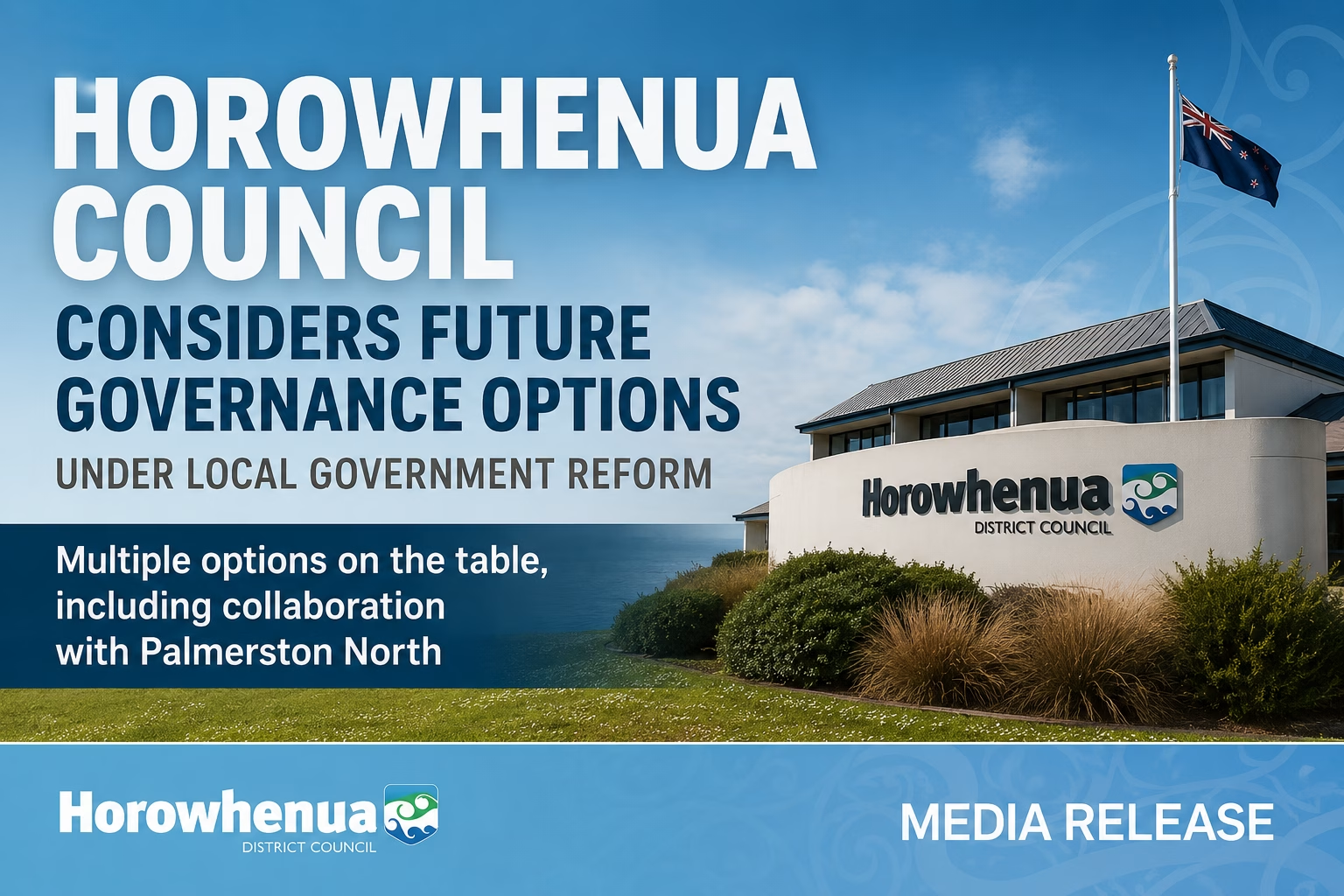
Horowhenua District Council is preparing to make one of its most important governance decisions in years as elected members consider how the district should respond to the Government’s Head Start pathway for local government reform.
Councillors are due to consider a detailed report on Wednesday, 5 August 2026, ahead of the Government’s 9 August deadline.
The report brings together months of independent analysis, community consultation and discussions with neighbouring councils. It presents several possible pathways for Horowhenua, including regional proposals, agreements involving councils within the Horizons area and locally developed options.
Mayor Bernie Wanden said the council had worked carefully within what he described as a compressed government timeframe.
“This is one of the most significant governance discussions our district has faced in many years,” Mayor Wanden said.
“We’ve invested in independent analysis, spoken with our communities, engaged with neighbouring councils and explored a range of options.”
What Is the Head Start Pathway?
The Government’s voluntary Head Start pathway allows councils to develop and submit their own proposals for future governance arrangements.
It comes before a compulsory Backstop process, which is expected to begin after the 2028 local elections.
The pathway gives councils an opportunity to influence the shape of future local government structures before the Government moves to a more directed reform process.
For Horowhenua, the decision is not simply about whether councils should work more closely together. It is also about which communities and regions the district should align with and how local representation, affordability and essential services would be protected.
Several Options Under Consideration
The council report includes a range of possible approaches.
These include:
• A Wellington regional proposal
• A memorandum of understanding developed by councils within the Horizons region
• Locally developed options based on technical analysis
• Possible closer cooperation with Palmerston North
• Future discussions involving neighbouring councils such as Kāpiti Coast, Rangitīkei, Manawatū and Tararua
One option attracting attention is a proactive approach involving Horowhenua and Palmerston North.
Under this approach, the two councils could signal a willingness to work together without immediately locking themselves into final governance arrangements.
Further analysis, engagement and planning would still be required before any permanent decisions were made.
Strong Connections to Both North and South
Mayor Wanden said Horowhenua’s location makes the district different from many others involved in the reform process.
“Our district sits in a unique position. We have strong and growing connections both north and south, and we need to make sure any proposal reflects how our communities actually live, work and travel,” he said.
Horowhenua residents have strong links with Palmerston North through employment, education, healthcare and transport.
At the same time, the district also has connections to Kāpiti Coast and the wider lower North Island.
This means the council must consider more than geographic boundaries. It must also assess the daily movement of people, services and economic activity.
Community Feedback Shapes the Debate
More than 600 residents participated in the council’s Future Fit Horowhenua community engagement process.
The feedback showed that many people are open to councils working more closely together, but only if important local protections remain in place.
The main concerns raised by residents included:
• Keeping council services affordable
• Protecting local representation
• Maintaining reliable essential services
• Ensuring Horowhenua’s identity is not lost
• Making decisions that reflect how residents use services across the region
The council’s independent analysis also examined the possible financial, social, cultural, economic and environmental effects of different reform options.
Mayor Wanden said residents expected the council to properly investigate the available choices.
“People expected us to genuinely explore the options rather than simply react to reform,” he said.
“We’ve tested assumptions, gathered evidence and listened carefully to our community so councillors can make their decision based on the best information available.”
Palmerston North Partnership Option
The possibility of closer cooperation between Horowhenua and Palmerston North could become a significant part of the council’s discussions.
Supporters of the idea may argue that the two areas already share important economic and social links.
Many Horowhenua residents travel to Palmerston North for work, tertiary education, specialist healthcare and major services.
A cooperative proposal could allow both councils to influence reform before the Government’s Backstop process begins.
However, any future arrangement would need to address questions about democratic representation, council debt, rates, service delivery and the protection of smaller communities.
The current proposal would not settle those questions immediately. Instead, it would create a platform for further work.
Keeping the Door Open to Other Councils
Mayor Wanden said the council does not want to limit future discussions to only one neighbouring authority.
“The intention isn’t to close doors. It’s the opposite,” he said.
“We want to create space for neighbouring councils to join conversations as regional arrangements continue to evolve, while ensuring Horowhenua remains well positioned regardless of the path reform ultimately takes.”
This could allow councils such as Kāpiti Coast, Rangitīkei, Manawatū and Tararua to participate later if they decide closer regional cooperation is in their communities’ interests.
That flexibility may be important because councils across the lower North Island are still developing their own responses to the Government’s reform programme.
What Happens Next?
Horowhenua District Council will consider the report at its meeting on Wednesday, 5 August 2026.
The timing is important because the Head Start pathway deadline falls on 9 August.
Should the council support progressing a proposal, that would not result in an immediate amalgamation or permanent governance change.
Further work would still be required before a formal submission was made to the Government.
The Head Start process includes:
• More detailed design work
• Further public engagement
• Discussions between participating councils
• Government assessment
• Consideration of financial and service implications
Final decisions would only be made after those stages were completed.
A Major Decision for Horowhenua
The debate places Horowhenua at an important crossroads.
Councillors must decide whether the district should support a regional proposal, pursue a closer relationship with Palmerston North, align with councils in the Horizons area or keep several options open.
Whatever decision is made, the central challenge will be balancing regional cooperation with local control.
Residents have shown they are willing to consider change, but they want clear evidence that any new structure would protect affordability, representation and essential services.
The council meeting will therefore be about more than administrative reform. It will be about who makes local decisions, how communities are represented and where Horowhenua sees itself in the future.
Source: Horowhenua District Council media release, 3 August 2026.