AUCKLAND, 20 July 2026
Auckland audiences will be invited to look beyond familiar celebrations of food, music and dance when a new theatrical production explores the lesser-known experiences of early Indian migrants who made Aotearoa New Zealand their home.
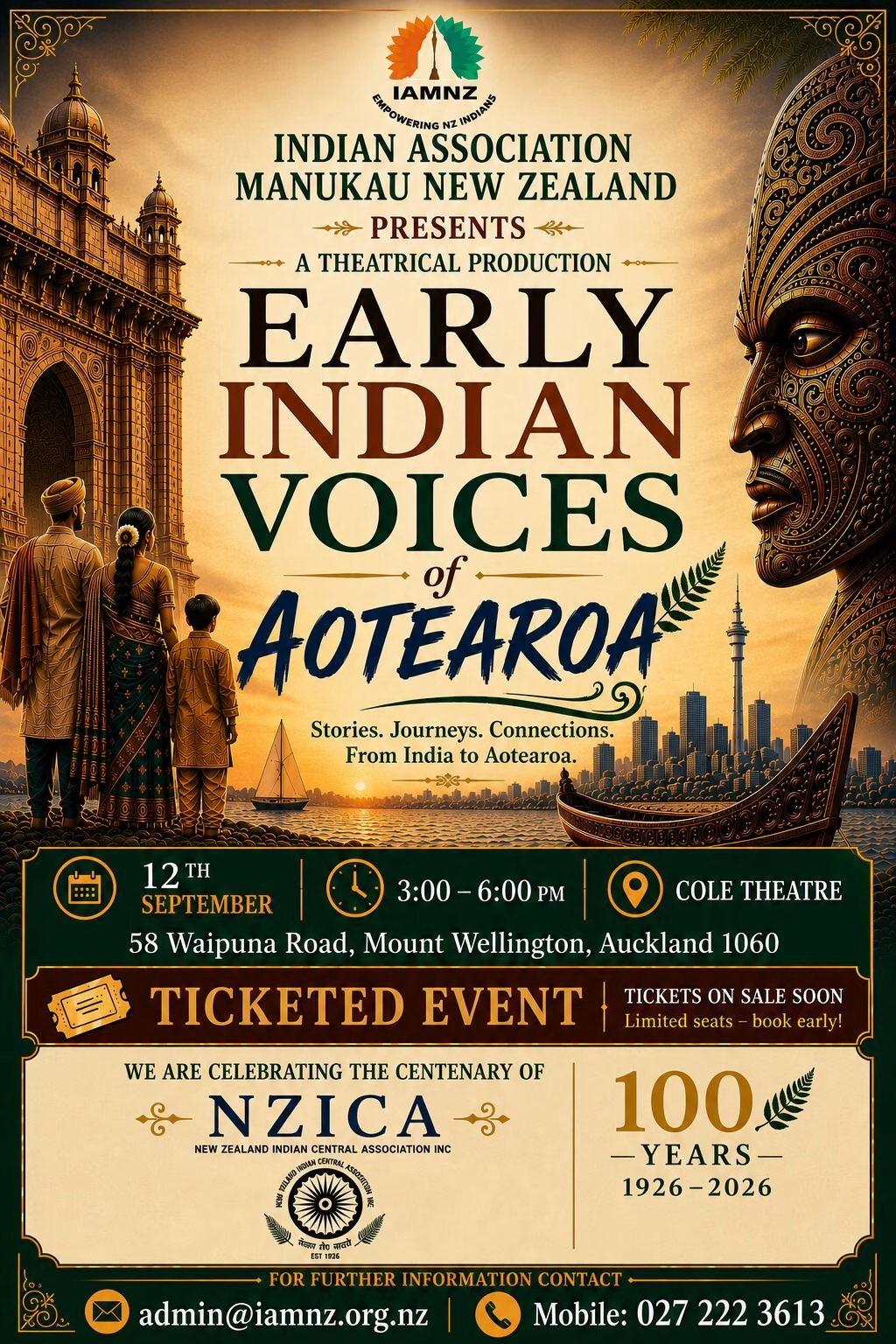
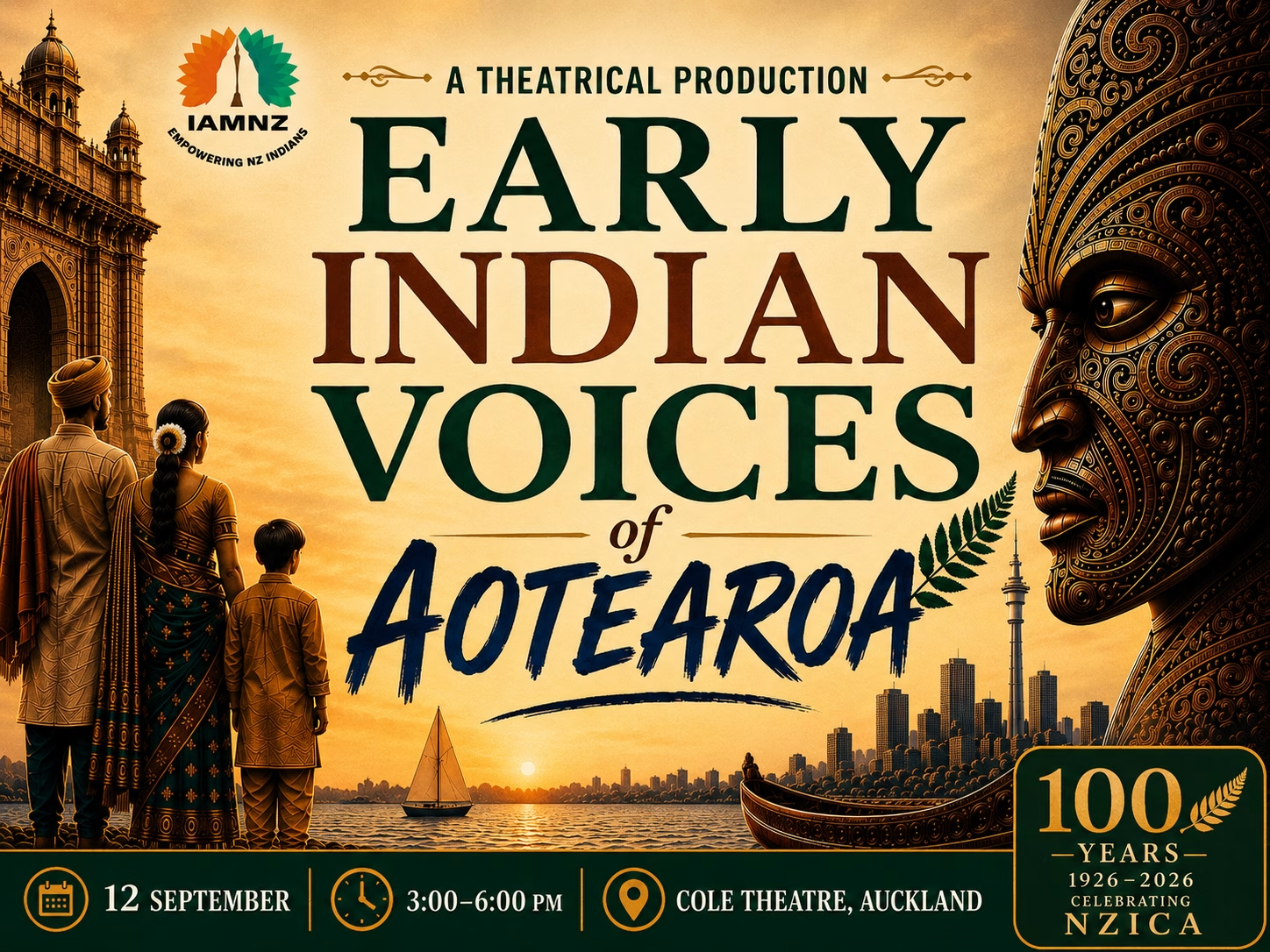
The Indian Association Manukau New Zealand, IAMNZ, will present Early Indian Voices of Aotearoa at the Cole Theatre in Mount Wellington on Saturday, 12 September 2026.
Rather than being promoted as another community entertainment programme, the production is being positioned as a historical and cultural journey. It will focus on the stories, struggles and connections that shaped the early Indian presence in New Zealand and contributed to the community that exists today.
The central message featured in the event promotion is:
“Stories. Journeys. Connections. From India to Aotearoa.”
Bringing overlooked history to the stage
The history of Indians in New Zealand stretches much further back than the recent growth of Indian communities across Auckland and other parts of the country.
According to Te Ara, the Encyclopedia of New Zealand, more consistent Indian migration began during the 1890s. By 1896, there were 46 Indians recorded in New Zealand. That number had increased to 181 by 1916, including only 14 women. Many of these early migrants came from the Navsari and Surat areas of Gujarat, as well as Jalandhar and Hoshiarpur in Punjab.
Some arrived directly from India, while others travelled through Fiji, where large numbers of Indians had been taken during the British colonial period to work under the indentured labour system.
Early Indian migrants often came as temporary workers, intending to earn money before returning home. Over time, however, many established families, businesses and permanent connections with New Zealand.
Their working lives were rarely easy. Indians found employment in farming, scrub cutting, market gardening, road construction and other physically demanding occupations. Some later became fruit and vegetable sellers, travelling merchants and small shopkeepers.
The story of Punjabi migrant Genda Singh provides one example. Te Ara records that he worked as a scrub cutter and farm labourer in the Whanganui area before returning to India to marry. He continued travelling between India and New Zealand while supporting his family and building a long-term connection with the country.
These personal journeys sit behind the demographic figures. They involve separation from family, long sea voyages, uncertain legal status, racial prejudice and the challenge of preserving cultural identity while adapting to a new society.
More than a performance
Theatre offers an opportunity to turn historical information into a human experience.
Dates and population figures can explain when migration occurred, but they do not fully capture what it meant to leave India, arrive in an unfamiliar country and attempt to build a future with limited support.
Through performance and storytelling, Early Indian Voices of Aotearoa has the potential to explore the emotional reality behind those journeys. It can also help younger generations understand that the Indian community’s presence in New Zealand was not created overnight.
Today, Auckland is home to a large, visible and diverse Indian population. Indian New Zealanders contribute across business, healthcare, education, technology, public service, politics, sport and the arts. That progress rests partly on foundations established by earlier migrants whose names and experiences are not always included in mainstream accounts of New Zealand history.
The production therefore carries relevance beyond the Indian community. It contributes to a wider understanding of how modern Aotearoa was shaped by migration, cultural exchange and the determination of people from different backgrounds to belong.
Marking 100 years of NZICA
The event will also form part of celebrations recognising the centenary of the New Zealand Indian Central Association, NZICA, from 1926 to 2026.
NZICA describes itself as a national organisation uniting Indian communities since 1926. Its history reflects the need for regional Indian associations to work collectively, represent community concerns and respond to the discrimination experienced by early settlers.
The centenary is not simply an organisational anniversary. It represents 100 years of advocacy, cultural preservation, community service and participation in New Zealand society.
Regional organisations played a major part in this development. The Wellington Indian Association, for example, marked its own centenary in 2025, recognising generations of community members who faced challenges while building lives and institutions in New Zealand.
Presenting a historical theatrical production during NZICA’s centenary year gives the event added importance. It connects the achievements of the present with the sacrifices and organising efforts of earlier generations.
Event information
Early Indian Voices of Aotearoa will be held from 3 pm to 6 pm on Saturday, 12 September 2026.
The venue is:
Cole Theatre
Waipuna Hotel and Conference Centre
58 Waipuna Road
Mount Wellington
Auckland 1060
The programme is a ticketed event, with limited seating. The official poster states that tickets will go on sale soon. Physical ticket availability, pricing and collection details are expected to be announced by the organisers.
Members of the public seeking further information can contact IAMNZ at admin@iamnz.org.nz or call 027 222 3613.
Families are encouraged to attend together, particularly parents and grandparents who may recognise parts of their own migration experiences, and younger New Zealanders who want to better understand the journeys that came before them.
Early Indian Voices of Aotearoa is not simply looking back at history. It is recognising the people who lived it, the communities they built and the legacy they passed to the generations that followed.