Introduction
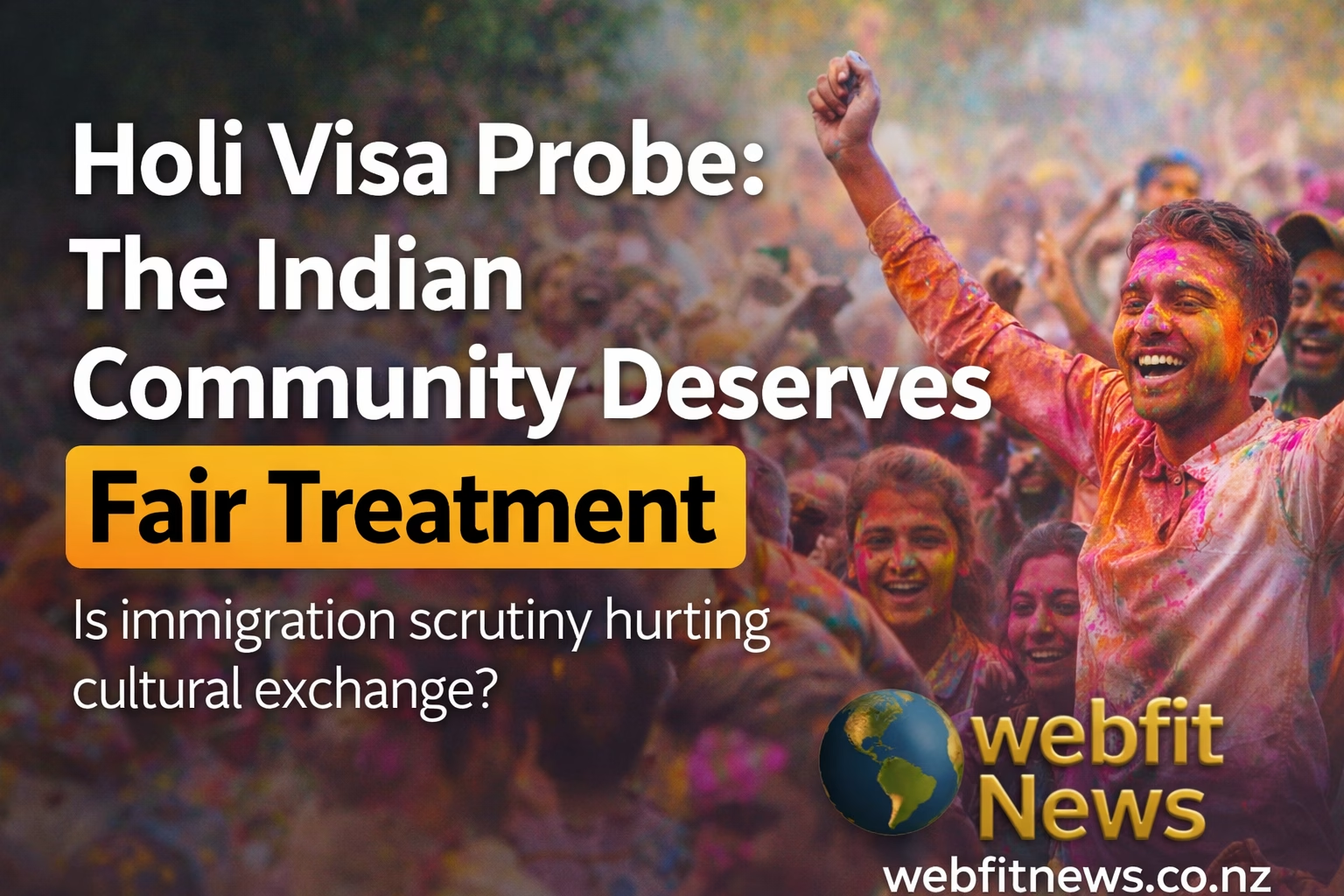
When a Holi celebration in Pukekohe turned into a full-scale immigration investigation, it did more than delay travel plans. It shook confidence inside New Zealand’s Indian diaspora.
The event, headlined by Bollywood singer Shibani Kashyap, was meant to celebrate colour, music and community. Instead, it became a case study in how cultural exchange can quickly collide with border risk management.
Immigration New Zealand examined 27 Indian nationals linked to the event. The results were mixed: some approvals, some declines, and a large number of Limited Visas issued under tighter conditions.
But here is the uncomfortable question that must be asked clearly:
Are cultural communities now paying the price for the actions of a few bad actors?
This article takes a structured look at what happened, what it means, and why the Indian side of this story matters.
| Nationality | 2021/22 Approved (Declined) | 2022/23 Approved (Declined) | 2023/24 Approved (Declined) | Trend Analysis |
| India | 31,019 (1,389) | 29,665 (1,588) | 38,455 (2,978) | Declines more than doubled as verification intensified. |
| China | 12,861 (826) | 26,041 (1,397) | 15,608 (1,061) | High decline rate relative to volume in 22/23. |
| Philippines | 17,594 (913) | 23,311 (830) | 19,242 (952) | Consistent decline rate indicative of steady R&V. |
| Vietnam | 1,241 (90) | 4,541 (376) | 3,657 (718) | Dramatic rise in declines (nearly 800% in 3 years). |
| Bangladesh | 618 (39) | 1,145 (44) | 1,066 (159) | Significant spike in declines in the most recent period. |
What Happened in the Pukekohe Case
Immigration authorities reviewed 27 visa applications connected to the Holi event.
Here is the outcome:
- 7 Standard Visitor Visas approved
- 13 Limited Visas granted under Section 83
- 4 applications declined
- 3 applications withdrawn
- 1 visa revoked after approval
That means nearly one third of the group did not enter under normal visitor conditions.
The use of Limited Visas is significant. These visas:
- Do not allow onshore visa changes
- Require departure by a specific date
- Offer limited appeal rights
From a regulatory perspective, this is risk mitigation.
From a community perspective, it feels like suspicion.
That distinction matters.
The Indian Community’s Position
| Feature of Limited Visa | Impact on the Holder | Risk Mitigation Strategy |
| No Onshore Applications | Holder cannot apply for any other visa while in NZ. | Prevents “visa-hopping” to stay in the country indefinitely. |
| Immediate Unlawfulness | Once the express purpose ends, the holder is immediately unlawful. | Simplifies the deportation process without the need for extensive appeals. |
| No Appeal Rights | Most limited visa decisions have no right of administrative appeal. | Reduces the judicial burden on the immigration system. |
| Mandatory Departure | Clear expectation of leaving by a specific date (e.g., “next Friday”). | Ensures the “performance group” remains a temporary visitor cohort. |
Let us be blunt.
The vast majority of Indian migrants in New Zealand are law-abiding, tax-paying, business-owning, contributing members of society. They run dairies, build homes, work in hospitals, drive innovation, and lead community groups.
When an isolated visa concern becomes a headline, it risks painting the entire community with the same brush.
That is not just unfair. It is dangerous.
Cultural performance groups are not immigration backdoors by default. They are artists, musicians, dancers, technicians and organisers who travel globally for legitimate work.
If a few individuals submitted questionable documents, that must be addressed. But accountability should be individual, not collective.
The Reality of Global Visa Fraud
| Year | Key Event / Sector | Specific Fraud Indicator | Regulatory Outcome |
| 2017 | Surge in Chinese Tourism | Rise in “unlicensed agents” providing false declarations. | Chinese entry refusals at Auckland Airport hit 55. |
| 2018 | Student Visa Expansion | Doubling of confirmed fraud in offshore student applications. | 88% increase in “misleading info” declines. |
| 2019 | Auckland Airport Crackdown | Professionalization of document forgery in the Chinese visitor market. | Refusals jump to 368 in nine months. |
| 2020 | Pandemic Lockdowns | Shift to “essential worker” fraud and identity theft. | Implementation of Epidemic Management Notices. |
| 2023 | AEWV Launch | “Wage recycling” and sale of job offers for $30k+. | Revocation of nearly 200 employer licenses. |
| 2024 | Sports & Cultural Groups | Use of “Limited Visas” for performance entourages (e.g., Holi). | Record numbers of “limited” status grants. |
| 2025 | #FightingVisaFraud Launch | Global coordinated Five-Eyes campaign against AI-driven scams. | Participation in International Fraud Awareness Week. |
Here is the truth that often gets lost.
Visa fraud is not an “Indian issue.” It is a global issue.
Across recent years, Immigration New Zealand has identified:
- Fraud in offshore student visa applications
- Fake job offers under the Accredited Employer Work Visa scheme
- Identity misuse cases involving multiple nationalities
- Organised “wage recycling” operations across sectors
Fraud networks operate across borders. They exploit hope.
The dream of working in New Zealand is powerful. Unscrupulous agents sell that dream at high prices. Many victims do not even realise their documents are manipulated.
So when authorities say “fraudulent documentation,” we must also ask:
Who created it?
Who profited from it?
Were the applicants victims of agents?
If enforcement focuses only on applicants but not on offshore agent networks, the root problem remains untouched.
The Shift from High-Trust to High-Scrutiny
| Outcome of Application | Number of Individuals | Context and Regulatory Mechanism |
| Standard Visitor Visas Approved | 7 | Granted to individuals meeting all bona fide requirements for a one-month stay. |
| Limited Visas Granted | 13 | Issued under Section 83 to mitigate specific risks; no right to apply for further visas. |
| Applications Declined | 4 | Identified fraudulent documents or failure to meet character standards. |
| Applications Withdrawn | 3 | Typically occurs following intensive R&V questioning or disclosure of verification plans. |
| Post-Grant Revocation | 1 | Prevented from traveling after “additional concerns” emerged post-visa issuance. |
| Total Group Size | 27 | Representing the full cohort of the Community Holi Celebration entourage. |
New Zealand once operated largely on a high-trust immigration model for short-term cultural and professional visits.
That model has clearly changed.
Now we see:
- Offshore verification teams
- Financial document cross-checking
- Live monitoring even after visa approval
- Strategic use of Limited Visas
From a government perspective, this is about protecting border integrity.
From a diaspora perspective, it feels like walking into every application already presumed suspicious.
This tension must be managed carefully.
If scrutiny becomes overcorrection, legitimate cultural exchange suffers.
The Risk to Cultural Diplomacy
Jacinda Ardern’s Move to Australia: Symbolic Exit or Strategic Reset? – WebfitNews
New Zealand promotes itself as a multicultural nation.
Holi festivals, Diwali celebrations, Pacific cultural weeks, and international performances are not just community events. They are soft diplomacy. They strengthen people-to-people ties.
When performance entourages face blanket restrictions, organisers become cautious. Insurance costs rise. Verification delays increase. Events become harder to plan.
Eventually, promoters may stop inviting international artists.
That is not good for New Zealand.
Cultural exchange builds trust. Excessive friction erodes it.
The solution is smarter risk-targeting, not broader suspicion.
The Economic Context
Let us also look at the numbers.
India remains one of New Zealand’s largest migrant-sending nations and an increasingly important trade partner. Negotiations toward a comprehensive free trade agreement continue at the diplomatic level.
At the same time:
- Indian students contribute billions to the education sector.
- Skilled Indian workers support healthcare, IT, construction, and retail.
- Indian-owned SMEs play a visible role in Auckland’s economy.
If visa narratives repeatedly highlight risk rather than contribution, the signal sent abroad becomes distorted.
Immigration integrity must be firm. But messaging must be balanced.
What the Indian Community Should Do Now
This is not the time for defensiveness. It is time for leadership.
Community organisers must:
- Use only licensed immigration advisers.
- Independently verify financial documents before submission.
- Avoid last-minute bulk applications for cultural events.
- Maintain transparent travel itineraries and funding sources.
Professionalism protects reputation.
If the community raises its own compliance standards, it reduces the room for fraud networks to operate.
The Webfit News Perspective
Webfit News believes two truths can exist at the same time.
First, Immigration New Zealand has a legitimate duty to prevent fraud.
Second, the Indian diaspora deserves to be treated as a valued partner, not a recurring risk category.
If enforcement becomes perception-driven rather than evidence-driven, trust breaks down.
The Holi case should become a learning moment, not a stigma marker.
Border integrity must be strong.
Cultural bridges must remain open.
Both are possible.
Conclusion
The Pukekohe Holi investigation is not just about 27 visa outcomes.
It is about how New Zealand balances security with openness.
It is about how communities respond to scrutiny.
And it is about whether isolated cases are allowed to define broader narratives.
If fraud networks are operating, dismantle them decisively.
But do not let cultural celebration become collateral damage.
New Zealand’s strength lies in its diversity. Protecting that strength requires precision, not panic.
References
- Immigration Act 2009, Section 83 Limited Visa provisions
- Immigration New Zealand’s public statements on Risk and Verification processes
- Ministry of Foreign Affairs and Trade updates on NZ–India trade negotiations
- Parliamentary data on Accredited Employer Work Visa compliance actions