On the evening of Wednesday, January 28, 2026, a routine bus journey in West Auckland turned violent.
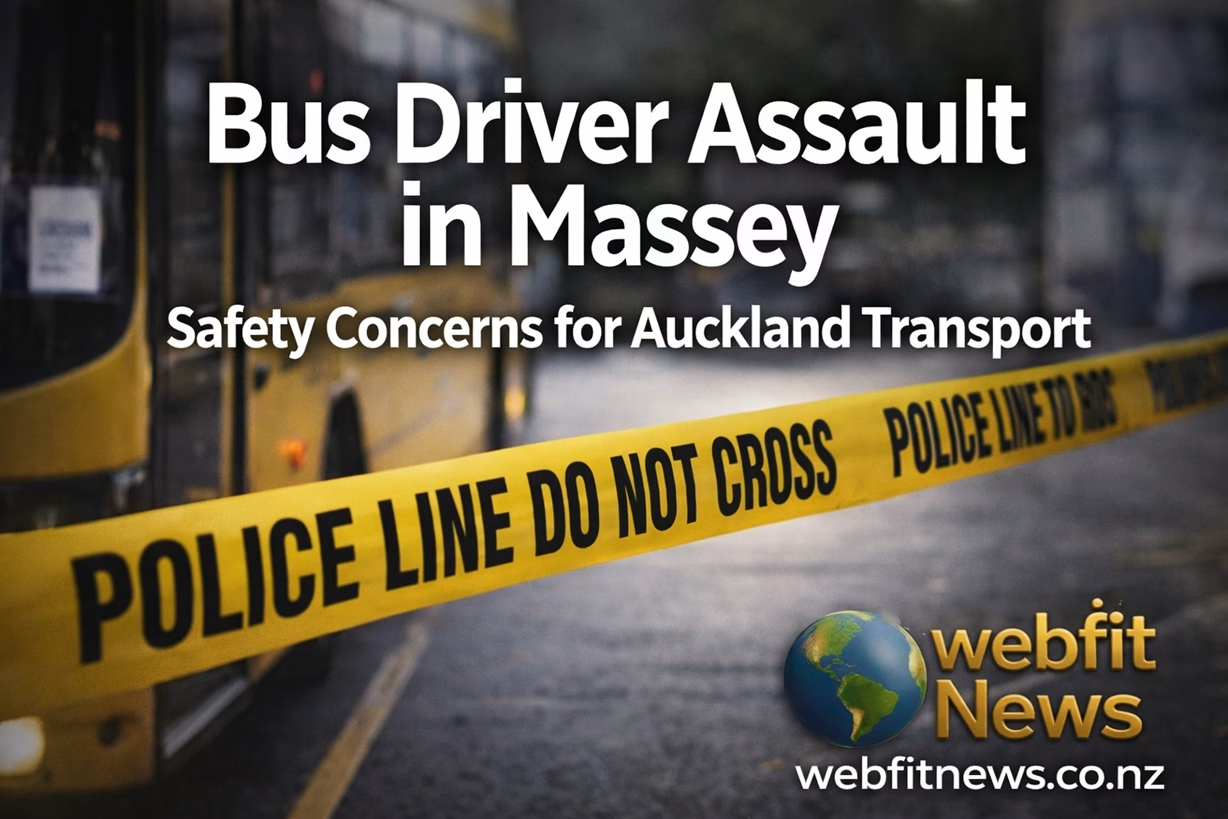
Around 7.00 pm, a bus driver was seriously assaulted on Colwill Road in Massey. Police later confirmed that a 14-year-old boy had been arrested and charged with wounding with intent to cause grievous bodily harm, assault, and possession of an offensive weapon. The driver was taken to hospital in a moderate condition.
The incident has become one of the most serious public transport assaults Auckland has seen this year. It has also reignited wider concerns about safety on buses, youth violence, and how well current protections are working for frontline transport staff.
What Happened in Massey
According to police, the teenage suspect fled the scene on foot after the assault. An overnight investigation led to his arrest the following morning. He appeared in the Waitākere Youth Court and is due to reappear on February 17.
Detective Senior Sergeant Ryan Bunting described the attack as a frightening ordeal for the driver and said police were treating the matter seriously due to the use of a weapon in an enclosed public space.
For bus drivers, the location of the incident matters. West Auckland routes often include long stretches where drivers work alone, sometimes at night, and sometimes far from immediate assistance. Colwill Road and nearby routes serve a mix of residential and semi-rural areas, making rapid intervention difficult.
Not an Isolated Incident
The Massey assault did not happen in isolation.
January 2026 has been a difficult month for Auckland’s public transport network. Within weeks, several violent incidents were reported across different suburbs:
- On January 13, a bus driver near Mt Eden Village was sprayed in the face with a fire extinguisher while driving. The attacker used the gap in a partially installed safety screen.
- On January 15, a passenger was attacked by a group in Onehunga during the afternoon.
- On January 17, two people were assaulted at a bus station in Ōrewa.
- In December 2025, two people were stabbed on a bus in Glen Innes, one fatally.
These events span the city, from central suburbs to the north and west, and involve both drivers and passengers.
What the Data Shows
Auckland Transport data helps explain why these incidents are raising alarm.
In 2025 alone, more than 2,100 incidents of aggression, violence, racism, or threatening behaviour were reported across buses, trains, and ferries. That averages close to six reported incidents per day.
March 2025 recorded the highest monthly total, while December saw fewer reports, likely due to lower holiday travel. Importantly, Auckland Transport says most of the 1.8 million weekly trips happen without incident, but the severity of recent attacks has shifted the conversation.
Driver assaults remain a particular concern. In 2024, there were 60 recorded physical assaults on drivers. In 2025, early data showed a slight drop, which transport officials partly attribute to the installation of protective screens.
However, safety reporting likely undercounts the problem. Surveys of transport workers show many experience verbal abuse regularly but only report incidents when they escalate.
The Safety Measures Being Rolled Out
In response, Auckland Transport, Auckland Council, NZTA, and central government have invested heavily in physical protections.
Around 650 buses already have driver safety screens installed. The goal is to reach about 1,100 buses, or 80 percent of the fleet, by July 2026. These screens are designed to fully separate drivers from passengers.
The Mt Eden fire extinguisher attack exposed the limits of partial screens, strengthening calls for full-length barriers with no gaps.
Other measures include:
- Expanded CCTV coverage, with live monitoring trials on selected buses
- Silent distress buttons that alert the transport operations centre
- Increased transport officer patrols, especially in the city centre
- Public reporting tools such as text alerts and the AT mobile app
These measures focus on deterrence and faster response rather than prevention.
The Human Impact on Drivers
Behind the statistics are people.
Bus drivers often work alone, manage fare disputes, and deal with antisocial behaviour as part of their daily routine. Unions representing drivers say repeated incidents take a psychological toll, even when injuries are minor.
Drivers are now advised not to challenge fare evaders, a policy intended to reduce confrontation. While this may lower risk, it also highlights how frontline authority has shifted in favour of personal safety.
Workplace injury data shows fewer incidents overall, but when injuries occur, they are more severe and more likely to lead to time off work.
Youth Offending and Wider Pressures
The Massey case also raises questions about youth offending.
While long-term youth crime rates have declined nationally, authorities acknowledge a smaller group of young offenders is involved in more frequent and violent incidents. Auckland accounts for a significant share of these cases.
Agencies such as Oranga Tamariki and Police are under pressure to balance rehabilitation with public safety, especially when serious violence occurs in public settings.
Looking Ahead to a Bigger Network
All of this is happening as Auckland prepares for the opening of the City Rail Link in mid-2026. The new system will carry more passengers through underground stations and central corridors than ever before.
Safety systems for the CRL include extensive CCTV, controlled access, and centralised emergency controls. The challenge will be ensuring that safety standards are consistent across both new rail infrastructure and existing bus routes in outer suburbs.
A Fragile Balance
The Massey bus assault has become a flashpoint because it sits at the intersection of several pressures: youth violence, frontline worker safety, public confidence, and a transport system in transition.
The response so far has focused on physical barriers and enforcement. Whether that will be enough to restore confidence, especially for drivers working alone on suburban routes, remains an open question.
As Auckland expands its transport network, the safety of those who operate it may prove just as critical as the infrastructure itself.