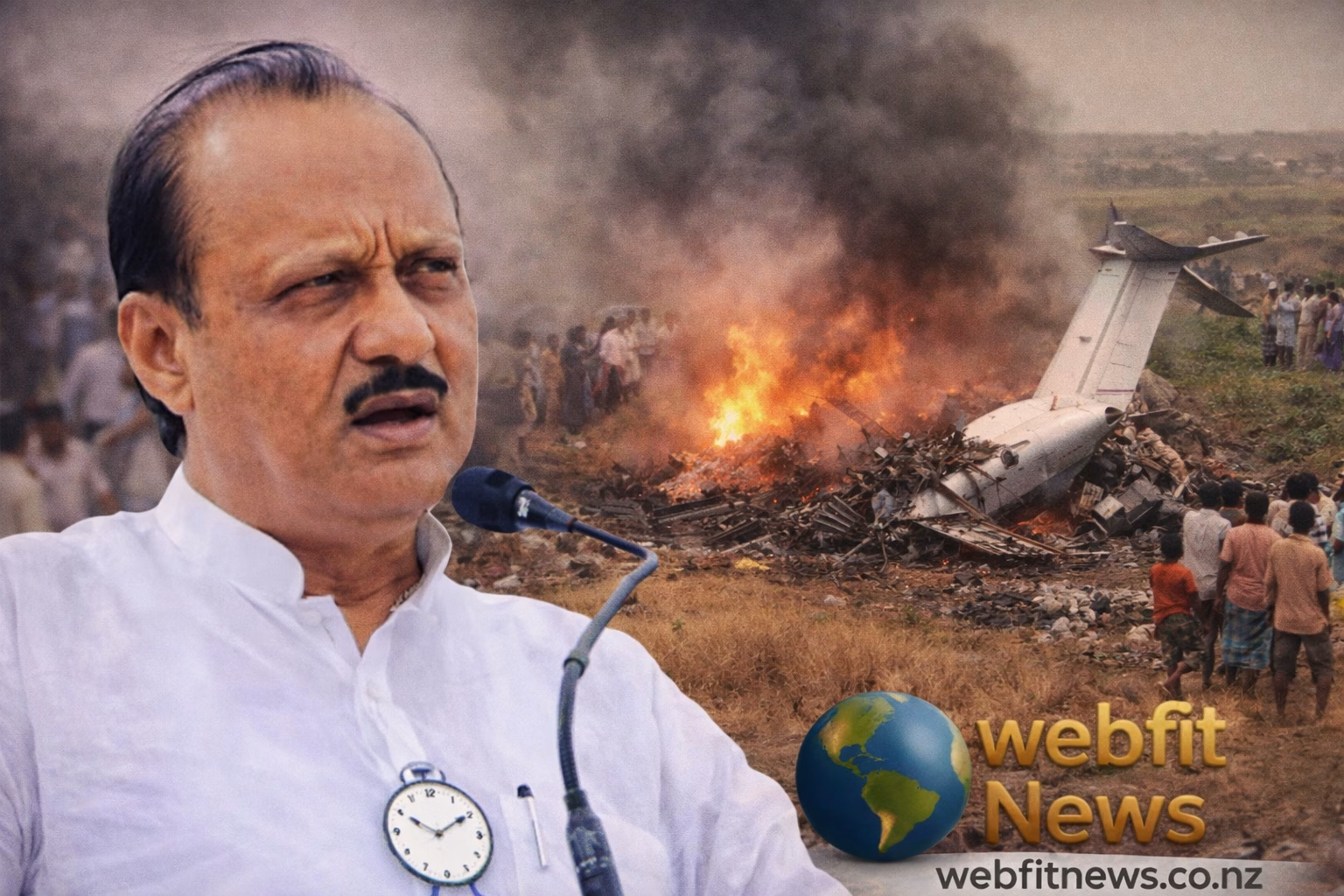
A chartered aircraft carrying Maharashtra Deputy Chief Minister Ajit Pawar crashed while attempting to land near Baramati on Wednesday morning, splitting into pieces and erupting in flames moments after impact. Visuals from the site showed thick black smoke, scattered debris, and papers strewn across nearby fields as emergency teams rushed to the scene.
Officials confirmed that Ajit Pawar was among those killed in the crash. The aircraft, which was approaching Baramati from Mumbai, reportedly encountered difficulties during landing. Videos circulating from the area showed fire engines, police personnel, and local residents witnessing the aftermath of one of the most devastating political tragedies Maharashtra has seen in recent years.
Baramati, Ajit Pawar’s political stronghold and the heart of the Pawar family legacy, has now become the site of a moment that could permanently alter the state’s political trajectory.
Baramati: From Power Centre to Political Tragedy
Baramati was not just a destination for Ajit Pawar. It was his base, his identity, and the foundation of his authority in Maharashtra politics.
For decades, the region symbolised the dominance of the Pawar family, first under Sharad Pawar and later under Ajit Pawar, who transformed Baramati into a model constituency with deep control over cooperatives, irrigation projects, and local institutions.
That the crash occurred here has given the tragedy a deeper political and emotional resonance. What was once the symbol of consolidation and control has now become a point of rupture.
Ajit Pawar and Sharad Pawar: A Complicated Final Chapter
Ajit Pawar’s political life was inseparable from his uncle, Sharad Pawar. For years, he was seen as the natural successor to Sharad Pawar’s legacy within the Nationalist Congress Party.
That relationship fractured dramatically in 2023 when Ajit Pawar split the NCP, took a majority of MLAs with him, and aligned with the BJP-led government in Maharashtra. The Election Commission later recognised Ajit Pawar’s faction as the official NCP, effectively transferring the party’s name and symbol away from Sharad Pawar.
In recent months, there had been subtle public interactions and restrained messaging between the two leaders, hinting at a possible softening of personal hostility. However, politically, the divide remained firm.
The tragedy now closes that chapter without resolution.
How Ajit Pawar Secured Power After the Split
After breaking away from his uncle, Ajit Pawar did not rely on sentiment. He relied on numbers.
His faction retained control over key cooperative institutions and performed strongly in local body and cooperative elections across western Maharashtra. These victories reinforced his grip on rural politics, even as Sharad Pawar retained moral authority among long-time supporters.
Ajit Pawar’s ability to deliver electoral results made him indispensable to the ruling alliance and strengthened his position within the state government.
His Role in the Current Maharashtra Government
As Deputy Chief Minister and a senior cabinet member, Ajit Pawar was an active and influential partner in the BJP-led government.
He played a central role in budget planning, state finances, and coordination between rural political networks and the government’s broader development agenda. His administrative experience allowed the ruling coalition to function smoothly across regions where the BJP traditionally had limited reach.
His sudden absence leaves a vacuum that will be difficult to fill.
What This Means for Maharashtra’s Political Future
Ajit Pawar’s death is not just a personal or party loss. It is a structural shock to Maharashtra politics.
Key questions now loom large:
- Who inherits control of the NCP faction he led
- How the ruling alliance recalibrates without his cooperative and rural networks
- Whether Sharad Pawar’s faction regains political space
- What happens to Baramati, the symbolic centre of Pawar power
The tragedy also forces a reckoning with the speed at which political legacies can shift, fracture, and end.
Conclusion
The crash near Baramati has brought a sudden and brutal end to the political journey of Ajit Pawar, a leader who rose from legacy to authority through strategy, control, and results.
Baramati, once the launchpad of power, is now remembered as the site of a defining tragedy.
Maharashtra politics will move forward, but it will do so without one of its most consequential and controversial power brokers. The consequences of that absence will shape the state for years to come.