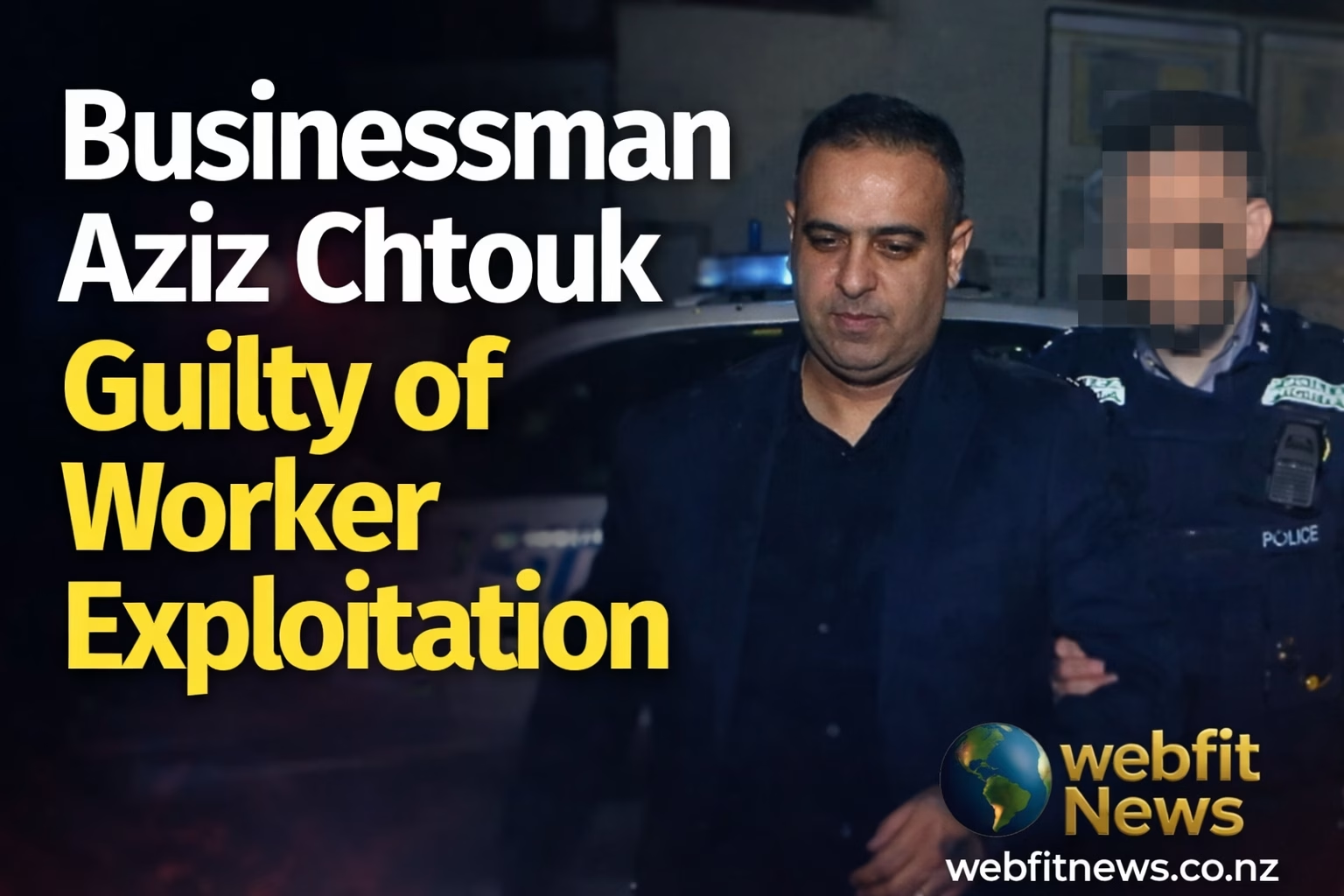
A businessman operating in Auckland has pleaded guilty to six charges of exploiting temporary visa holders by failing to pay them the minimum wage.
Aziz Chtouk admitted the offences in the Auckland District Court on 16 February 2026. The charges were brought by the Ministry of Business, Innovation and Employment under the Immigration Act 2009.
The case involves migrant workers employed in his restaurant businesses who were legally in New Zealand on temporary work visas.
What Were the Charges?
| Charge Category | Primary Legislation | Maximum Penalty (Individual) | Specific Offense in Chtouk Case |
| Worker Exploitation | Immigration Act 2009 | 7 Years Jail / $100,000 Fine | Systematic underpayment of restaurant staff. |
| Minimum Wage Breach | Minimum Wage Act 1983 | Civil Penalties / Arrears | Failure to pay statutory hourly rates. |
| Identity Manipulation | Companies Act 1993 | 5 Years Jail | Managing firms while prohibited via aliases. |
| Bankruptcy Fraud | Insolvency Act 2006 | 2 Years Jail | Operating businesses as an undischarged bankrupt. |
Chtouk pleaded guilty to six counts of worker exploitation. The charges relate to:
• Failure to pay the statutory minimum wage
• Underpaying migrant workers tied to his business
• Breaching employment law protections
Under New Zealand law, exploiting temporary visa holders is a serious criminal offence. It can carry penalties of up to seven years in prison and fines of up to 100,000 dollars per charge.
Sentencing is still pending.
Why Temporary Visa Holders Are Vulnerable
| Alias Identified | Primary Context of Use | Legal Relevance |
| Aziz Chtouk | 2026 Restaurant Exploitation | Current criminal conviction name. |
| Joseph Ronnie Brooks | 2010 Bankruptcy/Salons | Associated with consumer injuries and bankruptcy fraud. |
| Yosef Aziz Chtouki | High Court Proceedings | Used in the Registrar’s application to restore companies. |
| Josh Belgou | Informal Business Interactions | Used to obscure identity during 2023 salon operations. |
| Jo Brooks | Insolvency Register | Listed as an alternative name during 2010 proceedings. |
Most of the affected workers were on the Accredited Employer Work Visa system. This visa links a migrant’s legal right to stay in New Zealand to a specific employer.
That creates a power imbalance.
If workers complain, they risk losing their job and potentially their visa status. Exploitative employers can use this fear to pressure workers into accepting lower pay or unfair conditions.
Common forms of exploitation include:
• Paying less than the legal hourly rate
• Recording fewer hours than actually worked
• Threatening visa cancellation
• Forcing workers to return part of their wages
Authorities say the Chtouk case reflects these wider patterns of vulnerability.
A History of Business and Identity Issues
Court documents and past reporting show that Chtouk has operated under multiple names over the years, including Joseph Brooks and other aliases.
He has previously faced issues involving bankruptcy and company management restrictions. Investigations revealed complex business structures and company dissolutions that made regulatory oversight difficult.
The recent guilty plea connects his restaurant operations to a longer history of legal scrutiny.
Wider Crackdown on Worker Exploitation
| Case Name | Total Penalties / Arrears | Primary Sentences | Key Investigative Finding |
| Aziz Chtouk (2026) | Pending Sentencing | 6 Guilty Pleas | Exploitation of restaurant workers via minimum wage breaches. |
| R.S.X Limited (2025) | $335,000 | 10 Months Home Detention (Director) | Systematic underpayment at a rural bakery; false info to INZ. |
| Dev Trading Ltd (2025) | $182,934 | $159k Fine; $18k Reparation | 14-hour workdays; illegal deductions for “loans”. |
| Super Clearance (2025) | $140,000 (Pre-sentence) | $5,000 Emotional Harm per victim | Fabricated rosters and deceptive accreditation renewal. |
The case comes as New Zealand strengthens its enforcement against migrant worker abuse.
In 2025 and 2026, authorities increased prosecutions targeting employers who:
• Underpay migrant workers
• Provide false information to Immigration New Zealand
• Breach minimum wage and employment laws
The government has also introduced stronger data matching between Inland Revenue and Immigration New Zealand. This allows authorities to detect wage discrepancies more quickly.
From 1 April 2026, the adult minimum wage increased to 23.95 dollars per hour. Employers who fail to adjust payroll systems risk immediate investigation.
Protection for Migrant Workers
New Zealand offers a Migrant Exploitation Protection Visa. This visa allows workers who report exploitation to leave their employer and work elsewhere while their case is investigated.
Officials say this tool helps break the dependency between worker and employer and encourages reporting.
Authorities continue to urge migrant workers to report exploitation through MBIE’s confidential hotline.
Why This Case Matters
Labour exploitation not only harms workers. It also damages honest businesses.
Employers who underpay staff gain an unfair advantage over competitors who follow the law. This distorts pricing and undermines market fairness.
It also risks harming New Zealand’s international reputation as a fair place to live and work.
A Turning Point
Aziz Chtouk’s guilty plea is being seen as part of a broader shift toward stricter enforcement.
Government agencies say aliases and complex company structures will no longer protect employers who breach employment law.
For affected workers, the case signals that authorities are prepared to prosecute serious exploitation.
Sentencing will determine the final legal consequences, but the message is clear: underpaying migrant workers is a criminal offence, and enforcement is intensifying.