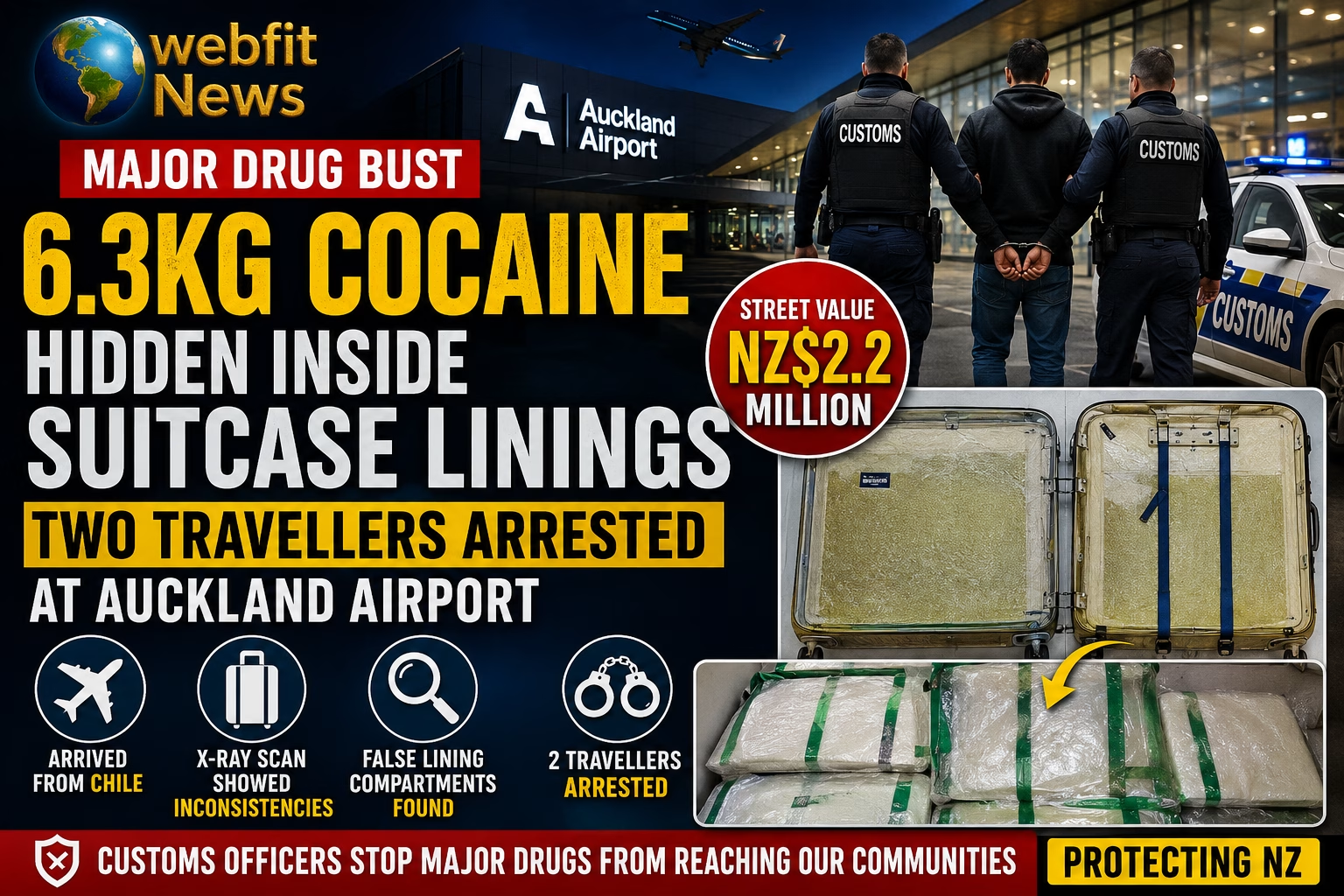
Two foreign nationals have been arrested at Auckland International Airport after Customs officers allegedly uncovered more than 6 kilograms of cocaine hidden inside specially modified suitcases in what authorities describe as another major interception in New Zealand’s ongoing battle against organised drug trafficking.
According to New Zealand Customs, the two travellers, aged 22 and 23, arrived in Auckland on Tuesday, 19 May, after travelling from Chile. During routine border processing, Customs officers referred the pair for further baggage examination after noticing suspicious irregularities during screening procedures.
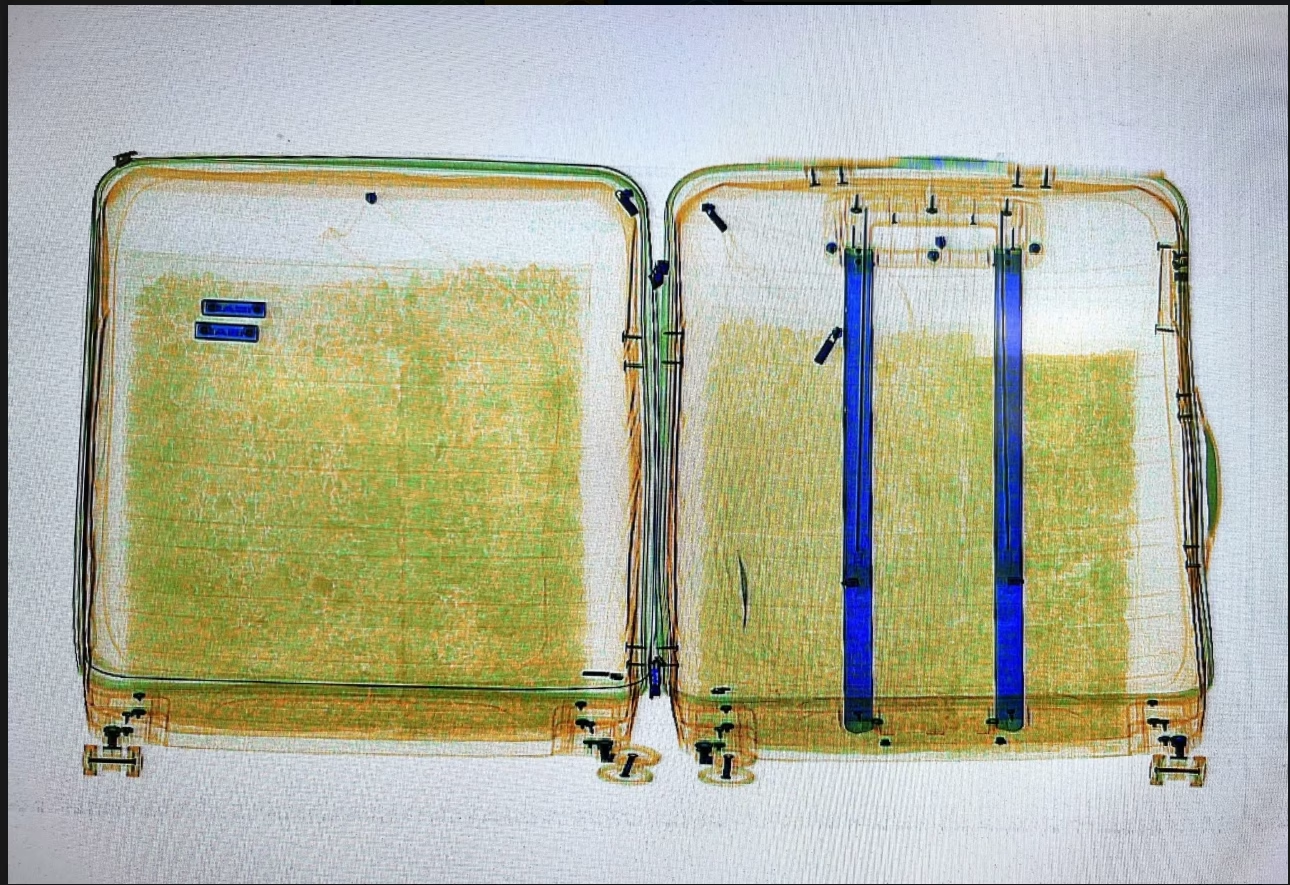
What initially appeared to be ordinary luggage quickly raised red flags when airport X-ray imaging showed unusual inconsistencies within the structure of the suitcases. A more detailed inspection allegedly revealed that both bags had specially constructed false bottoms hidden inside the suitcase lining.
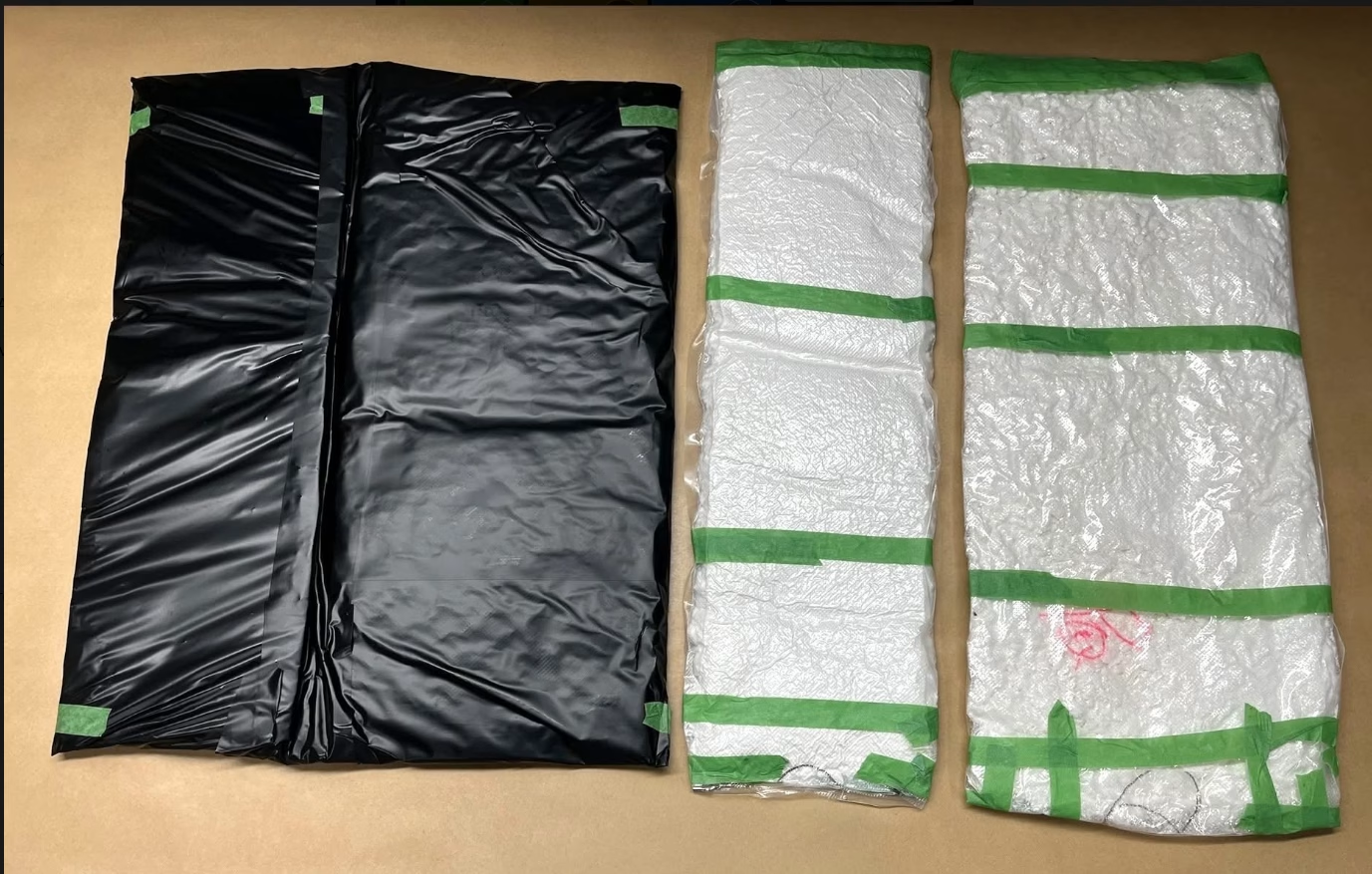
Inside those concealed compartments, officers discovered multiple vacuum-sealed packages containing a white powder-like substance that later tested positive for cocaine.
Authorities estimate the total seizure at approximately 6.3 kilograms of cocaine, carrying an estimated street value of around NZ$2.2 million.
The discovery highlights how international drug smuggling operations are continuing to evolve, using increasingly sophisticated concealment methods to bypass border detection systems.
How The Concealment Worked
According to the images released by Customs, the alleged concealment was carefully integrated into the internal structure of the luggage itself.
The cocaine packages were reportedly hidden beneath false lining panels inside the suitcases, making them difficult to detect through ordinary visual inspection alone.
However, modern airport scanning systems combined with experienced Customs profiling officers helped identify abnormalities in the baggage density and structure.
Concealment Details
| Detail | Information |
|---|---|
| Arrival Location | Auckland International Airport |
| Origin of Travel | Chile |
| Number of Travellers | 2 |
| Ages | 22 and 23 |
| Drug Type | Suspected Cocaine |
| Approximate Weight | 6.3 kilograms |
| Estimated Street Value | NZ$2.2 million |
| Concealment Method | False suitcase lining and hidden compartments |
Images released by authorities show both the X-ray scans and the dismantled suitcase interiors where the hidden compartments were allegedly constructed.
One image appears to show the vacuum-sealed drug packages carefully taped and flattened within the lining to avoid immediate suspicion.
Customs Praises Officers’ Vigilance
Customs’ Auckland Airport Manager Paul Williams praised the officers involved in the operation, saying the seizure demonstrated the importance of frontline border protection work.
“This interception highlights the skill, experience, and vigilance of our Customs officers, who work every day to protect New Zealand communities from the harm caused by illicit drugs.”
The suspects now face serious charges under New Zealand drug importation laws, where convictions involving Class A drugs such as cocaine can carry extremely lengthy prison sentences.
Why New Zealand Is Increasingly Targeted
Despite its relatively small population, New Zealand has become an attractive destination for international drug syndicates due to the extremely high street value of illicit drugs in the country.
Experts say cocaine prices in New Zealand can be significantly higher than in many other parts of the world because of geographic isolation, strong demand, and tighter supply chains.
This means even relatively small shipments can generate massive criminal profits.
Why Drug Syndicates Target NZ
- High black-market value for cocaine
- Strong consumer demand
- Geographic isolation creates supply scarcity
- Smaller shipments can still generate millions
- International courier routes remain active
Authorities have repeatedly warned that organised criminal networks are using a wide range of methods to move drugs into the country, including:
- Concealed baggage compartments
- Air cargo shipments
- International mail systems
- Maritime freight containers
- Human drug couriers
Chile-South America Connection Raises Attention
The travellers reportedly arrived from Chile, which sits within a broader South American region known globally as a major source area for cocaine production and trafficking networks.
International law enforcement agencies have increasingly strengthened intelligence-sharing efforts across borders to track suspected trafficking routes linking South America, Oceania, Asia, and Europe.
New Zealand Customs, Police, and international partners regularly cooperate on intelligence-led operations targeting high-risk passengers and organised criminal syndicates.
Broader Social Impact
While seizures like this often make headlines because of their high dollar value, authorities say the real concern is the social harm associated with hard drugs entering communities.
Cocaine trafficking is frequently linked to wider criminal activity, including money laundering, organised gangs, violence, addiction, and exploitation.
Officials argue that every major interception potentially prevents significant downstream harm across families and communities.
Potential Community Harm Linked To Cocaine Trade
| Impact Area | Possible Effects |
|---|---|
| Public Health | Addiction and overdose risks |
| Crime | Gang activity and violence |
| Economy | Money laundering and illegal cash flow |
| Families | Social and emotional harm |
| Communities | Increased policing and healthcare pressure |
Increasing Sophistication At The Border
Border agencies globally are facing growing challenges as smugglers continue experimenting with more advanced concealment techniques.
From hidden compartments in luggage to chemically infused materials and internally concealed packages, drug trafficking methods are becoming harder to detect through traditional checks alone.
That reality has pushed border agencies to increasingly rely on:
- Advanced X-ray imaging
- Behavioural profiling
- Intelligence sharing
- Detector dogs
- Digital analytics
- International cooperation
New Zealand Customs says frontline vigilance remains one of the strongest defences against drug importation attempts.
Webfit News Perspective
This case is another reminder that New Zealand’s border is not just an immigration checkpoint anymore. It has become one of the most important frontline security barriers protecting communities from increasingly globalised criminal networks.
What stands out in this interception is not only the amount of cocaine allegedly seized, but the sophistication of the concealment itself. These were not careless attempts. They appear calculated, structured, and professionally organised.
At the same time, the incident also highlights how critical Customs officers and airport screening systems have become in modern national security.
As international criminal syndicates become smarter, border protection can no longer rely only on routine checks. Intelligence, technology, and experienced officers are now central to stopping organised crime before it reaches New Zealand streets.
By Geet G | Webfit News
🌐 webfitnews.co.nz