Introduction
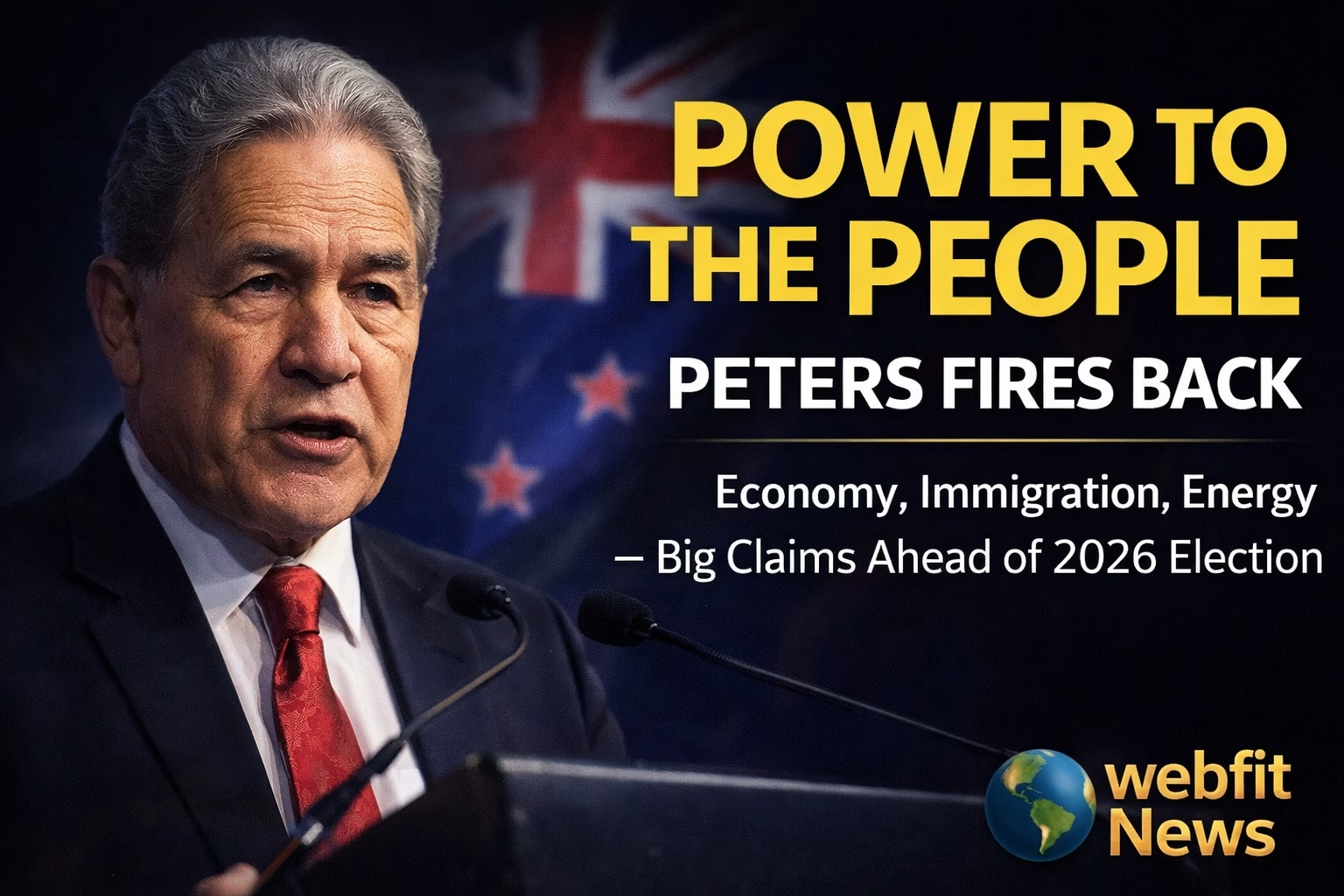
New Zealand First leader Winston Peters has delivered a hard-hitting “State of the Nation 2026” speech, laying out a clear political message ahead of the upcoming election. Speaking in Tauranga, Peters framed his vision around one central theme: “Power to the People.”
The speech was not just a routine political address. It was a direct challenge to both major parties, a critique of economic direction, and a signal that New Zealand First intends to reshape the political conversation.
A Nation Under Pressure
Peters opened by painting a picture of a country facing serious challenges. According to him, New Zealand is navigating one of the most uncertain global environments in decades.
He highlighted:
- Rising inflation
- Increasing interest rates
- Cost-of-living pressure on families
The core message was simple. Many New Zealanders are struggling, and the recovery is slower than expected.
He argued that external factors, such as global conflict, have impacted the economy, but also pointed directly at past government decisions as a major cause.
Blame on Past Economic Decisions
A major part of the speech focused on criticising previous Labour-led policies.
Peters claimed:
- Excessive borrowing during COVID
- Spending that did not create long-term value
- Weak economic planning
He pointed to figures suggesting billions were not used effectively and argued that this has left the country paying the price today.
His broader argument was that New Zealand shifted away from strong economic fundamentals over the past decades and became less competitive globally.
Economic Nationalism at the Core
One of the strongest themes in the speech was “economic nationalism.”
Peters positioned New Zealand First as:
- Pro local ownership
- Against excessive privatisation
- Supportive of government intervention when needed
He criticised past decisions such as:
- Selling state assets
- Foreign ownership of key industries
- Loss of control over national infrastructure
His message was clear. New Zealand must protect its assets and rebuild a system that prioritises local benefit over global profit.
Energy and Power Sector Reform
A major policy announcement in the speech was focused on electricity.
Peters proposed:
- Breaking up large power companies
- Separating electricity generation and retail
- Increasing competition to reduce prices
He argued that current market structures allow companies to control both supply and pricing, leading to high costs for households and businesses.
The proposal aims to:
- Lower electricity costs
- Improve energy security
- Support local industry
This is one of the most concrete policy directions announced in the speech.
Immigration and India Trade Deal Concerns
Peters also raised concerns about immigration, particularly in relation to the proposed India Free Trade Agreement.
Key concerns included:
- Increased migration through student and work visas
- Pressure on local job markets
- Long-term impact on infrastructure and society
He questioned whether New Zealand is prioritising economic growth through migration without proper planning.
This aligns with New Zealand First’s long-standing position of controlled and targeted immigration.
Criticism of Political Rivals
The speech included strong criticism of other political parties.
Labour Party
Peters described Labour as:
- Lacking direction
- Moving away from working-class roots
- Focused on ideology rather than practical issues
Green Party
He accused the Greens of:
- Losing focus on environmental issues
- Shifting toward social and ideological agendas
Māori Party
He claimed the party promotes division rather than unity.
These criticisms were sharp and clearly aimed at positioning New Zealand First as a “middle ground” alternative.
COVID Inquiry and Public Trust
Another important point raised was the COVID-19 inquiry.
Peters argued:
- Key health decisions lacked transparency
- The public was not fully informed of the risks
- Economic and social impacts were underestimated
He called for further accountability and investigation into decision-making during the pandemic.
This is likely to remain a politically sensitive issue going into the election.
The Bigger Strategy: Rebuilding Political Position
Beyond policies, the speech reveals a clear political strategy.
New Zealand First is positioning itself as:
- A nationalist and conservative voice
- A counterbalance to both left and right extremes
- A party focused on “ordinary working New Zealanders.”
Peters also expressed confidence that the party will gain stronger support in the upcoming election.
Webfit News Perspective
This speech is not just about policy. It is about positioning.
Winston Peters is trying to reclaim relevance in a crowded political landscape. His strategy is clear:
- Tap into economic frustration
- Question globalisation and migration
- Present himself as the “common sense” option
But here is the reality.
Strong speeches are easy. Execution is hard.
If New Zealand First wants to turn this narrative into real voter support, it needs:
- Clear, detailed policy follow-through
- Consistent messaging
- Credible solutions, not just criticism
Otherwise, this risks becoming another loud political moment that fades quickly.
Conclusion
Winston Peters’ “Power to the People” speech sets the tone for a highly competitive 2026 election.
It highlights:
- Economic pressure on households
- Debate around immigration and globalisation
- Rising dissatisfaction with mainstream politics
The message is bold. The intent is clear.
Now the real question is simple.
Will voters see this as a genuine alternative or just another political cycle repeating itself?