Napier, New Zealand | 28 June 2026
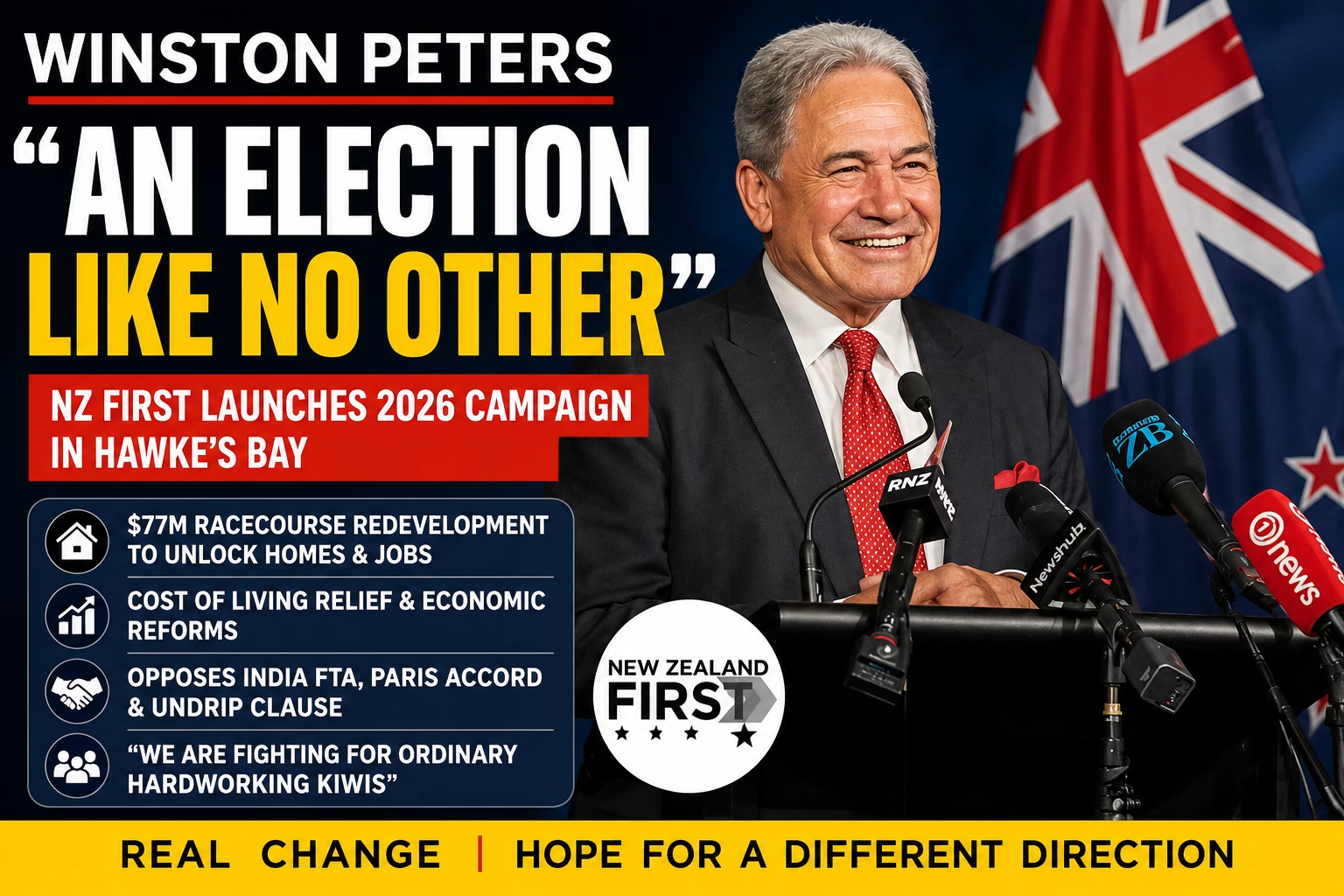
New Zealand First leader Winston Peters has declared the 2026 General Election will be “an election like no other”, using a campaign speech in Hawke’s Bay to position his party as an alternative to New Zealand’s traditional political blocs while outlining a series of major policy proposals.
Speaking in Napier alongside New Zealand First candidates Stuart Nash and Taine Randell, Peters told supporters that voters were increasingly looking for parties that reflected their values rather than continuing what he described as the long-standing political cycle between Labour and National.
“The election is going to be one like no other,” Peters said, arguing that New Zealanders were seeking political change amid economic uncertainty and rising living costs.
Focus on Hawke’s Bay Investment
A significant portion of Peters’ address focused on regional development, highlighting the Government’s investment in the Hawke’s Bay racecourse redevelopment project.
According to Peters, the project involves more than $77 million in combined funding, including a Regional Infrastructure Fund loan alongside industry co-investment. He said the redevelopment would free land for housing in Hastings while creating a modern racing and community events facility.
Peters said the project would generate hundreds of construction jobs and support long-term employment within the racing industry.
Cost of Living and Economic Reform
The New Zealand First leader argued that cost of living pressures remain one of the country’s biggest challenges and said his party would pursue structural reforms across several sectors if elected.
Among the policies highlighted were:
- Breaking up electricity companies to increase competition.
- Reforming the supermarket sector.
- Re-establishing a state-owned bank.
- Returning mining royalties directly to the regions where resources are extracted.
- Expanding KiwiSaver through compulsory participation and automatic enrolment from birth.
Peters said these initiatives were designed to increase competition, reduce household costs and strengthen New Zealand’s economic resilience.
Sharp Criticism of Political Opponents
The speech included strong criticism of Labour, the Green Party and Te Pāti Māori.
Peters accused Labour of relying on publicly funded spending commitments rather than addressing structural economic issues. He also argued that the party had moved away from its traditional working-class voter base.
He criticised the Green Party’s economic policies and questioned its current priorities, while also attacking Te Pāti Māori’s parliamentary performance and political direction.
Many of these comments reflected campaign rhetoric and political opinion rather than independently verified factual claims.
Opposition to India Free Trade Agreement
One of the most significant policy announcements during the speech was Peters’ renewed opposition to the recently concluded New Zealand-India Free Trade Agreement.
He argued that the agreement contains immigration provisions, environmental commitments and investment obligations that he believes are not in New Zealand’s long-term interests.
Among his concerns were:
- Immigration pathways linked to the agreement.
- References to the United Nations Declaration on the Rights of Indigenous Peoples (UNDRIP).
- Commitments relating to the Paris Climate Agreement.
- Investment provisions involving New Zealand businesses.
Peters called for New Zealand to reconsider the agreement and said New Zealand First would continue campaigning against it.
The New Zealand Government has previously described the India Free Trade Agreement as a landmark deal expected to strengthen bilateral trade, improve market access for exporters and deepen economic ties between the two countries.
Climate Policy
Peters also called for New Zealand to withdraw from the Paris Climate Agreement.
He argued that New Zealand’s contribution to global greenhouse gas emissions is comparatively small and questioned whether existing climate commitments place an unnecessary financial burden on taxpayers and primary industries.
His position differs from that of the current Government, which continues to support international climate commitments while pursuing domestic emissions reduction targets.
Campaign Message
Throughout the address, Peters repeatedly presented New Zealand First as a party focused on national sovereignty, economic reform and conservative social values.
He told supporters that the party intends to reshape the political landscape during the upcoming election campaign and predicted stronger electoral support than current opinion polls suggest.
The speech also reaffirmed Peters’ position that New Zealand First will not enter a coalition with Labour following the election.
Looking Ahead
With the general election now only months away, major political parties are expected to intensify policy announcements and nationwide campaigning.
Issues including the cost of living, housing affordability, healthcare, immigration, climate policy and international trade are likely to dominate political debate in the lead-up to polling day.
Sunday’s speech signals that New Zealand First intends to make those issues central to its election campaign while positioning itself as a challenger to both the Government and Opposition.
References
- New Zealand First: “An Election Like No Other” speech by Rt Hon Winston Peters, 28 June 2026.
- New Zealand First official website.
- New Zealand Electoral Commission.
- Ministry of Foreign Affairs and Trade.
- New Zealand Parliament.