Auckland
In a candid conversation hosted by WebfitNews in association with NZICA, Dame Ranjna Patel and NZICA President Veer Khar urged the Indian community in Auckland to take local elections seriously. The discussion focused on why voting shapes daily life, how diversity at the decision-making table improves outcomes, and what families can do at home to lift turnout.
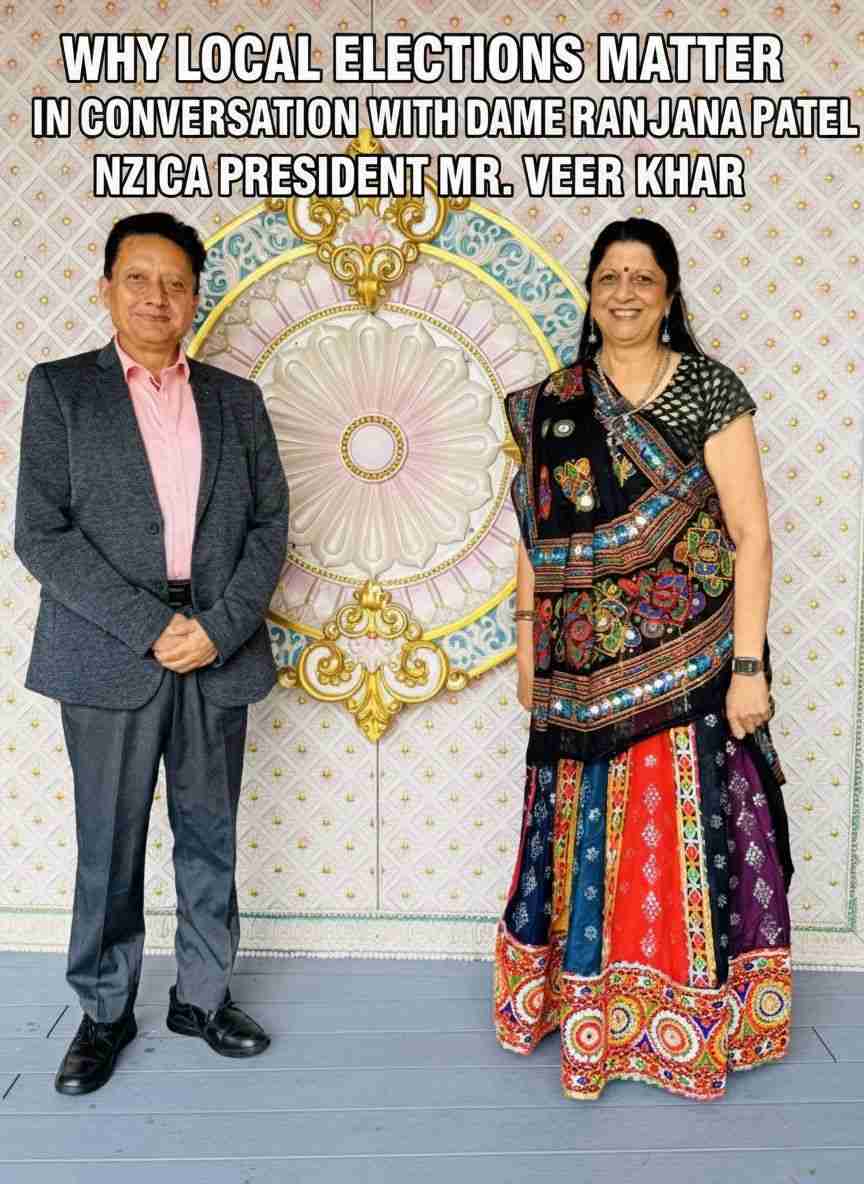
Dame Ranjna’s community track record is well known. She helped build Tamaki Health into a network serving hundreds of thousands and co-founded Gandhi Nivas, an early-intervention service that has supported thousands of families facing harm. Veer Khar leads NZICA’s push to bring more Indian Kiwi voices into civic spaces.
Below are highlights from the conversation:-
Q: Why should Indian Kiwis vote in local elections
A: Dame Ranjna Patel
In India, voting is a habit. Here, many do not see people like them in council roles and feel their voice will not matter. That must change. Read the booklet that arrives with the orange voting pack, find the candidate who matches your values, and vote. Even if you only mark a few names, take part. Your voice is not heard if you stay quiet.
Q: What difference does local government make to everyday life
A: Veer Khar
Councils decide how water is delivered, how rubbish is collected, how parks look, how roads are built and maintained. When diverse communities are at the table, the thinking widens and services improve. The first step is voting for quality candidates and bringing more diversity to local boards. From there the community is better placed for the next level of representation.
Q: Many young people think one vote will not change anything. What do you say to them
A: Dame Ranjna Patel
Every vote counts. Some races in New Zealand have been decided by just a handful of votes. Start the conversation at home when the orange pack arrives. Parents and young adults should discuss who is standing and why. Our community is active in sewa. Voting is sewa for the wider society. Do not be lazy. If you want better roads or safer playgrounds, use your vote.
Q: How can families turn voting into a habit
A: Veer Khar
Bring the issue to the dining table. Ask your 18-year-olds what they know about the candidates. Often, they have information you do not have. If your children are not voting, consider that our failure as parents. Planning to vote is like planning for success. If you are not planning, you are planning to fail.
Q: Why is diversity at the decision-making table so important
A: Dame Ranjna Patel
Different lived experience changes how problems are solved. When our clinics began,n we kept longer hours because that is what South Auckland families needed. Some peers thought it was wrong, but customers needed access. At Gandhi Nivas, we flipped the approach by helping men change so families could be safer. These ideas are understood only when someone with that experience is present to explain them. If you are not at the table, your perspective is not heard.
Q: What do you see in this year’s field of candidates
A: Veer Khar
There is quality and professional experience across many names. Our community performs well in education and business. We now need that same strength in civic life. Only a small share of eligible voters have returned ballots so far. That is not good enough. Voting is simple, and the drop-off options are many. If we want better performance from local boards, we must choose leaders and hold them to account.
Q: What is your message to the Indian community about shaping a better Auckland
A: Dame Ranjna Patel
We can inspire and we can make it easy, but each person must act. Temples and gurdwaras have ballot boxes. Many of us will visit them during festivals. Fill the papers and put them in the box. Do not do half the job. Action creates change. If you are happy with the status quo, that is a choice, but if you want better, vote.
Closing note
The guests reminded viewers that the Indian community now numbers in the hundreds of thousands across New Zealand. With that size comes responsibility. The power to choose local leaders sits in every home. As Dame Ranjna said, the glass can look half empty or half full. The choice is ours.