
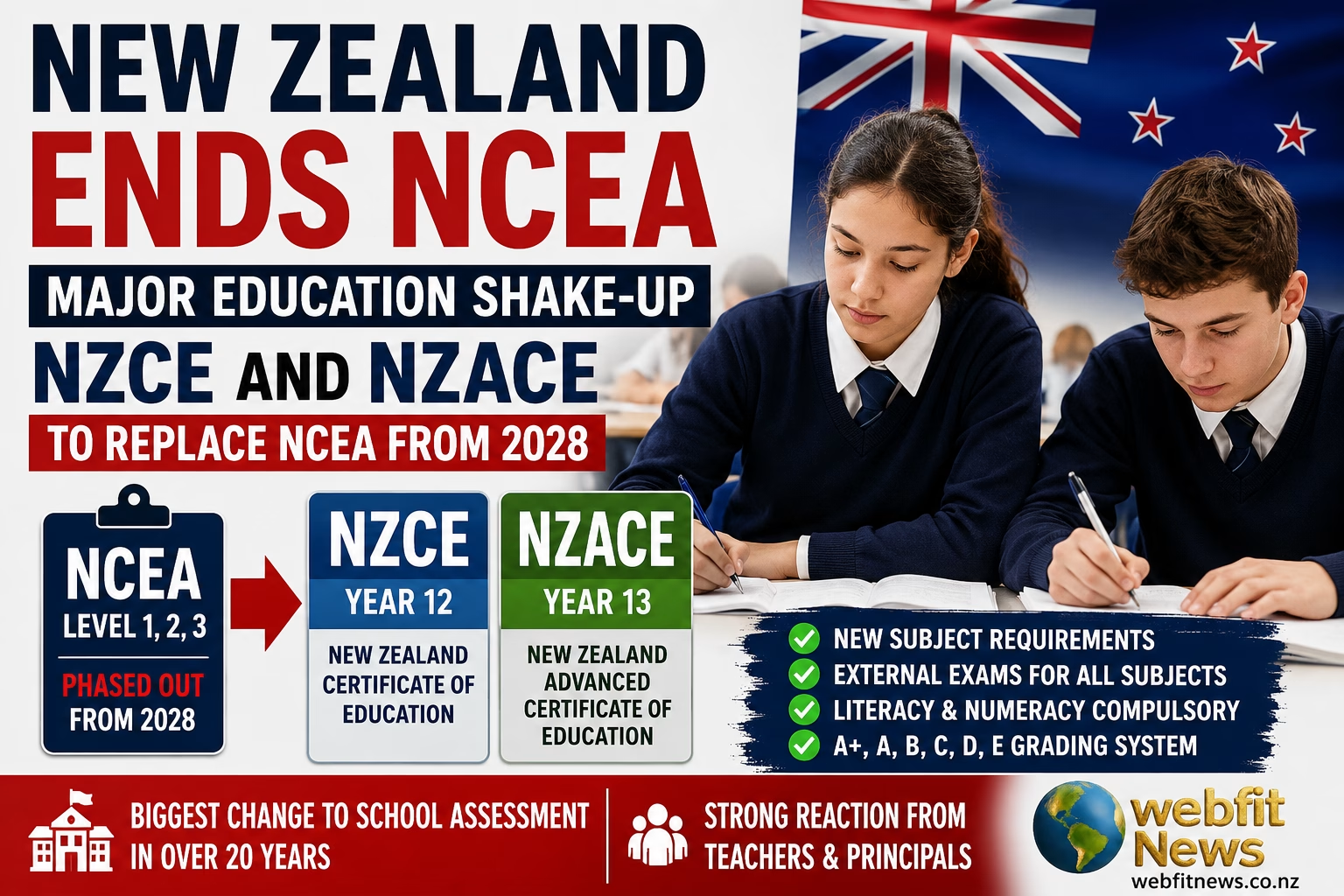
NZCE And NZACE To Replace NCEA From 2028 Onwards
As of 18 May 2026, New Zealand’s education sector is still reacting strongly to the Government’s announcement confirming the phased removal of NCEA and the introduction of two new national qualifications: NZCE and NZACE.
The announcement, made over the weekend by Prime Minister Christopher Luxon and Education Minister Erica Stanford, has quickly become one of the biggest education stories in the country this year.
For many parents, teachers, and students, this is more than just an assessment update. It is a complete redesign of how secondary school achievement will be measured in New Zealand.
NZ First’s BNZ Buyback Plan: Economic Sovereignty or Election-Year Theatre? – WebfitNews
What Exactly Is Changing?
The Government has confirmed:
- NCEA Level 1 will be removed from 2028
- Students in Year 11 will instead complete a compulsory Foundational Skills Award focused on literacy and numeracy
- NCEA Level 2 will become the New Zealand Certificate of Education (NZCE)
- NCEA Level 3 will become the New Zealand Advanced Certificate of Education (NZACE)
Students will need to take at least five subjects per year and pass a minimum of three subjects to gain the qualification.
Traditional A+ to E grades will replace the current Achieved, Merit, and Excellence system.
Every subject will also include mandatory external exams.
Why The Government Says NCEA Needed To Go
The Government argues the current NCEA system has become too fragmented and too easy to manipulate through “credit chasing.”
Education Minister Erica Stanford said some students were collecting easier credits without developing strong academic foundations in key areas like English and maths.
The Government says employers and universities increasingly struggle to understand what an NCEA qualification actually represents.
Research previously showed many employers lacked confidence in NCEA as a reliable measure of student capability.
The new model aims to create:
- Clearer academic standards
- Stronger literacy and numeracy outcomes
- Better preparation for tertiary study and employment
- More consistency across schools
Strong Backlash From Teachers And Principals
However, the reforms are already facing heavy criticism from parts of the education sector.
Teacher unions, principals, and education organisations say the changes risk pushing New Zealand backwards into a rigid “pass or fail” system.
Some groups argue:
- Standardised exams disadvantage neurodivergent learners
- Māori and Pasifika students could be disproportionately impacted
- External testing may increase inequality
- Schools are not properly resourced for the changes
There are also concerns around teacher shortages, especially in science, which will become compulsory at Year 11 level from 2028.
Literacy And Numeracy Concerns Growing
One of the biggest debates surrounds the new Foundational Skills Award.
Students will need to pass literacy and numeracy requirements before gaining future qualifications under the NZCE and NZACE system.
Recent trial assessments reportedly showed concerning pass rates in some lower socioeconomic schools, raising fears that vulnerable students may struggle under the new framework.
Education leaders say improving standards is important, but the system must not unfairly leave students behind.
Rollout Timeline
The Government plans a phased transition:
- 2027: Teacher preparation and pilot work
- 2028: NCEA Level 1 removed
- 2029: NZCE introduced
- 2030: NZACE introduced
Students already progressing through NCEA will continue under the current framework during the transition.
Webfit News Perspective
This is one of the most significant education reforms New Zealand has seen in decades.
The Government clearly wants to restore confidence in school qualifications and strengthen academic standards.
But the reaction from the education sector shows this debate is far from settled.
The challenge now will be balancing higher standards with fairness and accessibility.
Parents, students, and schools are likely to spend the coming months trying to understand what these changes will really mean in practice.
And politically, this issue could become much bigger than education alone, because it touches directly on opportunity, inequality, and the future direction of New Zealand’s school system.
References
- New Zealand Government education announcements
- Ministry of Education consultation material
- PPTA Te Wehengarua responses
- SPANZ and NZATE public commentary
- NZQA information and literacy/numeracy trial data