By Webfit News
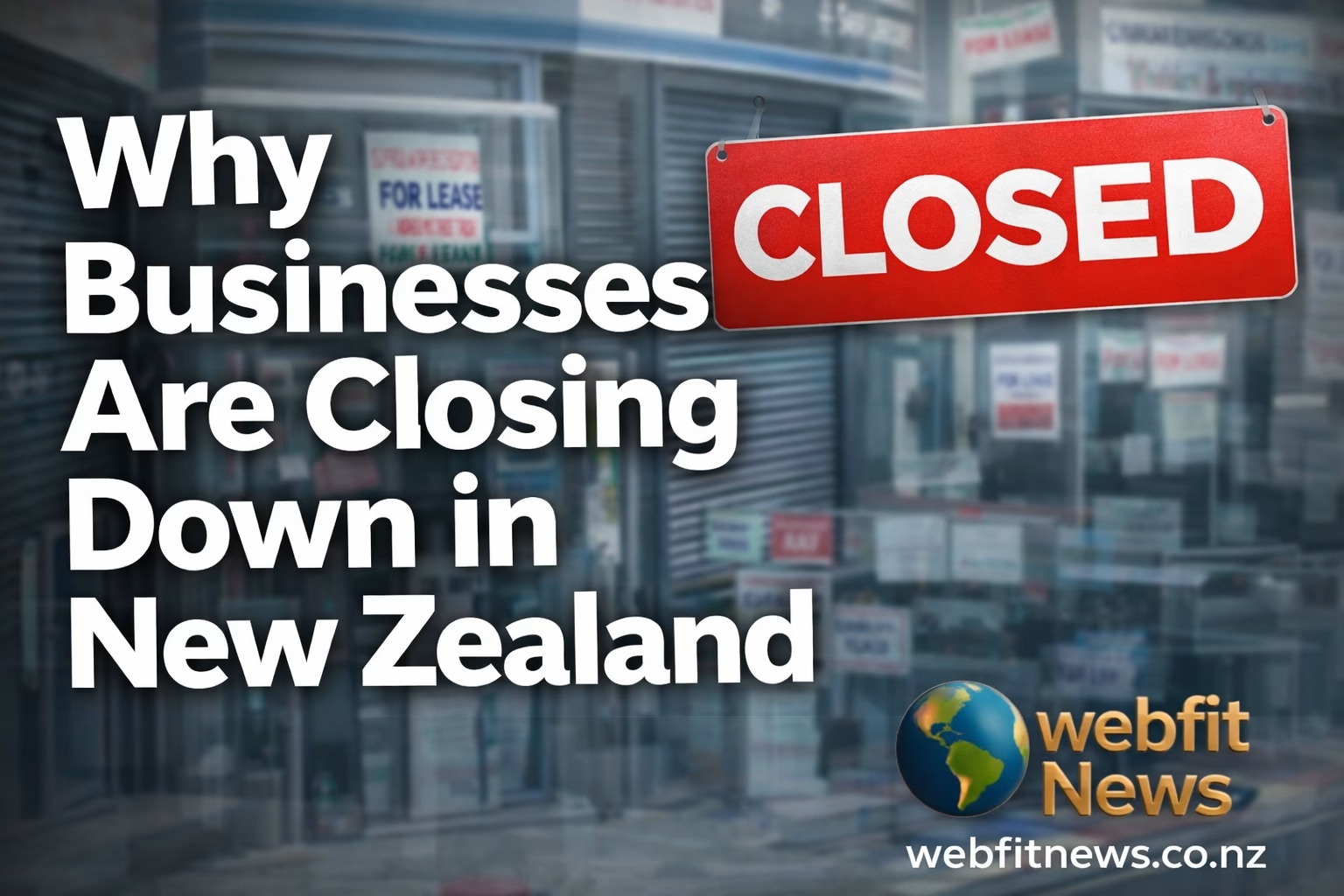
New Zealand has started 2026 with a worrying trend. Dozens of well-known businesses are shutting their doors, and many more are struggling to survive. From retail stores to cafés and construction firms, closures are happening across the country.
So what is really going on? And why now?
Here is a clear breakdown of the main reasons businesses are failing in New Zealand.
1. Spending Has Not Recovered Like Businesses Expected
Many businesses believed 2025 would be the year customers started spending freely again. That did not happen.
New Zealand Takes a Key Role at WTO as Global Trade Faces a Turning Point – WebfitNews
- Christmas and Boxing Day sales in late 2025 were weaker than expected
- Non-essential spending dropped
- People focused on food, rent, fuel, and bills instead of shopping
As a result, businesses were left with:
- Unsold stock
- Less cash in January
- High costs they could not cover
When rent, wages, and tax bills arrived, many simply ran out of money.
2. Inland Revenue Has Restarted Aggressive Debt Collection
During the Covid years, the Inland Revenue Department allowed many businesses to delay tax payments. That grace period is now over.
Key facts:
- Total unpaid business tax has reached over $9 billion
- IRD is issuing more winding-up notices than at any time in recent years
- PAYE and GST debts are a major trigger for liquidation
Many businesses used tax money to survive short-term. Once IRD stepped in, liquidation followed quickly.
3. Online Shopping Is Killing Low-Margin Retail Stores
Physical retail is under heavy pressure from global online platforms.
Businesses are losing customers to:
- Temu
- Shein
- AliExpress
- Amazon
These platforms:
- Sell cheaper
- Have no New Zealand rent
- Have lower staffing and compliance costs
Stores selling novelty items, games, cosmetics, or homewares cannot compete. That is why brands like EB Games, Miniso, and Yoyoso collapsed.
4. High Rent and Operating Costs Are Crushing Small Businesses
Many CBDs are no longer busy like they once were.
Problems businesses face:
- High commercial rents
- Fewer office workers in city centres
- Reduced foot traffic
- Rising insurance and power costs
Even long-standing businesses could not make the numbers work. Iconic cafés and pharmacies closed because sales no longer matched rent and wages.
5. Interest Rates and Old Debt Are Still Hurting Cash Flow
Although interest rates may ease later, the damage is already done.
Businesses are dealing with:
- Loans taken during low-rate years
- Higher repayments
- No spare cash buffer
When sales fall and debt remains high, failure becomes unavoidable.
6. Some Business Models Are Simply Outdated
The economy has changed, but many businesses did not change with it.
Examples:
- Physical game stores in a digital download world
- Voucher platforms losing relevance
- Large showrooms selling big-ticket items during a cost-of-living crisis
Longevity alone no longer protects a business.
7. Construction and Hospitality Are Also Under Pressure
Retail is not the only sector struggling.
Construction:
- Fixed-price contracts
- Rising material costs
- Thin margins
- Many small firms collapsing
Hospitality:
- Fewer office workers in CBDs
- Higher food and labour costs
- Lower mid-week trade
These sectors now account for a large share of business failures.
What Webfit News Sees Differently
While big brands are failing, smaller community-focused businesses are showing resilience.
What is working:
- Low overhead models
- Online-first businesses
- Local and cultural niches
- Service-based and experience-based offerings
The economy is not dying. It is changing.
What This Means for 2026 and Beyond
Experts expect:
- Business closures to remain high until mid-2026
- Slow improvement later in the year
- Stronger businesses to emerge leaner and more digital
The painful reality is this:
2026 is a reset year.
The old way of doing business is being cleared out. What survives will be smaller, smarter, and closer to the customer.
Webfit News View
This wave of closures is not just failure. It is a warning and a transition.
Businesses that adapt, cut costs early, manage tax obligations, and focus on real customer needs still have a future. Those that do not will continue to disappear.
New Zealand’s economy is not broken. But it is done carrying outdated models.
Recent Major Business Closures in New Zealand (2025–Early 2026)
| Business Name | Sector | Location(s) | Closure Period | Key Reason for Closure |
|---|---|---|---|---|
| EB Games New Zealand | Retail (Electronics & Gaming) | Nationwide (38 stores) | Jan 2026 | Liquidation, weak foot traffic, and online competition |
| Miniso / Yoyoso Group | Retail (Lifestyle & Variety) | Auckland and major cities | Jan 2026 | Liquidation, weak foot traffic, online competition |
| Smiths City | Retail (Furniture & Appliances) | Nationwide | Sep 2025 – Jan 2026 | Heavy debt, reduced consumer spending |
| Kitchen Things | Retail (Home & Kitchen) | Nationwide | Late 2025 | High rents, low discretionary spending |
| GrabOne | E-commerce / Deals Platform | Online (NZ-wide) | Oct 2025 | Loss of relevance, declining voucher demand |
| Leuven Belgian Beer Café | Hospitality | Wellington CBD | Jan 2026 | Falling CBD foot traffic, rising costs |
| Orrs Pharmacy | Pharmacy / Healthcare Retail | Whangārei | Jan 2026 | Declining CBD trade, shift to online cosmetics |
| Fortune Favours Brewery (partial closures) | Hospitality | Wellington | 2025 | Rising costs, reduced city demand |
| Multiple Small Construction Firms | Construction | Nationwide | 2025–2026 | Fixed-price contracts, material cost spikes |
| Independent Cafés and Takeaways | Hospitality | Auckland, Wellington, Hamilton | 2025–2026 | Shift to digital sales, ongoing losses, and high operating costs |