
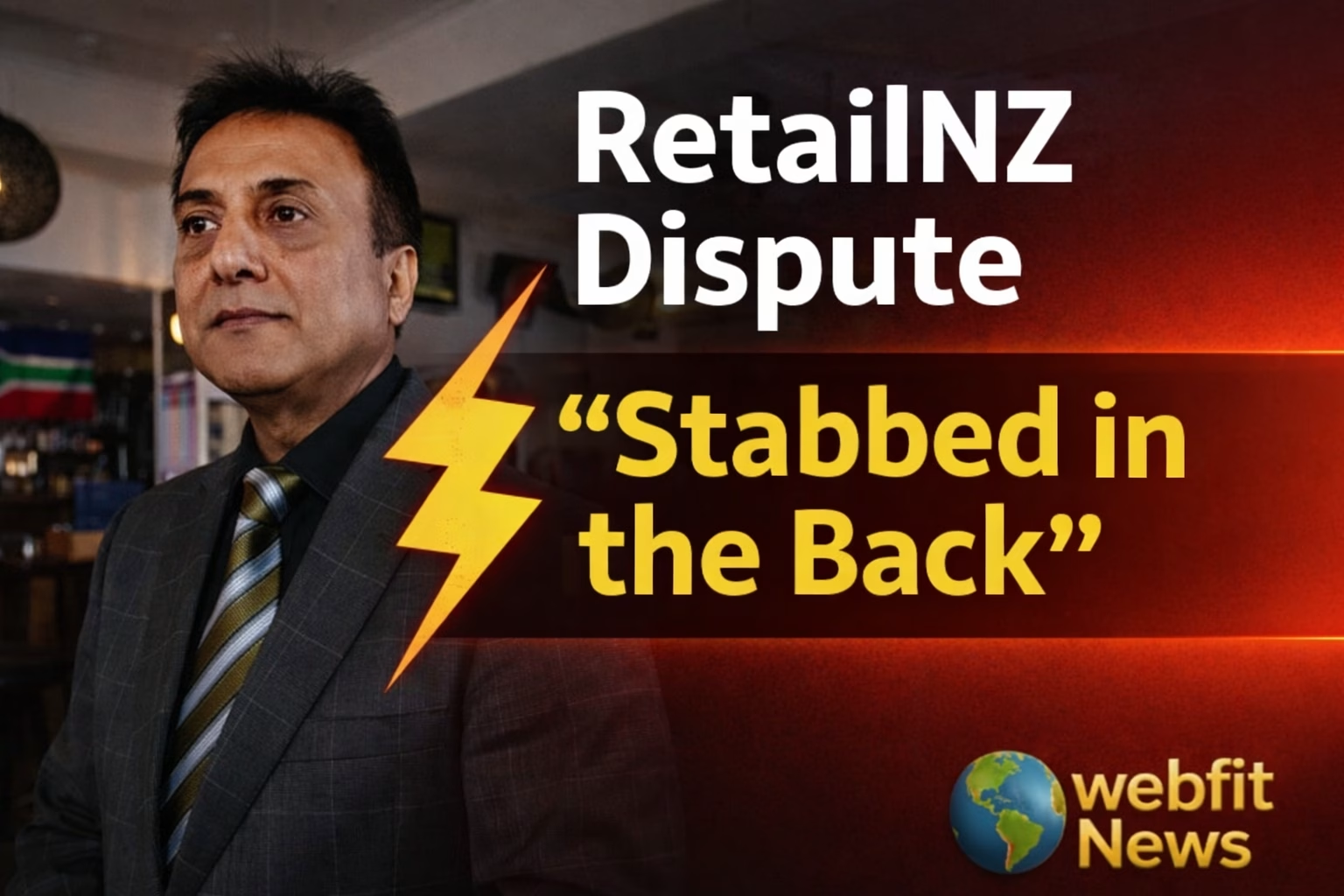
A public disagreement inside Retail NZ has exposed tensions over how strongly the organisation is advocating for retailers facing rising crime.
Sunny Kaushal, a long-time retailer and member of a Retail NZ advisory group, says he felt “stabbed in the back” by comments made by fellow members about retail crime. His criticism raises a broader question: are the concerns of front-line retailers being fully represented at the national level?
The Background
Retail crime has become one of the most debated business issues in New Zealand. From shoplifting to violent incidents, many store owners say the problem has escalated over the past few years.
Retail NZ, as the country’s leading retail industry body, plays a central role in representing retailers’ interests to government and policymakers. It participates in advisory groups, consults on legislation, and speaks publicly about crime trends and solutions.
However, Kaushal argues that the tone and direction of recent discussions have not reflected the urgency that many retailers feel on the ground.
What Kaushal Is Saying
Kaushal’s frustration centres on comments made within the advisory group that he believes downplayed the severity of retail crime.
According to him, the issue is not just theft. It is about:
- Staff safety
- Repeat offending
- A lack of strong consequences
- The emotional toll on small business owners
He believes retailers are paying the price, both financially and psychologically, while policy discussions move too slowly.
His statement that he felt “stabbed in the back” suggests a deeper disappointment, not just disagreement. It reflects a sense that internal advocacy may not be aligned with the lived experience of store operators.
Retail NZ’s Position
Retail NZ has consistently acknowledged retail crime as a serious issue. The organisation has:
- Called for stronger collaboration between retailers and police
- Advocated for improved reporting systems
- Engaged in policy conversations around sentencing and prevention
At the same time, industry bodies often balance multiple perspectives. Advisory groups can include retailers of different sizes and philosophies, from small independent stores to large chains.
Disagreements within such groups are not unusual. The key issue is whether those disagreements affect the strength of the public advocacy message.
The Bigger Question: Representation
Kaushal’s criticism raises a wider concern.
If members of an advisory group feel unheard or misrepresented, it can undermine confidence in the organisation itself. Retailers who are dealing with daily incidents want to know that their representative body is pushing firmly and clearly for solutions.
This is especially relevant at a time when:
- Public debate around crime is politically charged
- Businesses are struggling with high operating costs
- Staff retention and morale are already under pressure
Retailers are not just asking for sympathy. They are asking for visible action and policy change.
Why This Matters
Retail crime is no longer a fringe issue. It is central to the viability of many small and medium-sized businesses.
If advocacy groups appear divided, it weakens the overall message to government. Policymakers respond most strongly to clear, unified industry positions.
At the same time, strong organisations must allow internal debate. Healthy disagreement can sharpen strategy and improve outcomes. The challenge is ensuring that internal differences do not dilute public representation.
Webfit News Perspective
This dispute is not simply about one individual feeling sidelined. It reflects a broader tension between lived experience and institutional process.
Retailers on the ground measure crime in broken windows, frightened staff, and lost revenue. Advocacy organisations measure it in submissions, policy meetings, and negotiation timelines.
For the sector to move forward, those two realities must stay aligned.
Retail NZ now faces an important test. Can it reassure members that their concerns are being strongly represented while maintaining a balanced, credible voice in policy discussions?
Retail crime is not going away soon. Neither is the demand for accountability.