Webfit News | Global Energy & NZ Impact
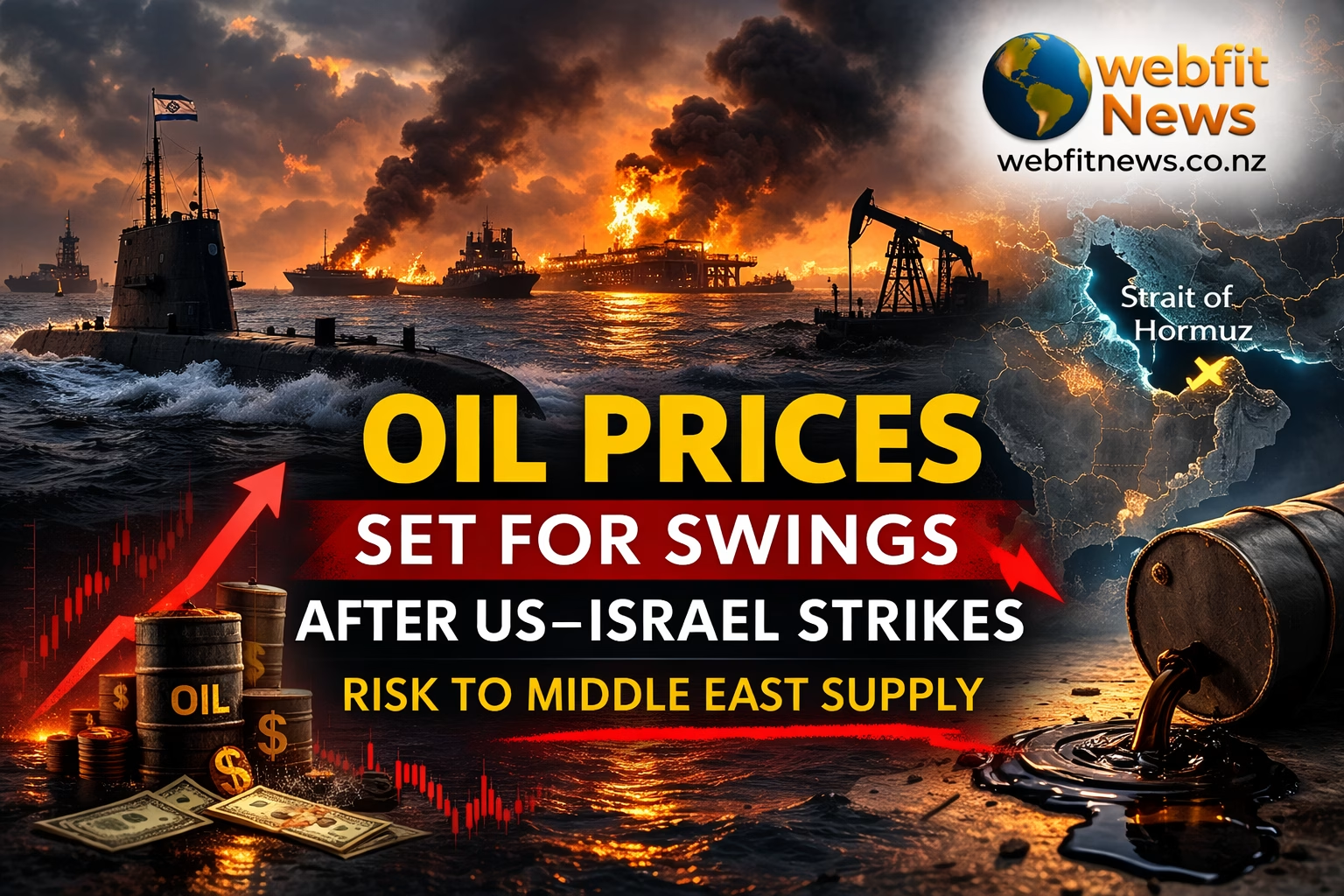
Oil markets are closed for the weekend. When they reopen, traders will be watching one thing: whether the latest US and Israeli strikes linked to Iran trigger disruption across the world’s most critical oil routes.
Brent crude finished Friday at $72.87 per barrel, a seven-month high. The rise reflects rising geopolitical risk rather than confirmed supply losses. The question now is whether fear alone drives prices higher, or whether physical disruption pushes the market into a sharper spike.
For energy-dependent economies like New Zealand, the difference matters.
What Happened and Why Markets Care
The strikes have heightened tensions involving Iran, a key oil exporter in the Middle East. While no major oil infrastructure damage has yet been confirmed, the market is reacting to uncertainty.
There are two core risks:
- Direct damage to Iranian oil production or export facilities
- Disruption to tanker traffic through the Strait of Hormuz
Iran exports roughly 1.6 million barrels of oil per day, with most shipments going to China. Because of US sanctions, much of that crude is bought by privately owned Chinese refiners willing to operate outside Western financial systems.
If Iranian exports are interrupted, Chinese buyers would need to secure a replacement supply from the open market. That could tighten global availability and push prices upward.
But the bigger risk sits at sea.
The Strait of Hormuz: The Real Pressure Point
About 20 percent of the world’s oil supply passes through the Strait of Hormuz each day. Saudi Arabia, Iraq, and the United Arab Emirates rely heavily on this narrow waterway for exports.
Analysts generally argue Iran has little incentive to close or severely disrupt the strait. Doing so would:
- Cut off its own exports
- Anger China, its primary oil customer
- Invite broader military retaliation
Still, even limited naval activity or perceived threats can cause tanker rerouting, higher insurance cost and temporary shipping delays. Markets price risk before events happen. Oil traders do not wait for confirmation.
That is why volatility next week is widely expected.
Possible Price Scenarios
Before the latest escalation, energy analysts had already mapped out potential price responses to a conflict scenario involving Iran.
- Limited strikes with no shipping disruption could trigger a short-term price spike of $5 to $10 per barrel, driven largely by fear.
- Wider conflict involving tanker interference could push crude above $90 per barrel, according to pre-conflict modelling by strategic policy analysts.
For comparison, Brent at $72.87 is elevated but not crisis level. Prices above $90 would represent a significant inflation shock globally.
US petrol prices averaged $2.98 per gallon last week, according to AAA. A move toward $90 crude could drive American fuel prices well above $3 per gallon, and ripple through Asia Pacific fuel markets soon after.
Why China Matters in This Equation
China is central to the oil math.
Iran’s 1.6 million barrels per day mostly head east. If that supply is removed, Chinese refiners must compete for alternative cargoes from:
- Saudi Arabia
- Russia
- West Africa
- Latin America
That increased competition would lift global benchmark prices. Even countries that do not import Iranian oil directly, including New Zealand, would feel the impact through higher global crude pricing.
Oil is globally priced. There is no “safe distance” from a supply shock.
Webfit News Perspective: What This Means for New Zealand
Here is where the story hits home.
New Zealand imports nearly all of its refined fuel products. We are fully exposed to global price swings. When Brent rises, Kiwi drivers usually feel it within weeks.
If crude climbs by $5 to $10 per barrel, expect:
- Petrol price increases of roughly 5 to 10 cents per litre over time
- Higher freight costs
- Increased airline fuel expenses
If prices push toward $90, the impact becomes more serious:
- Noticeable inflation pressure
- Higher grocery prices due to transport costs
- Added strain on already stretched household budgets
New Zealand’s inflation rate has been moderating, but energy price spikes can quickly reverse progress. The Reserve Bank will also be watching closely. Sustained oil-driven inflation complicates interest rate decisions.
Shipping costs are another factor. Even without direct oil shortages, heightened tension in the Strait of Hormuz raises insurance premiums for tankers. That feeds into global freight pricing, which affects everything from electronics to food imports.
Small, open economies like ours are especially sensitive.
Asia Pacific Ripple Effects
Australia, Japan, South Korea, and other regional economies are also exposed. Many Asian countries rely heavily on Middle Eastern crude.
If Chinese buyers scramble fora replacement supply, it will tighten the Asia Pacific market first. That could mean regional benchmark prices rise faster than Western markets expect.
Energy security is back in the spotlight.
Is a Strait Closure Likely?
Most analysts say no. Iran benefits from the continued oil flow. Closing the Strait would harm its own revenue and risk escalation beyond its control.
However, history shows even minor confrontations can spark outsized price reactions.
Markets trade on probability and fear, not just confirmed events.
What to Watch This Week
When markets reopen, traders will focus on:
- Any confirmed damage to Iranian pipelines or export terminals
- Naval activity near the Strait of Hormuz
- Official statements from OPEC members
- Chinese buying patterns
- US Strategic Petroleum Reserve Commentary
Expect sharp intraday swings.
The Bigger Picture
Oil markets have been relatively stable in recent months compared to the volatility seen during earlier geopolitical crises. Brent at $72.87 is elevated but far from panic territory.
The key variable is duration.
Short-lived tension may produce only a temporary price spike. Sustained instability in the Gulf region could reintroduce energy-driven inflation globally.
For New Zealand households already managing high living costs, this is not an abstract geopolitical story. It is about petrol receipts, supermarket prices, and business operating margins.
The next trading week will reveal whether markets are reacting to noise or to genuine supply disruption.
Either way, volatility is almost guaranteed.
Webfit News will continue tracking the global energy situation and its impact on Kiwi households and businesses.