Introduction
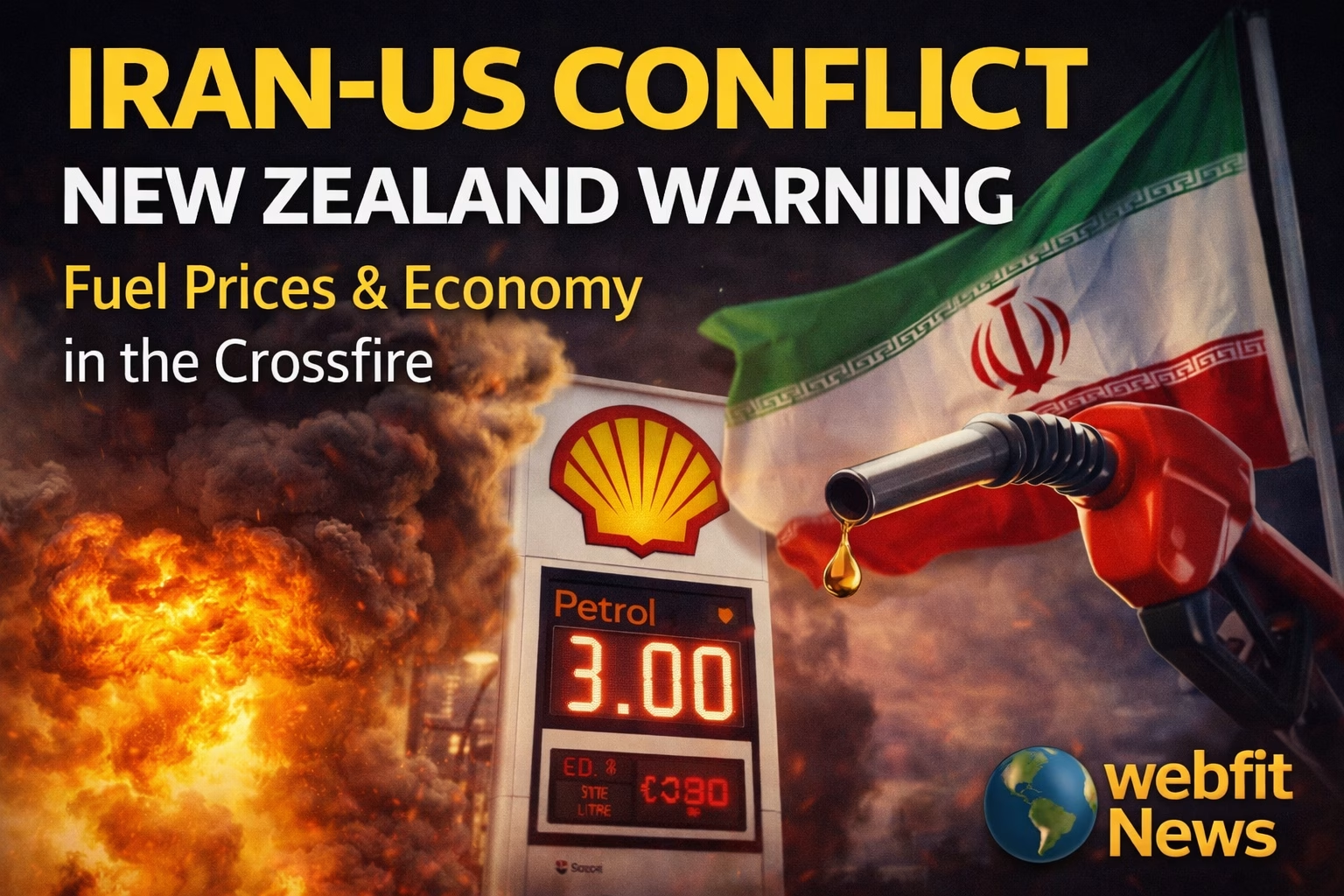
A growing conflict involving the United States, Iran, and its allies is no longer just a distant geopolitical issue. It is rapidly turning into a global economic and security concern.
What many people in New Zealand do not realise is this. Even if the conflict is happening thousands of kilometres away, the consequences can hit directly at home.
From fuel prices to supply chains, and from inflation to national security, the ripple effects are already forming.
A Crisis Triggered by Miscalculation
Recent analysis suggests that the escalation was not entirely unexpected. It was driven by a familiar pattern in global politics.
Leaders overestimate their control. They underestimate their opponent. And they assume the next conflict will behave like the last one.
In this case, the United States appears to have misread Iran’s response capability.
Instead of a limited reaction, Iran responded with:
- Missile and drone strikes across the region
- Expanded conflict zones beyond the Middle East
- Strategic disruption of global energy routes
This is where the situation became serious for the rest of the world.
The Strait of Hormuz Shock
At the centre of this crisis is one critical chokepoint.
The Strait of Hormuz.
Roughly 20 percent of the world’s oil supply passes through this narrow route every day.
Iran did not need a full-scale naval war to disrupt it.
Instead, it used:
- Low-cost drones
- Targeted threats
- Psychological pressure on insurers and shipping companies
The result was immediate.
Shipping slowed down. Insurance risk surged. Oil markets reacted.
This is being described as one of the biggest energy disruptions since the 1970s.
Why New Zealand Cannot Ignore This
Here is the uncomfortable truth.
New Zealand is extremely exposed to global fuel shocks.
We:
- Import most of our refined fuel
- Depend on stable shipping routes
- Have limited domestic reserves
Even if supply remains stable in the short term, pricing is global.
That means:
👉 If global oil prices rise, New Zealand pays more
👉 If shipping risks increase, costs go up
👉 If uncertainty continues, inflation follows
This directly impacts:
- Petrol prices
- Grocery costs
- Transport and logistics
- Business operating expenses
Fuel Stability vs Market Reality
The government has reassured that fuel stocks remain healthy.
That is true for now.
But there is a gap between physical supply and market pricing.
Even without shortages:
- Prices can spike due to global panic
- Futures markets react instantly
- Businesses pass costs to consumers
So while there is no immediate crisis at the pump, the pressure builds quietly.
The Real Risk: Economic Domino Effect
The bigger issue is not just fuel.
It is what comes next.
A prolonged crisis could trigger:
- Higher inflation
- Slower economic growth
- Increased cost of living pressure
- Pressure on interest rates
This is where it becomes political.
Because voters do not care about global strategy. They care about:
- Weekly grocery bills
- Fuel costs
- Job stability
A Pattern We Have Seen Before
This is not new.
History shows the same pattern again and again.
From Vietnam to Afghanistan, and now modern conflicts:
- Strong powers assume quick outcomes
- Opponents adapt using unconventional tactics
- Conflicts expand instead of shrinking
What has changed is the technology.
Cheap drones, cyber capability, and asymmetric warfare now allow smaller powers to create global disruption at low cost.
Strategic Blind Spot
One of the biggest failures highlighted in the analysis is not intelligence.
It is imagination.
The real question that was missed:
👉 What happens when your opponent learns from previous wars?
Iran appears to have done exactly that.
Instead of fighting directly, it:
- Targeted economic pressure points
- Used global dependencies as leverage
- Avoided conventional military confrontation
This makes the conflict harder to control and more expensive to manage.
Webfit News Perspective
Let’s be blunt.
This is not just about Trump. It is about how global power works.
Big countries still think in old ways.
But smaller or constrained countries are now playing smarter, cheaper, and more disruptive games.
And that changes everything.
For New Zealand, the biggest mistake would be complacency.
Because:
- We are not in the war
- But we are definitely in the consequences
Conclusion
The Iran conflict is not just another headline.
It is a signal.
A signal that global stability is fragile.
A signal that economic shocks can travel fast.
And a signal that New Zealand must stay prepared, not just reassured.
The real test is not whether there is panic today.
The real test is whether we are ready for what comes next.