
By Geet G | Webfit News
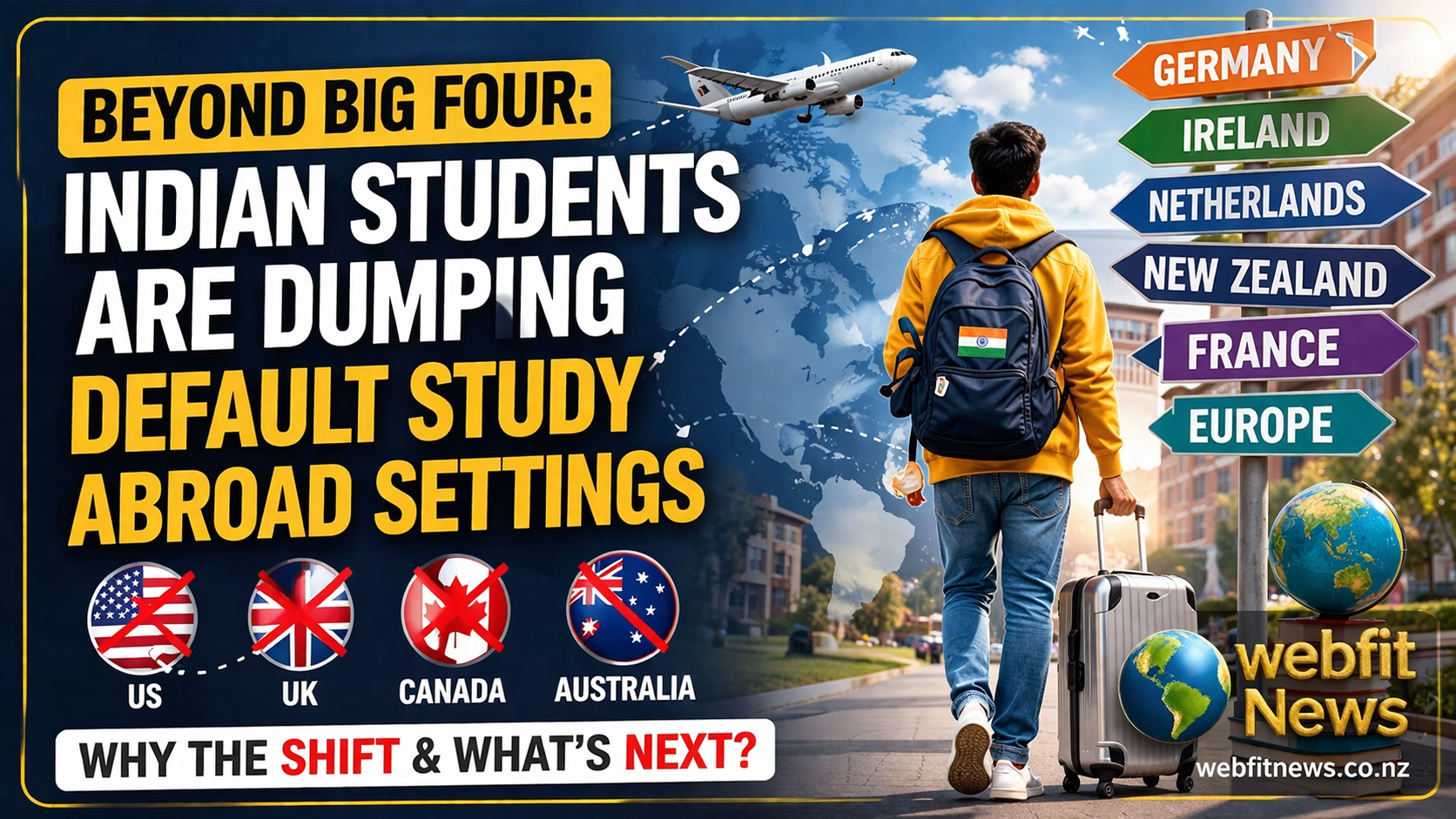
A quiet but significant shift is underway in global education trends. Indian students, long associated with traditional study destinations like the United States, United Kingdom, Canada, and Australia, are now actively exploring alternative countries.
This change, highlighted in a recent report by The Economic Times, reflects evolving priorities shaped by policy changes, economic realities, and post-study uncertainties.
A Shift Away from Default Destinations
“No Jealousy, No Gossip”: NRI’s Viral Take on Life in New Zealand Sparks Wider Debate – WebfitNews
For decades, the “Big Four” countries dominated Indian students’ study abroad preferences. These destinations offered strong academic reputations, clear migration pathways, and established Indian communities.
However, recent developments are challenging that dominance.
Key concerns include:
- Stricter visa and immigration policies
- Rising tuition fees and living costs
- Increasing competition for post-study work opportunities
- Uncertainty around long-term residency pathways
As a result, students are no longer treating these countries as default options.
Emerging Alternatives Gain Attention
Countries across Europe and Asia are increasingly attracting Indian students by offering:
- More affordable education
- Flexible visa policies
- Growing job markets
- English-taught programs
Destinations such as Germany, Ireland, France, the Netherlands, and even parts of Eastern Europe are gaining traction.
In some cases, these countries provide clearer pathways between education and employment, making them more attractive in a competitive global landscape.
Cost and ROI Now Driving Decisions
One of the most notable changes is the shift in how students and families evaluate study abroad options.
Earlier, decisions were often driven by reputation and aspiration. Today, they are increasingly driven by return on investment (ROI).
Students are asking:
- What are the chances of getting a job after graduation?
- How long will it take to recover the cost of education?
- Are there stable immigration pathways?
This more pragmatic approach is reshaping global student mobility.
Impact on Countries Like New Zealand
While the article focuses on global trends, the implications are relevant for countries like New Zealand as well.
New Zealand has positioned itself as a quality education destination, but it operates in a highly competitive environment.
To remain attractive, countries must now balance:
- Immigration policies
- Work opportunities
- Cost of living
- Student experience
The global shift suggests that students are more informed and selective than ever before.
Webfit News Perspective
Let’s be honest.
The era of “go abroad, settle automatically” is fading.
Students today are not chasing destinations.
They are evaluating systems.
If a country offers:
- Clear visa rules
- Real job opportunities
- Reasonable costs
It wins.
If not, students move on.
The power has shifted.
From countries choosing students…
to students choosing countries.
What Comes Next
As competition intensifies, traditional study destinations may need to rethink their strategies to remain relevant.
At the same time, emerging destinations have an opportunity to position themselves as practical, accessible, and future-ready alternatives.
For Indian students, the message is clear:
The world is no longer limited to four choices.
Reference
- The Economic Times:
“Beyond Big Four: Indian students are dumping default study abroad settings”