A legal clock is ticking in Washington, and it could force a major decision on the Iran war within days.
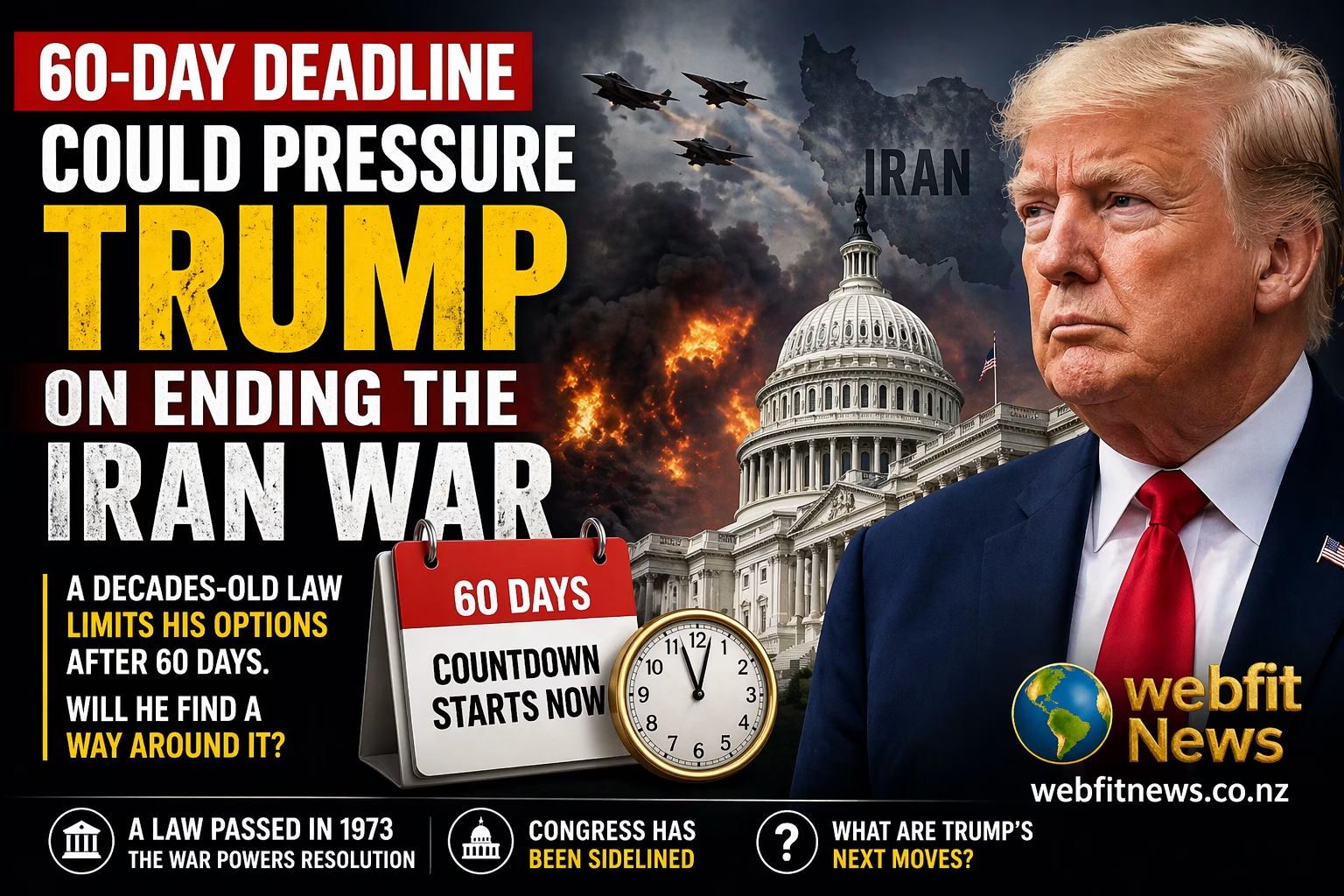
Nearly eight weeks after military action began, the United States President is now approaching a 60-day limit that could determine whether the conflict continues or comes to a halt.
What happens next will not just shape the Middle East, but global markets, oil prices, and geopolitical stability.
War Powers Timeline
| Stage | What It Means | Current Status |
|---|---|---|
| Day 0 | Military action begins without Congress approval | Already happened |
| Day 30 | Congress can start questioning and debating | Ongoing |
| Day 60 | Legal deadline to approve or withdraw | Approaching |
| Post 60 | Must withdraw OR seek approval | Decision pending |
WHAT HAPPENED
The United States has been engaged in military operations linked to Iran for close to two months.
Under a decades-old law known as the War Powers Resolution, the President can deploy armed forces without full approval from Congress for up to 60 days.
After that period, the administration must either:
- Get approval from Congress, or
- Withdraw forces
Reports suggest the administration may explore ways to bypass or stretch this limit.
Meanwhile, attempts by opposition leaders to block or restrict the conflict have been repeatedly rejected.
Possible Scenarios After 60 Days
| Scenario | What Happens | Risk Level |
|---|---|---|
| Congress Approves | War continues legally | Medium |
| Withdrawal | Military action stops | Low |
| Bypass / Delay | Legal grey area, continued conflict | High |
| Escalation | Conflict expands regionally | Very High |
BACKGROUND
The War Powers Resolution was created to limit the President’s ability to engage in prolonged military action without oversight.
It was designed after the Vietnam War to prevent open-ended conflicts without accountability.
However, over the years, multiple presidents have found ways to interpret or work around it.
This has created a long-standing tension between the White House and Congress on war powers.
KEY FACTS
- 60-day legal window for military action without approval
- Conflict has already crossed nearly 8 weeks
- Congress has not approved an extended engagement
- Political divisions remain strong in Washington
- Global attention is increasing as the deadline nears
Global Impact Areas
| Sector | Impact if War Continues |
|---|---|
| Oil Prices | Likely increase due to Middle East risk |
| Shipping Routes | Disruptions in Strait of Hormuz |
| Inflation | Higher fuel = higher living costs |
| Financial Markets | Increased volatility |
| Global Trade | Slower movement, higher costs |
WHY THIS MATTERS (REAL IMPACT)
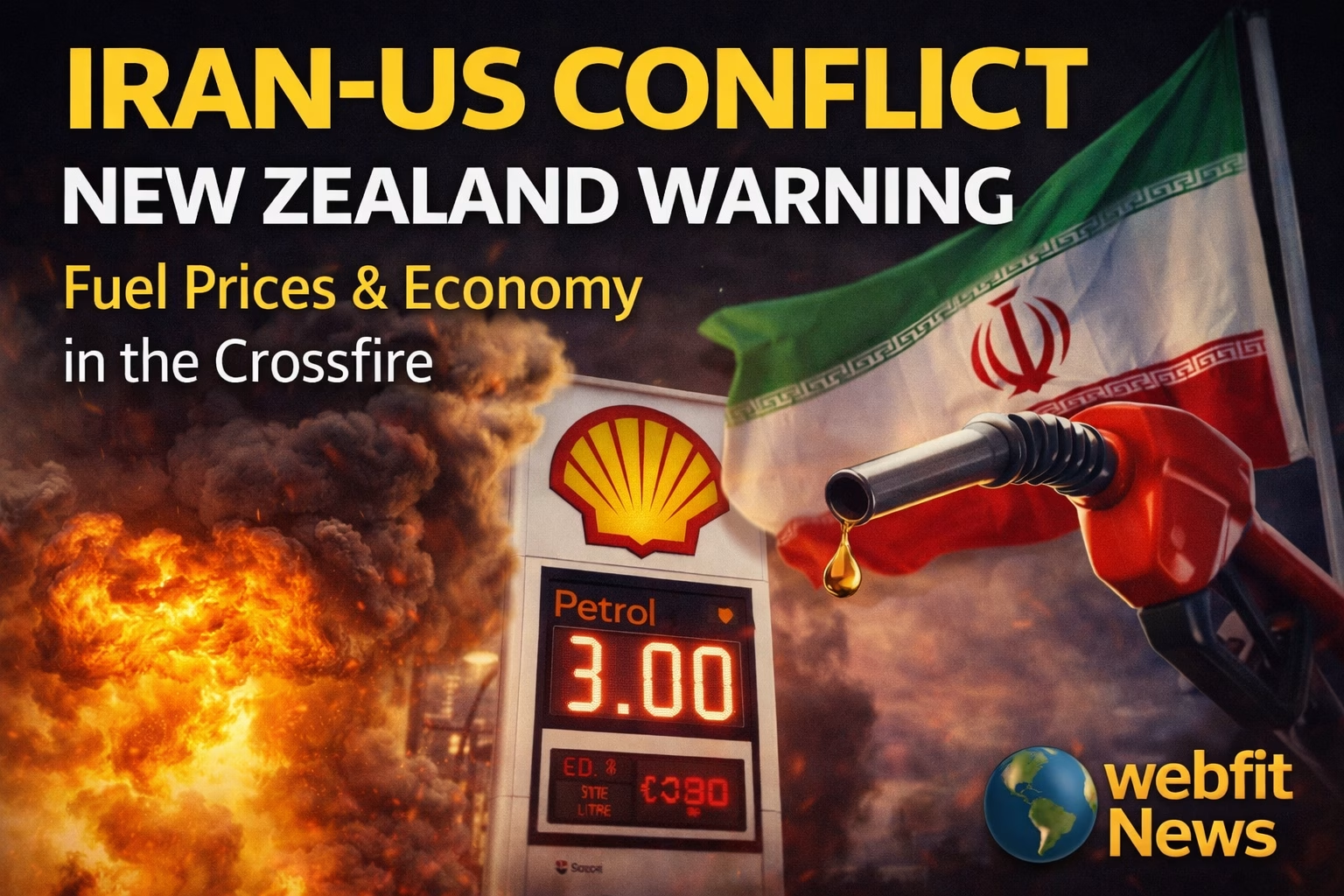
For New Zealand, this is not just a distant political story.
Any escalation involving Iran directly impacts:
- Global oil prices
- Shipping routes
- Inflation and cost of living
New Zealand, as a trade-dependent economy, is highly sensitive to disruptions in global supply chains.
Even a small increase in fuel prices can quickly translate into higher costs for transport, food, and everyday living.
Why It Matters for New Zealand
| Area | Potential Impact |
|---|---|
| Fuel Prices | Direct increase at pump |
| Food Costs | Transport costs rise |
| Export Businesses | Shipping delays and costs |
| Household Expenses | Inflation pressure continues |
| Tourism | Global uncertainty affects travel |
MULTIPLE PERSPECTIVES
Supporters of the current approach say:
- The President needs flexibility in global conflicts
- Quick decisions are necessary for national security
Critics argue:
- Bypassing Congress weakens democratic checks
- It risks dragging the country into another long war
Global observers are watching:
- Whether the US follows its own legal framework
- Or sets another precedent for unilateral action
HIDDEN ANGLE (THIS IS WHERE YOU WIN)
Here is what most coverage is not saying clearly.
The issue is not just about Iran.
It is about how modern wars are being controlled.
Presidents today can start conflicts quickly, but ending them becomes politically complicated.
And if this deadline is ignored or bypassed, it weakens one of the last legal limits on war-making power.
That is a much bigger shift than the conflict itself.
Around 20% of the world’s oil supply passes through the Strait of Hormuz. The War Powers Resolution was passed in 1973. The 60-day rule is one of the few legal checks on US military action. Global oil prices historically spike during Middle East conflicts. New Zealand imports the majority of its fuel, making it highly exposed to global price shocks
WEBFIT NEWS PERSPECTIVE
For readers in New Zealand, this is a reminder that global conflicts are never truly “far away.”
Energy prices, trade stability, and geopolitical alliances are all connected.
If the United States extends this conflict without clear legal backing, it signals a more unpredictable global environment.
And that uncertainty is what small, open economies like New Zealand feel the most.
CONCLUSION
The next few days will be critical.
This is not just a military decision. It is a legal, political, and global turning point.
Whether the 60-day rule is followed or stretched will set the tone for how future conflicts are handled.
And the world will be watching closely.