
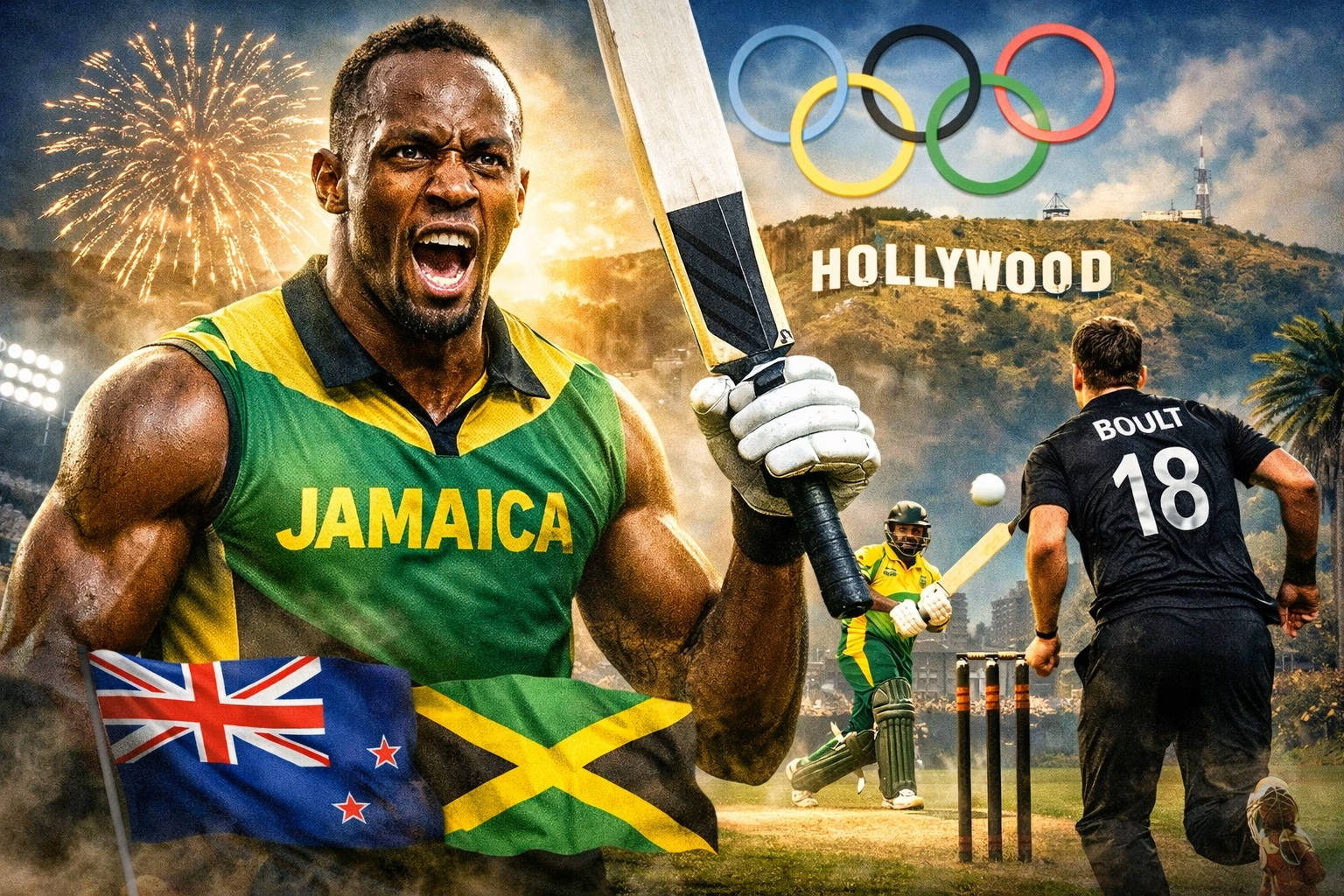
When Usain Bolt speaks, the sporting world still listens.
When he hints at returning to the Olympic stage in a completely different sport, it forces a serious conversation.
Bolt’s recent comments about being open to competing at the 2028 Los Angeles Olympics, where cricket will return for the first time in more than a century, are not just nostalgic soundbites. They raise real questions about elite longevity, Olympic strategy, global marketing, and where countries like New Zealand sit in a rapidly changing sporting landscape.
For Kiwi fans, this story hits closer to home than it might first appear.
Bolt’s Track Legacy Is Still Untouched by Time
Between 2008 and 2016, Bolt did not just dominate sprinting. He redefined it.
He remains the only athlete in history to win the 100m and 200m titles at three consecutive Olympic Games. His world records from Berlin in 2009 still stand nearly two decades later, despite advances in sports science, footwear, and track technology.
Key career records that remain unbeaten:
| Event | Time | Year |
|---|---|---|
| 100 metres | 9.58 seconds | 2009 |
| 200 metres | 19.19 seconds | 2009 |
| 4×100 relay | 36.84 seconds | 2012 |
No active sprinter has come within two tenths of his 100m mark. That matters because it explains why Bolt’s name still carries unmatched credibility. When an athlete at 41 is still globally relevant, it is not nostalgia. It is a legacy.
Cricket Was Bolt’s First Sporting Love
What many casual fans forget is that Bolt did not grow up dreaming of Olympic gold. He grew up wanting to bowl fast.
As a teenager in Jamaica, he played cricket seriously, often as a pace bowler. Coaches noticed his explosive run-up and natural bounce long before the track world came calling. His transition to sprinting happened almost by accident.
Even after retiring from athletics, Bolt kept returning to cricket:
- Celebrity T20 matches
- Bowling exhibitions against professional batters
- Ambassador roles for ICC events
This is not a publicity stunt. It is a long-running personal ambition.
Why the 2028 Olympics Change Everything
Safest Ways to Lose Weight in 2026: What Actually Works for Real People – WebfitNews
Cricket’s return to the Olympics at LA 2028 creates a structural opening that never existed before. The format will be T20, favouring short bursts of speed, power, and recovery.
For a former sprinter, this matters.
A fast bowler does not sprint continuously. He explodes, recovers, explodes again. From a physiological standpoint, that aligns far better with Bolt’s profile than a return to competitive sprinting ever would.
That said, age is not irrelevant. At 41, Bolt would face:
- Higher injury risk
- Longer recovery cycles
- Heavy conditioning demands
But Olympic cricket will be a six-team tournament, not a long professional season. The load is controlled, not relentless.
The New Zealand Angle Is Real, Not Forced
Bolt is not a stranger to Aotearoa. His 2012 visit to Auckland remains one of the most high-profile athlete tours New Zealand has hosted.
He trained with the NZ Breakers, worked with young sprinters at the Millennium Institute, and publicly praised the Haka for its psychological power. That visit still circulates in Kiwi sports culture.
More importantly, Bolt’s friendships tie directly into New Zealand cricket.
He has long admired Brendon McCullum, whose aggressive style mirrors Bolt’s own philosophy of attacking first. The speed-obsessed mindset behind modern “Bazball” cricket is not far removed from Bolt’s “Forever Faster” ethos.
Then there is the irresistible wordplay. Bolt versus Trent Boult is the kind of headline editors dream about. Add Olympic stakes, and it becomes global content.
On the athletics side, New Zealand fans are already invested in sprinting thanks to Zoe Hobbs, whose rise has reignited local interest in elite speed. Bolt remains the measuring stick for every sprinter, including Kiwi ones.
Fans Are Not Expecting Medals. They Are Expecting Moments.
This is the part many analysts miss.
Bolt’s appeal was never just about times. It was about theatre. The smile at the blocks. The archer pose. The way he turned pressure into entertainment.
In a T20 cricket context, that showmanship has more room to breathe than a 100m final ever allowed. One over. One wicket. One celebration. That is enough to electrify an Olympic crowd.
For fans, especially in New Zealand, the appeal is simple:
- Seeing a once-in-a-generation athlete try something genuinely risky
- Watching cricket framed as a global Olympic spectacle
- Measuring Kiwi athletes against a sporting icon, not a memory
What This Means for New Zealand Sport Strategically
There is a harder edge to this story.
With only six men’s teams in the Olympic cricket draw, qualification will be brutal. If smaller markets gain entry through regional pathways, countries like New Zealand could be squeezed despite strong cricketing credentials.
That tension matters. Olympic exposure shapes funding, youth participation, and global perception. Bolt’s presence would amplify attention, but it would also intensify competition for limited space.
For New Zealand, the message is clear. Olympic cricket is not a novelty. It is a strategic priority.
A Second Act That Still Matters
Whether Usain Bolt ever bowls a ball in Los Angeles is still uncertain. Training realities, selection politics, and qualification rules all stand in the way.
But the fact that this conversation is even credible tells us something important.
Bolt’s legacy is not frozen in the past. It is still shaping how we think about sport, crossover talent, and Olympic relevance. For New Zealand fans, his story intersects with our athletes, our teams, and our future on the world stage.
If the fastest man the world has ever seen does return, it will not just be a comeback.
It will be a statement.