By Webfit News
Auckland | December 16, 2025
New Zealand house prices are expected to grow more slowly over the next two years than previously predicted, before gaining momentum later in the decade, according to the latest economic forecasts from Treasury.
The Half-Year Economic and Fiscal Update (HYEFU), released this week, shows officials now expect annual house price growth of just 1.9 percent in the year ending June 2026. That is a sharp downgrade from the 5.6 percent increase forecast earlier this year in the May Budget.
Treasury’s updated outlook reflects a housing market that remains cautious, despite falling interest rates and expectations of an economic recovery.
What the new forecasts show
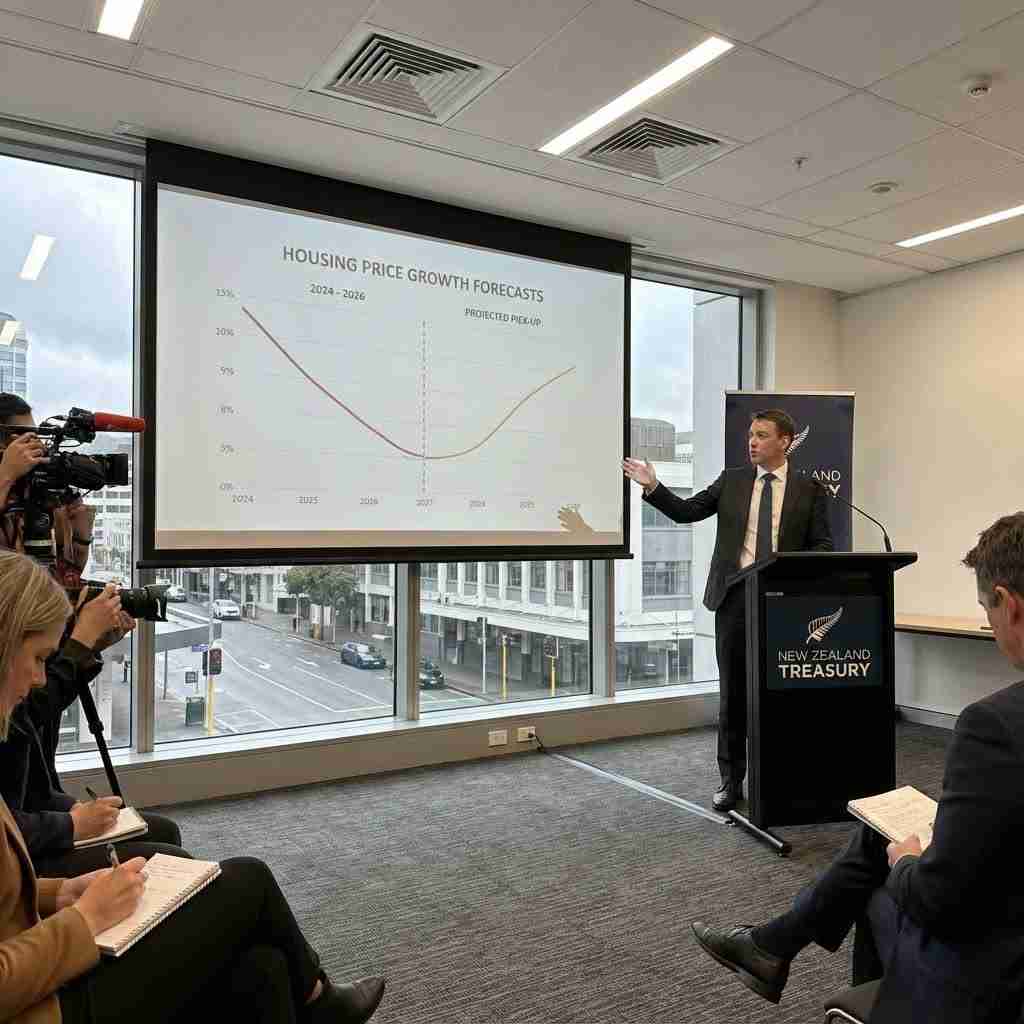
Treasury’s projections outline a gradual return to stronger house price growth after a slow start.
Here is the forecast path:
- 2026: 1.9 percent growth
- 2027: 6.6 percent growth
- 2028: 7.0 percent growth
- 2029: 6.6 percent growth
- 2030: 6.8 percent growth
The peak of 7 percent growth in 2028 is the highest annual increase expected across the forecast period to 2030.
Even at those levels, price growth would remain well below the extreme surge seen in 2021, when house prices jumped nearly 30 percent in a single year during the pandemic-era housing boom.
Why is growth slower than expected
Treasury says the housing market has been slower to respond to lower interest rates than many had expected.
Several factors are holding prices back:
- A large number of homes for sale, giving buyers more choice
- Weak buyer demand, especially in major cities
- Lower net migration, reducing pressure on housing
- Ongoing caution from households facing higher living costs
Treasury notes that many buyers are still waiting, expecting mortgage rates to fall further before committing.
Not all regions are experiencing the same conditions. Prices in parts of the South Island remain close to their 2022 peaks, while some North Island markets are still well below earlier highs.
What this means for homeowners and buyers
Finance Minister Nicola Willis said she supports moderate house price growth, balancing affordability with stability.
She acknowledged that some homeowners who bought near the top of the market may still be dealing with negative equity and are hoping for price increases. At the same time, she stressed the importance of keeping housing within reach for younger New Zealanders.
For first-home buyers, the slower growth outlook may provide breathing room. With prices rising only modestly in the near term, buyers may face less competition and more time to save deposits.
For investors, the forecasts suggest returns will be steady rather than spectacular. Treasury does not expect a return to the rapid price inflation of the early 2020s.
Interest rates and the wider economy
The Reserve Bank has cut the Official Cash Rate several times since the change of government, helping ease mortgage costs. However, Treasury says the effect on housing has been limited so far.
High interest rates earlier in the cycle reduced household wealth and spending. Treasury estimates average household net wealth has fallen from around 12 times annual disposable income at the 2021 peak to about 10 times today.
Household consumption is expected to remain subdued through the rest of 2025, before improving in 2026 as house prices recover and interest rates ease further.
The big picture
Treasury’s message is clear. The housing market is stabilising, but the recovery will be gradual.
Rather than another boom, officials are forecasting a period of moderate, sustained growth, supported by lower interest rates, improving migration, and a gradual lift in confidence.
For most New Zealanders, that could mean fewer shocks, more predictability, and a housing market that grows without overheating again.