By Webfit News
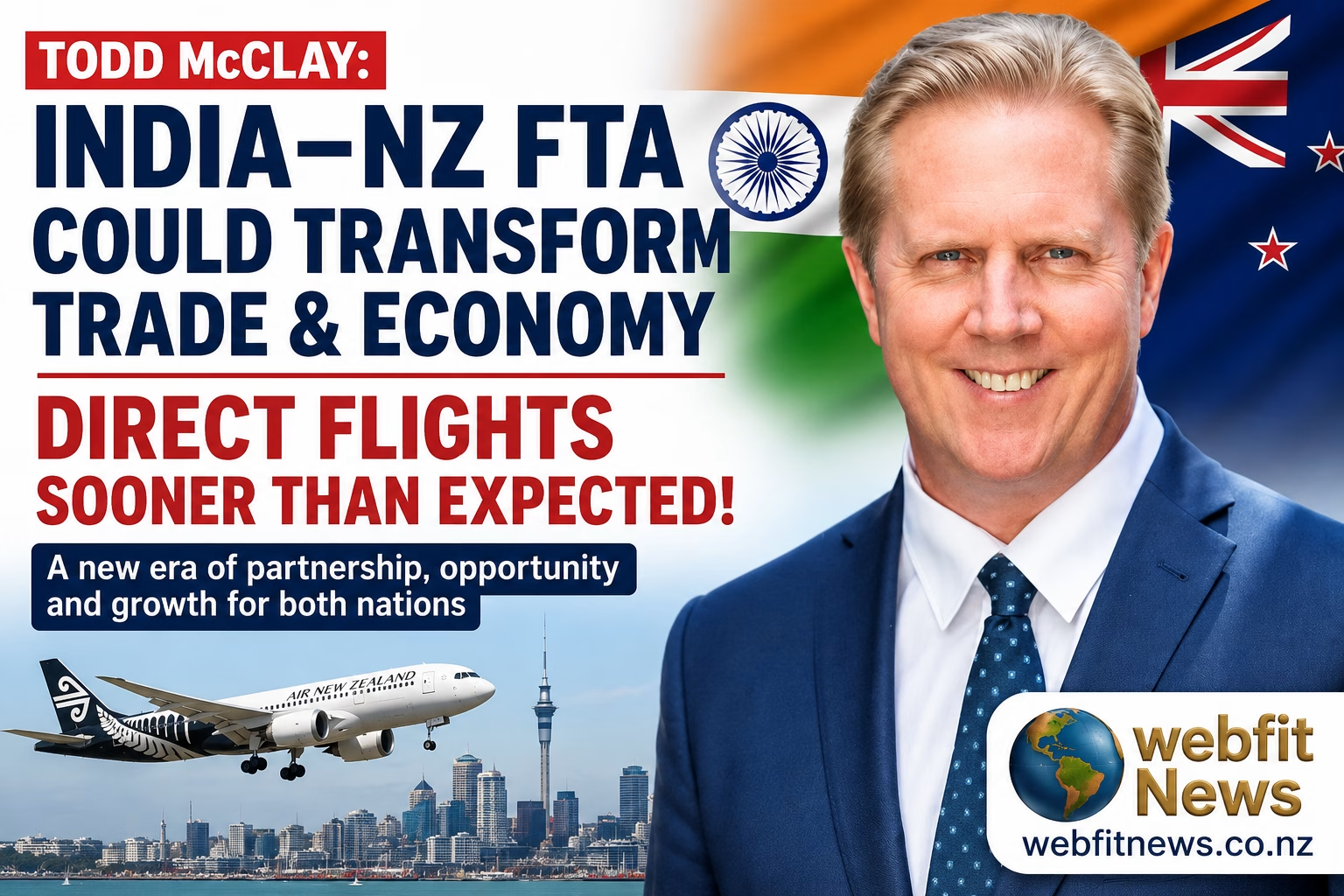
New Zealand Trade and Investment Minister Todd McClay says the newly signed New Zealand India Free Trade Agreement is much more than a trade deal. He believes it marks the beginning of one of New Zealand’s most important international relationships and could reshape trade, business, tourism and people-to-people connections for decades.
Speaking during a community interaction in the first week of August, McClay reflected on the significance of the agreement, New Zealand’s economic outlook, and why he believes closer ties with India will become one of the country’s greatest opportunities.
His message was clear. The agreement has been signed, but its real success will depend on how governments, businesses, educational institutions and communities bring it to life.
Spain’s Ceuta Border Crisis: From Mass Migrant Crossings to a Growing European Debate – WebfitNews
“Trade agreements are only the beginning”
McClay described a free trade agreement as a framework rather than an end goal.
“Trade agreements are just rules. They create the framework. It is now up to governments, businesses, sporting organisations, educational institutions and communities to breathe life into those agreements.”
According to McClay, the India agreement has the potential to become one of New Zealand’s most significant international partnerships.
“It will not take many years before New Zealand’s relationship with India becomes one of our most important international relationships.”
He said India’s growing global influence makes the partnership increasingly valuable.
With India now among the world’s fastest growing major economies and expected to become one of the world’s three largest economies, McClay said New Zealand cannot afford to overlook the opportunities.
Strong bipartisan support sends positive signal
McClay welcomed the broad political support the agreement received in Parliament.
He noted that while political debate is normal in a democracy, the overwhelming majority of MPs supported the agreement because of its long term benefits for New Zealand.
According to him, this sends a strong message internationally that New Zealand remains committed to building a lasting partnership with India regardless of political differences.
Community relationships matter as much as trade
Throughout his remarks, McClay repeatedly returned to one theme.
Governments can negotiate agreements, but communities make them successful.
He praised New Zealand’s Indian community for helping strengthen relationships between both countries through business, education, culture and community engagement.
He encouraged community organisations to continue building connections with similar organisations across India.
According to McClay, these relationships create trust that often proves just as valuable as commercial negotiations.
Why India matters more than ever
McClay believes India’s importance extends far beyond trade.
He pointed out that India has a population of more than 1.4 billion people, an expanding middle class and rapidly growing demand for high quality food, education, tourism and professional services.
For New Zealand exporters, this creates significant opportunities across sectors including:
- Dairy
- Horticulture
- Forestry
- Education
- Tourism
- Technology
- Professional services
Rather than seeing India only as an export destination, McClay said New Zealand should build a genuine long term partnership.
Direct flights could arrive sooner than expected
One of the strongest announcements during his address involved aviation.
McClay revealed that preparations for direct flights between India and New Zealand are already well underway.
He said Air New Zealand has established dedicated offices in India to begin planning future services and promoting New Zealand to Indian travellers.
According to McClay, the airline has already approached competition authorities seeking approval to cooperate on launching direct routes.
“It is no longer a question of if. It is a question of when.”
He believes direct flights would dramatically improve:
- Tourism
- Business travel
- Student mobility
- Family connections
- Investment opportunities
Direct air connectivity has long been one of the biggest requests from the Indian community and New Zealand businesses.
Economy showing signs of recovery
McClay also spoke extensively about New Zealand’s economic direction.
He acknowledged that the past several years have been difficult for households and businesses following Covid 19 and global economic uncertainty.
He said the Government remains focused on careful financial management while investing in essential public services.
According to McClay, priorities include:
- Improving healthcare
- Supporting education
- Strengthening public safety
- Growing exports
- Creating jobs
- Reducing inflation
He argued that governments should spend taxpayer money with the same discipline that families and businesses apply to their own finances.
Export growth already delivering results
McClay pointed to recent export performance as evidence that New Zealand’s trade strategy is working.
He highlighted the success of previous trade agreements, particularly with the European Union, saying exporters are already benefiting from improved market access.
He believes the India agreement could become one of the country’s largest export opportunities over the next decade.
India relationship extends beyond economics
While trade featured prominently, McClay emphasised that the relationship extends into many other areas.
He noted that recent engagements between both countries have included agreements covering:
- Defence cooperation
- Education
- Sport
- Culture
- Tourism
- Research
- Business partnerships
He said Prime Minister Narendra Modi’s recent visit demonstrated how broad the relationship has become.
Rather than focusing solely on commercial outcomes, both countries are investing in stronger people-to-people connections.
Personal story highlights growing trust
McClay also shared a personal story from his trade mission to India.
During the visit, he attended a large community cricket event in the constituency of India’s Commerce Minister, Piyush Goyal.
The experience, he said, illustrated how relationships built through community engagement often strengthen official negotiations.
He described meeting local communities, participating in cultural activities and seeing first hand the warmth extended towards New Zealand’s delegation.
According to McClay, those experiences help build trust that formal negotiations alone cannot achieve.
Focus remains on growth
Looking ahead, McClay said New Zealand’s economic future depends on remaining outward looking and continuing to strengthen international partnerships.
He believes trade, innovation and international cooperation will create new opportunities for future generations.
While acknowledging continuing global uncertainty, including geopolitical tensions and fluctuating fuel prices, he expressed confidence that New Zealand businesses have shown resilience and adaptability.
Why this matters
The New Zealand India Free Trade Agreement represents one of the most significant diplomatic and economic milestones in recent years.
If successfully implemented, it has the potential to:
| Opportunity | Potential Impact |
|---|---|
| Increased exports | Greater access to one of the world’s largest markets |
| Direct flights | Easier travel, tourism and business connections |
| Education | Growth in international student numbers |
| Tourism | Higher visitor arrivals from India |
| Investment | Stronger two way commercial partnerships |
| Community ties | Deeper cultural and people to people relationships |
For New Zealand’s Indian community, the agreement also carries symbolic importance.
It reflects recognition of India’s growing global role and the significant contribution Indian New Zealanders continue to make across business, education, healthcare, technology and public life.
As implementation begins, businesses, exporters, educational institutions and community organisations will now play a central role in turning the agreement from a signed document into meaningful economic and social outcomes.
If McClay’s prediction proves correct, the relationship between New Zealand and India may soon become one of the defining partnerships shaping the country’s future.