Published: 17 January 2026 | Webfit News Analysis
Why This Is News Today
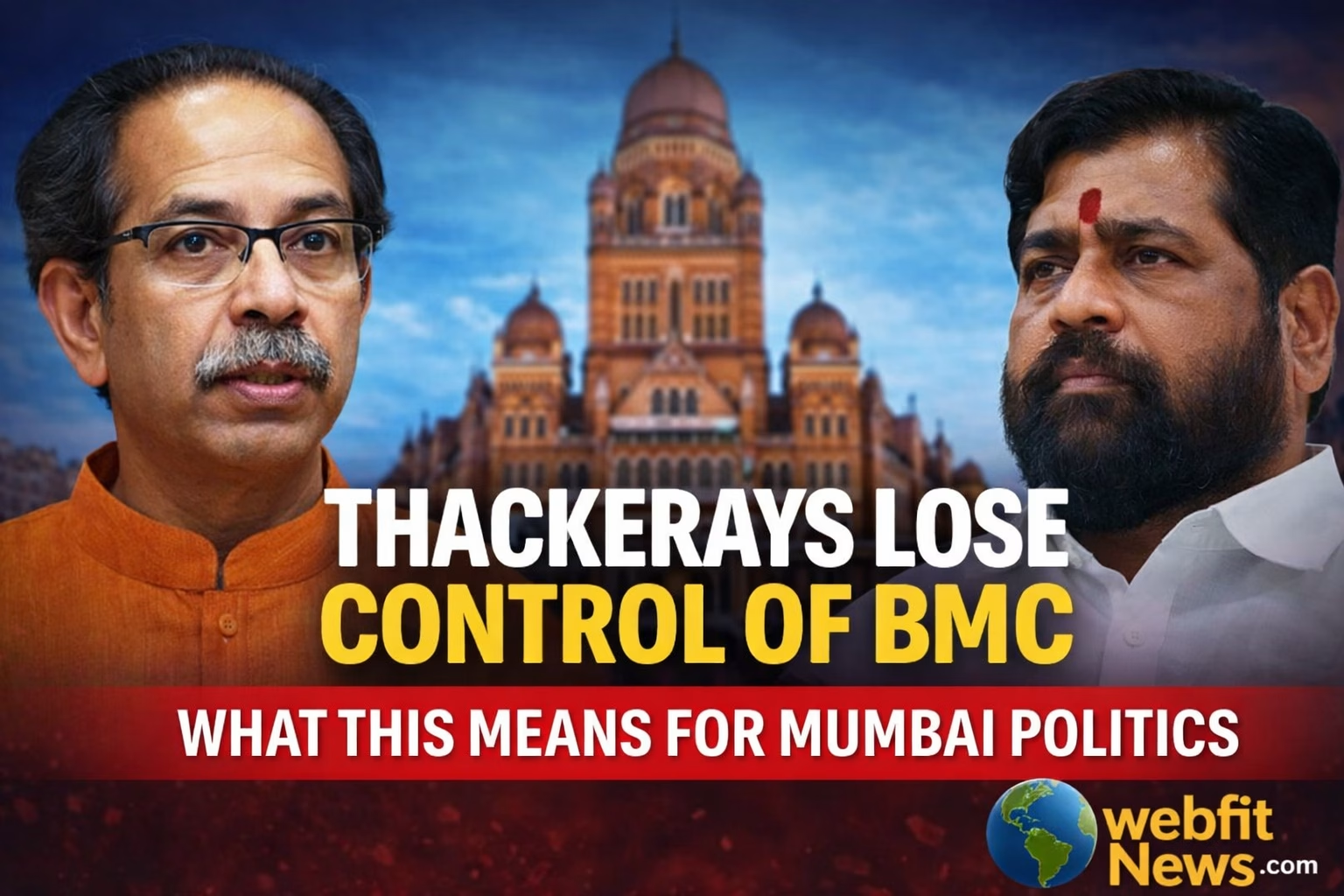
As Maharashtra enters a politically charged 2026, the loss of effective control over the Brihanmumbai Municipal Corporation (BMC) has moved from being a past event to a present-day consequence for the Thackeray-led Shiv Sena faction.
With civic elections still delayed, administrative decisions, budget influence, and urban governance in Mumbai are now firmly aligned away from Uddhav Thackeray. This shift is shaping political alignments, resource flow, and campaign strategy right now, not later.
In short, January 2026 is when the cost of losing the BMC is being fully felt.
What Has Changed on the Ground
Over the past few weeks, senior bureaucratic appointments, project approvals, and ward-level coordination within the BMC ecosystem have increasingly reflected the priorities of the ruling state alliance led by Eknath Shinde, with backing from the Bharatiya Janata Party.
This has immediate effects:
- Shiv Sena (Uddhav faction) corporators and workers report reduced access to decision-makers
- Local contractors and civic intermediaries are realigning politically
- Control over messaging around Mumbai infrastructure and services has shifted
This is not symbolic. This is operational power moving hands.
Why the BMC Still Decides Mumbai Politics
The BMC is not just a municipal body. It is:
- India’s richest civic institution
- The engine behind Mumbai’s roads, housing approvals, flood management, and public health
- A long-standing political training ground for future state leaders
Historically, even when the Shiv Sena was weakened at the state level, control of the BMC kept the Thackeray brand politically relevant and financially resilient.
That shield is now gone.
The Immediate Impact on Uddhav Thackeray in 2026
From Webfit News’ assessment, the consequences are becoming sharper this month.
1. Cadre Drift Is Accelerating
Grassroots workers operate on access and influence. January has seen visible hesitation among mid-level leaders about staying aligned with a faction that lacks institutional leverage.
2. Campaign Preparation Is Weakened
With assembly elections on the horizon, Mumbai should have been a mobilisation base. Instead, it is now contested territory.
3. Narrative Control Has Slipped
Political opponents are successfully framing this as a decline, not a disruption. Silence or cautious messaging from the Uddhav camp is reinforcing that perception.
Politics punishes pauses.
Why This Strengthens Shinde and the BJP Now
For Eknath Shinde, January 2026 is about consolidation. Control over Mumbai’s civic machinery allows his faction to demonstrate governance, reward loyalty, and project inevitability.
For the BJP, this fits a wider strategy:
- Neutralise legacy-based regional power centres
- Convert administrative control into electoral advantage
- Present stability versus fragmentation
Mumbai is central to Maharashtra’s political economy. Holding influence here is not optional. It is decisive.
Is a Comeback Still Possible?
Yes, but only if the strategy changes immediately.
Webfit News believes three things are non-negotiable in 2026:
- Clear positioning: The Uddhav faction must stop sitting between soft opposition and reluctant alliance politics. Voters do not rally behind ambiguity.
- Aggressive urban issues: Housing affordability, infrastructure delays, and civic transparency are Mumbai’s pressure points. They must be owned loudly.
- Visible leadership presence: Mumbai politics is street-level politics. Distance creates doubt.
Legacy alone will not survive a ground war.
Why This Matters Beyond Maharashtra
Nationally, this moment is being closely watched.
- It signals how administrative control can outweigh electoral symbolism
- It shows how delayed civic elections can still reshape political power
- It warns other regional parties dependent on municipal strongholds
The message is blunt: lose your city, and your relevance erodes fast.
Webfit News Take
This is not about nostalgia. It is about adaptation.
The Thackerays are not politically finished. But January 2026 marks the point where the consequences of losing the BMC are no longer theoretical.
Power has moved. Systems have adjusted. People are choosing sides.
From here, Uddhav Thackeray either reinvents his leadership for a harder, leaner political fight or risks being remembered as the last custodian of a fading dynasty.
Indian politics does not wait for comfort.
Endnote
Mumbai remains the heartbeat of Maharashtra politics. Whoever controls its institutions controls the tempo of the state.
As of today, that tempo is no longer set by the Thackerays.