CEUTA, 3 August 2026
Spain’s North African enclave of Ceuta is beginning to recover from an extraordinary border surge that saw tens of thousands of migrants enter from neighbouring Morocco, overwhelming local services, triggering a military deployment and reopening one of Europe’s most divisive political arguments.
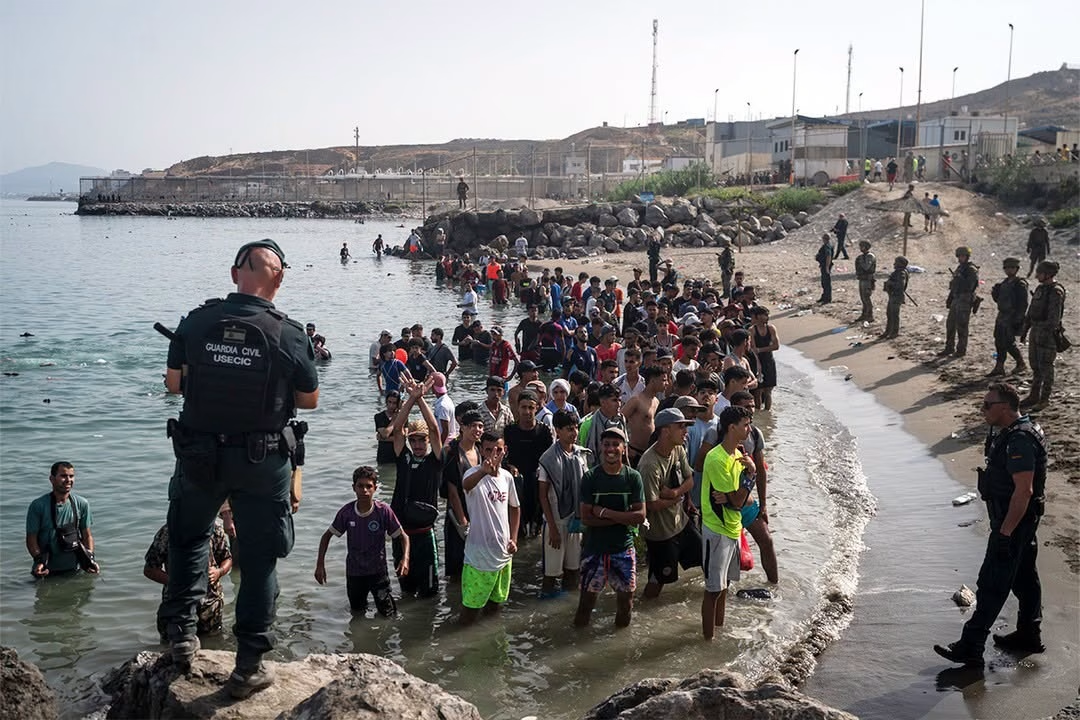
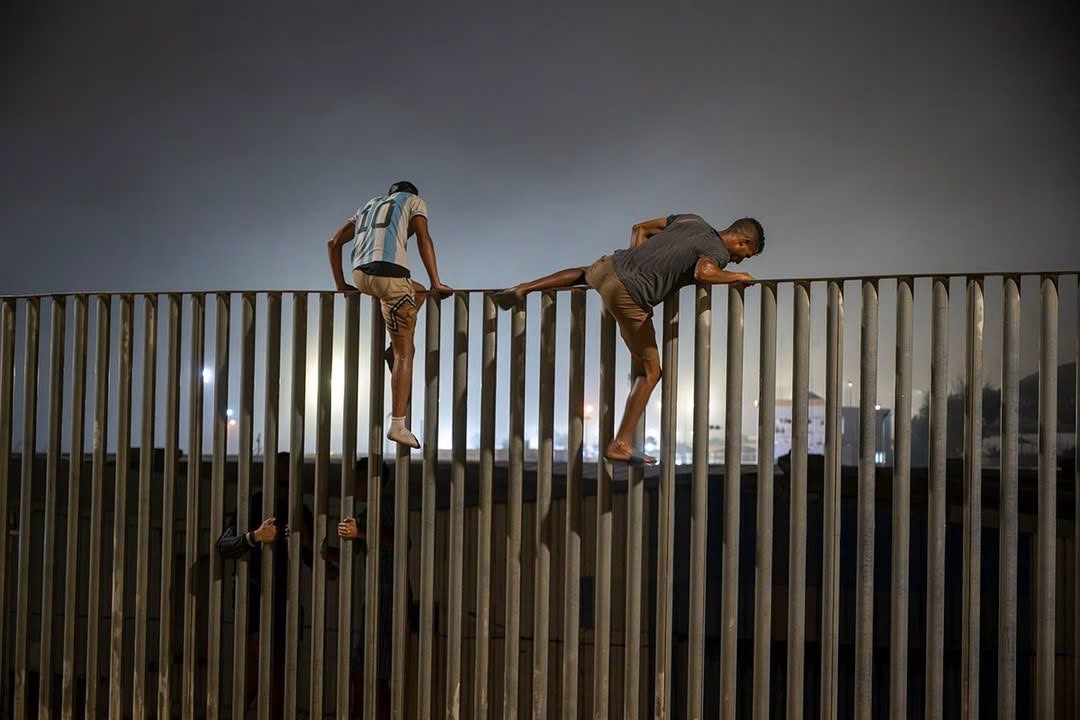
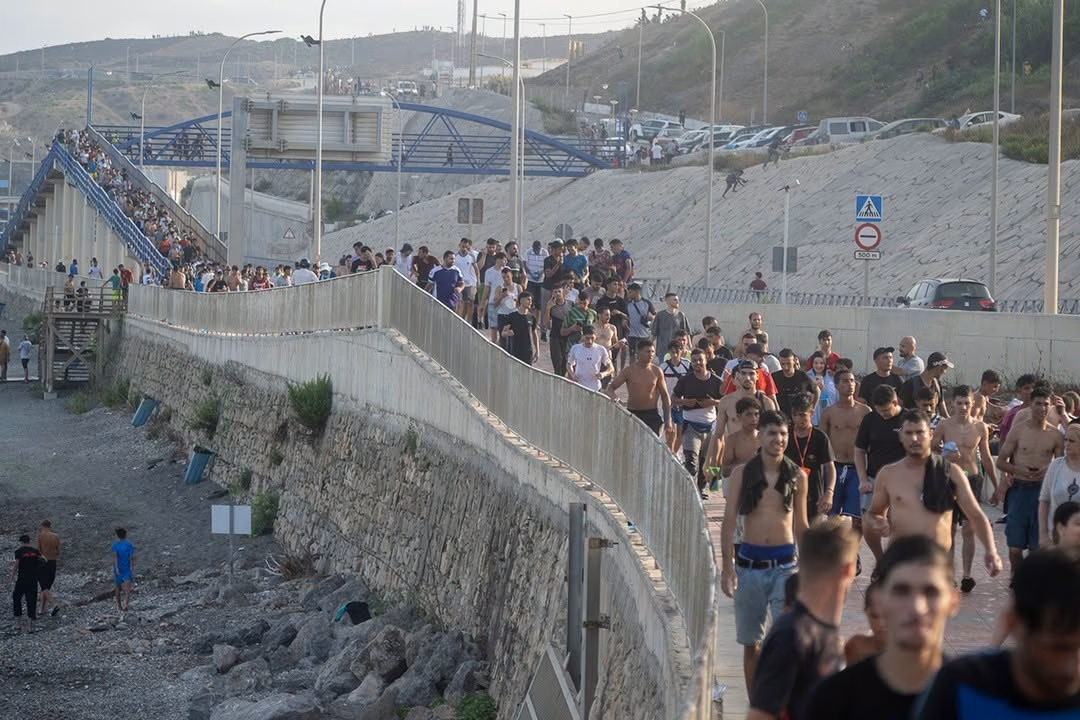
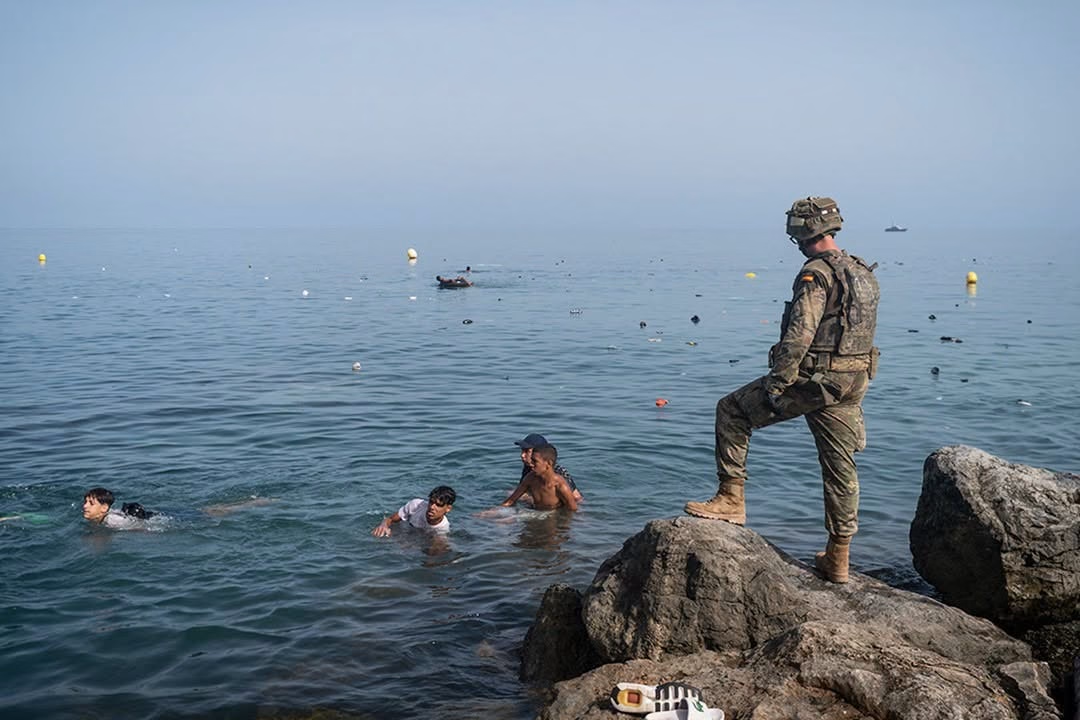
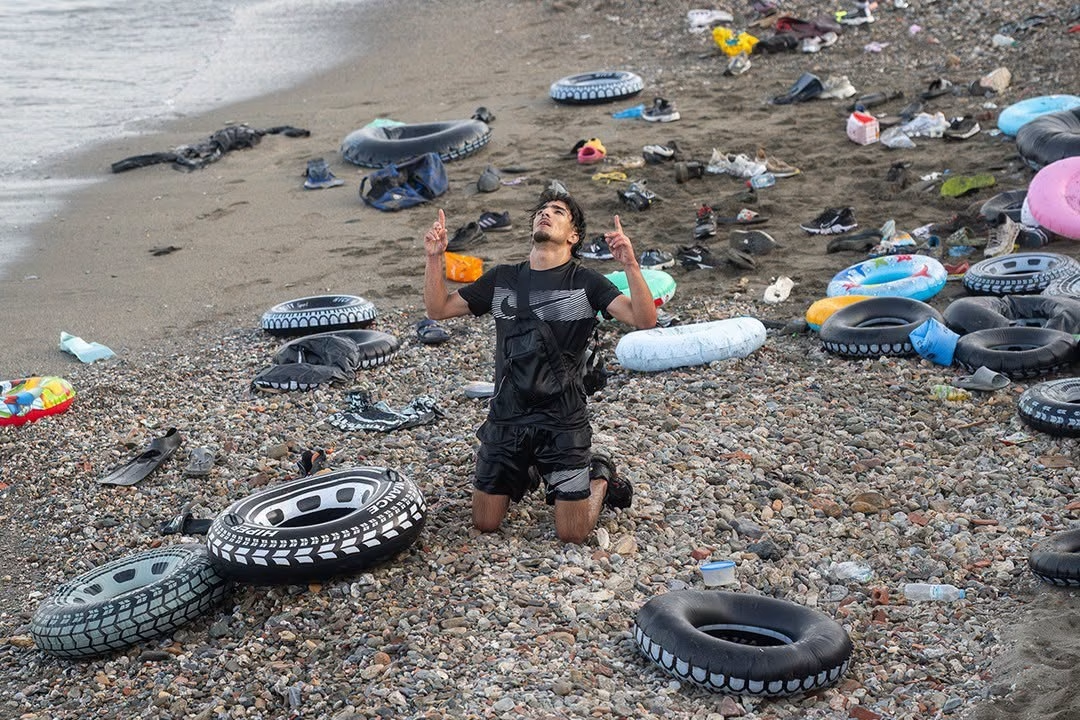
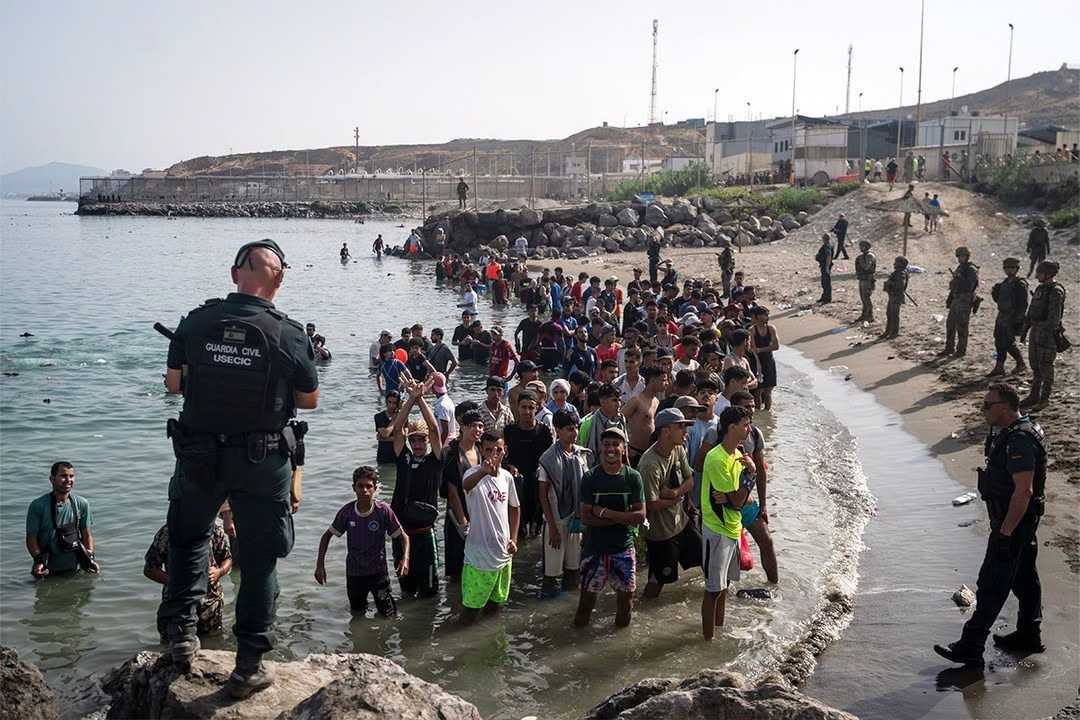
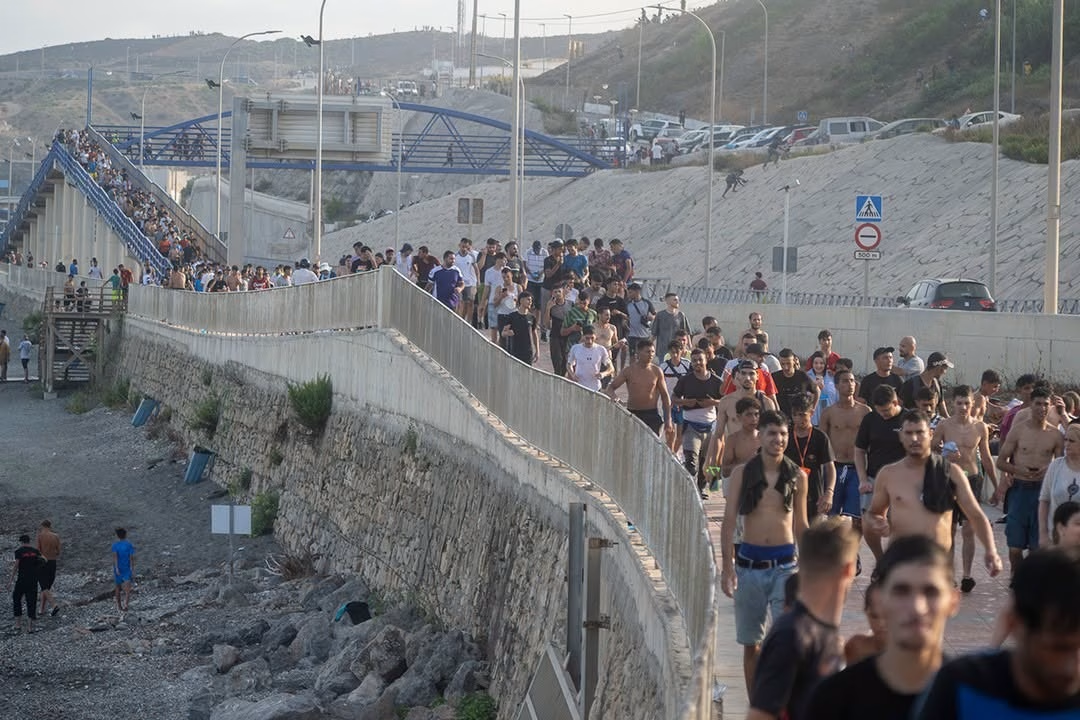
Spanish authorities estimate that roughly 49,000 to 60,000 people crossed into Ceuta during the peak of the crisis on 30 and 31 July, travelling by land, swimming around the Tarajal breakwater or climbing border fencing. Most were young Moroccans, although people from other African countries were also among those who entered.
By 3 August, the immediate pressure had eased significantly. Spanish officials said most of those who entered had returned to Morocco, while fewer than 2,000 were believed to remain in Ceuta by late Friday. Nevertheless, the deaths, humanitarian fallout and political consequences continue to reverberate across Spain and the European Union.
Lower Hutt Opens the Door to Family History with Free August Programme – WebfitNews
What is Ceuta, and why does it matter?
Ceuta is a Spanish autonomous city on the northern coast of Africa, directly bordering Morocco.
Together with Melilla, it forms the European Union’s only land border with Africa. That makes the small territory both strategically important and highly vulnerable to sudden movements of people seeking entry into Europe.
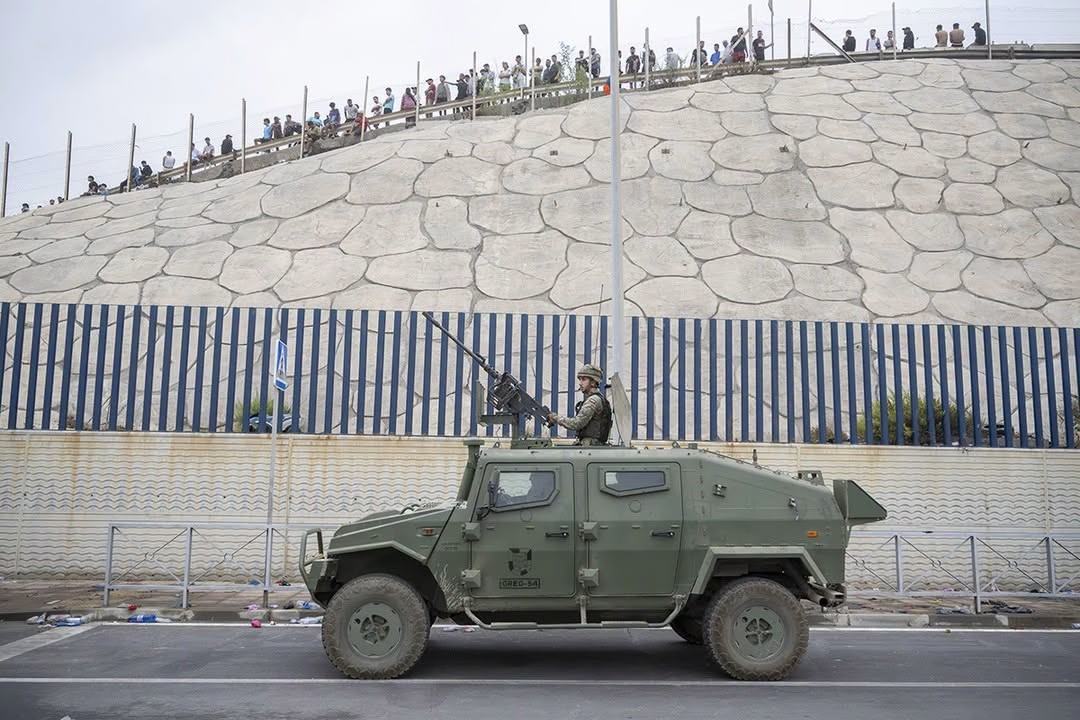
Ceuta is separated from Morocco by reinforced fencing and closely monitored border crossings. Migrants who enter the enclave do not automatically gain access to mainland Spain or the wider Schengen area.
Despite that restriction, reaching Ceuta is often seen as a first step towards Europe.
Its geography has repeatedly made it a focal point for migration pressures, diplomatic disputes and organised smuggling activity.
How the crisis began
Pressure had been building before the mass crossings.
Earlier reports indicated that around 1,500 migrants had reached Ceuta over the preceding week, many by swimming from Morocco. Local officials warned that the territory’s reception facilities were already under severe strain.
The situation escalated dramatically on 30 July.
Thousands gathered near the Moroccan border town of Fnideq before moving towards Ceuta. Some swam around coastal barriers, while others crossed overland or scaled the border fence.
Initial reports suggested between 2,000 and 3,000 people had entered. Within 24 hours, Spain’s Interior Ministry raised its estimate to approximately 49,000. Later accounts placed the total closer to 60,000.
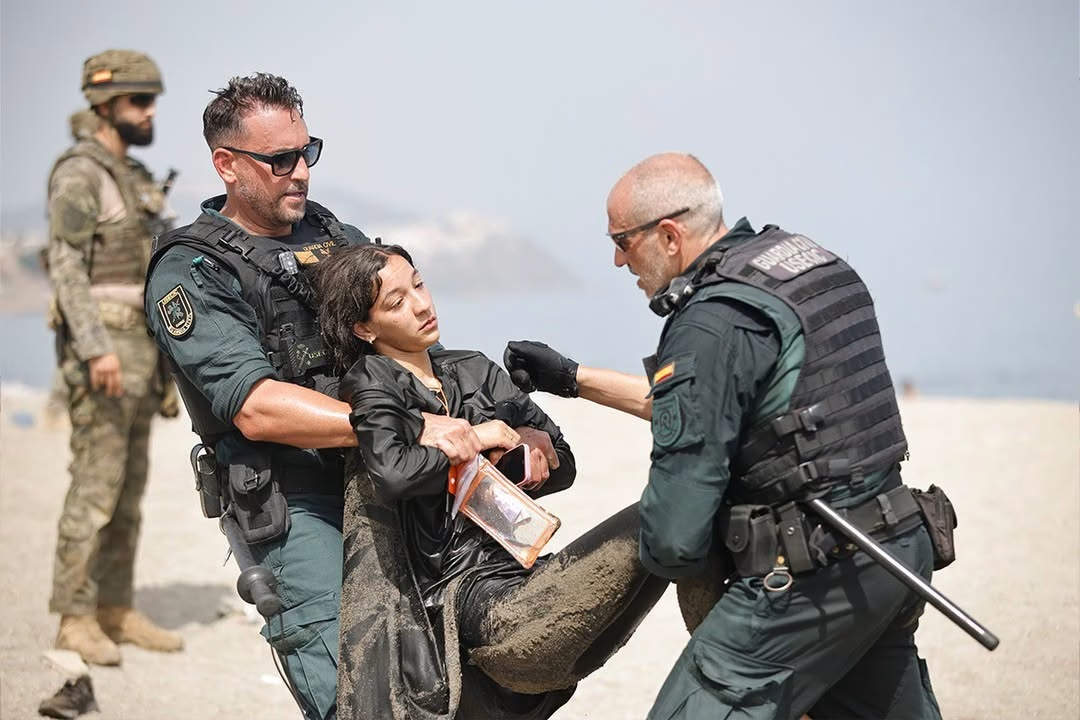
Spain deployed additional Guardia Civil officers, national police and military personnel to restore border control and support local authorities.
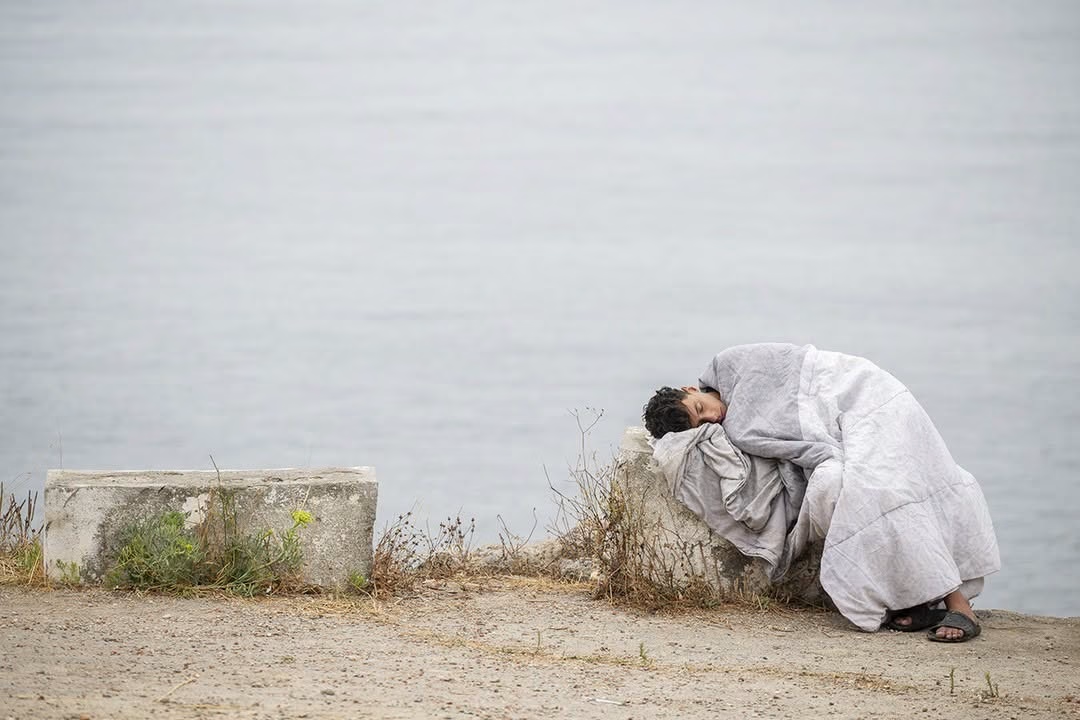
The scale of the movement quickly overwhelmed Ceuta’s normal reception capacity. Many arrivals slept outside, relied on food and water distributed by residents and aid workers, or attempted to return after realising they could not immediately travel onwards to mainland Europe.
A deadly crossing
The crisis also produced a substantial loss of life.
Spanish reporting initially confirmed at least 18 deaths, mainly involving people who drowned while attempting to swim into the enclave.
The toll later rose sharply. By the end of 31 July, Spanish authorities reported that 57 bodies had been recovered, with subsequent reports placing the number even higher.
Some deaths were attributed to drowning in crowded coastal waters, while others reportedly occurred during chaotic movements near the border.
Search and recovery operations continued after the main surge had subsided.
Why did so many people attempt to cross?
There is no single confirmed explanation.
Economic hardship and youth unemployment in Morocco appear to have been major underlying factors. Many of those interviewed said they were seeking employment and a better future in Europe.
Misleading social media posts also played an important role.
Videos and messages circulated online claiming that a recent Spanish Supreme Court decision meant migrants arriving by sea could not be returned to Morocco.
The ruling reportedly restricted immediate pushbacks at sea but did not grant migrants an automatic right to remain in Spain. Smuggling networks and social media accounts appear to have presented the decision as an open door into Europe.
Spanish officials have blamed trafficking organisations for exploiting the ruling and spreading false information.
Questions have also been raised over Morocco’s handling of the border.
Some Spanish politicians and analysts suggested Moroccan authorities initially allowed the crossings to proceed, possibly as a diplomatic message to Madrid. Similar accusations followed a large Ceuta border crisis in 2021.
However, claims that Morocco deliberately opened the border remain unproven. Moroccan security forces later used barriers, tear gas and other measures to prevent additional crossings.
Why most migrants returned
Ceuta did not become the gateway to mainland Europe that many arrivals expected.
Spanish authorities tightened controls and accelerated returns. Migrants were unable to move freely from Ceuta to continental Spain.
Many chose to return voluntarily after encountering overcrowding, food shortages and uncertainty about what would happen next.
Some told reporters they had nowhere to sleep and could not access basic services. Others returned by land or attempted to swim back to Morocco.
Spain said around 48,300 people had returned to Morocco within a short period, leaving the immediate crisis largely contained within Ceuta.
A smaller group remained, hoping to seek asylum, find work or eventually reach mainland Spain.
European governments react
The scale of the crossings caused alarm beyond Spain.
Italy temporarily reintroduced checks on some travellers arriving from Spain by air and sea, citing concerns about irregular secondary migration.
Spain criticised the move and argued there was no evidence of large-scale movement from Ceuta into the wider Schengen area. European officials also said the situation remained geographically contained.
France increased security along its border with Spain, while European leaders called for faster returns, stronger external border controls and greater cooperation with Morocco.
The response exposed familiar divisions within Europe.
Some governments emphasised solidarity with Spain and the need for coordinated border management. Others argued that Spain’s immigration policies had encouraged irregular migration, a claim disputed by Spanish authorities and fact-checkers.
Spain faces domestic political pressure
Prime Minister Pedro Sánchez described the mass crossing as a challenge to Spanish sovereignty and promised stronger border controls.
Opposition parties accused the Government of losing control and demanded tougher action.
The crisis has also intensified arguments over Spain’s immigration regularisation policies, asylum rules and relationship with Morocco.
Madrid now faces the difficult task of balancing border enforcement with humanitarian and legal obligations.
Authorities must identify minors, process asylum claims, investigate deaths and determine the status of those who remain.
What happens next?
The immediate crossings have slowed, but Ceuta remains under heightened security.
Spain is expected to reinforce coastal barriers, expand surveillance and increase cooperation with Moroccan authorities against smuggling networks.
The European debate will last much longer.
Ceuta has once again demonstrated how quickly misinformation, economic desperation and weak border coordination can combine to produce a major humanitarian emergency.
It has also shown the limits of national responses inside a borderless European system.
For Spain, the challenge is no longer simply removing people from Ceuta.
It is rebuilding confidence in border control, maintaining cooperation with Morocco and explaining how one of Europe’s smallest territories became the centre of one of its largest migration crises in years.
Photo credit: Images used in this article were sourced from publicly available internet sources for editorial and news-reporting purposes. All copyrights remain with their respective owners.