Auckland / New Delhi:
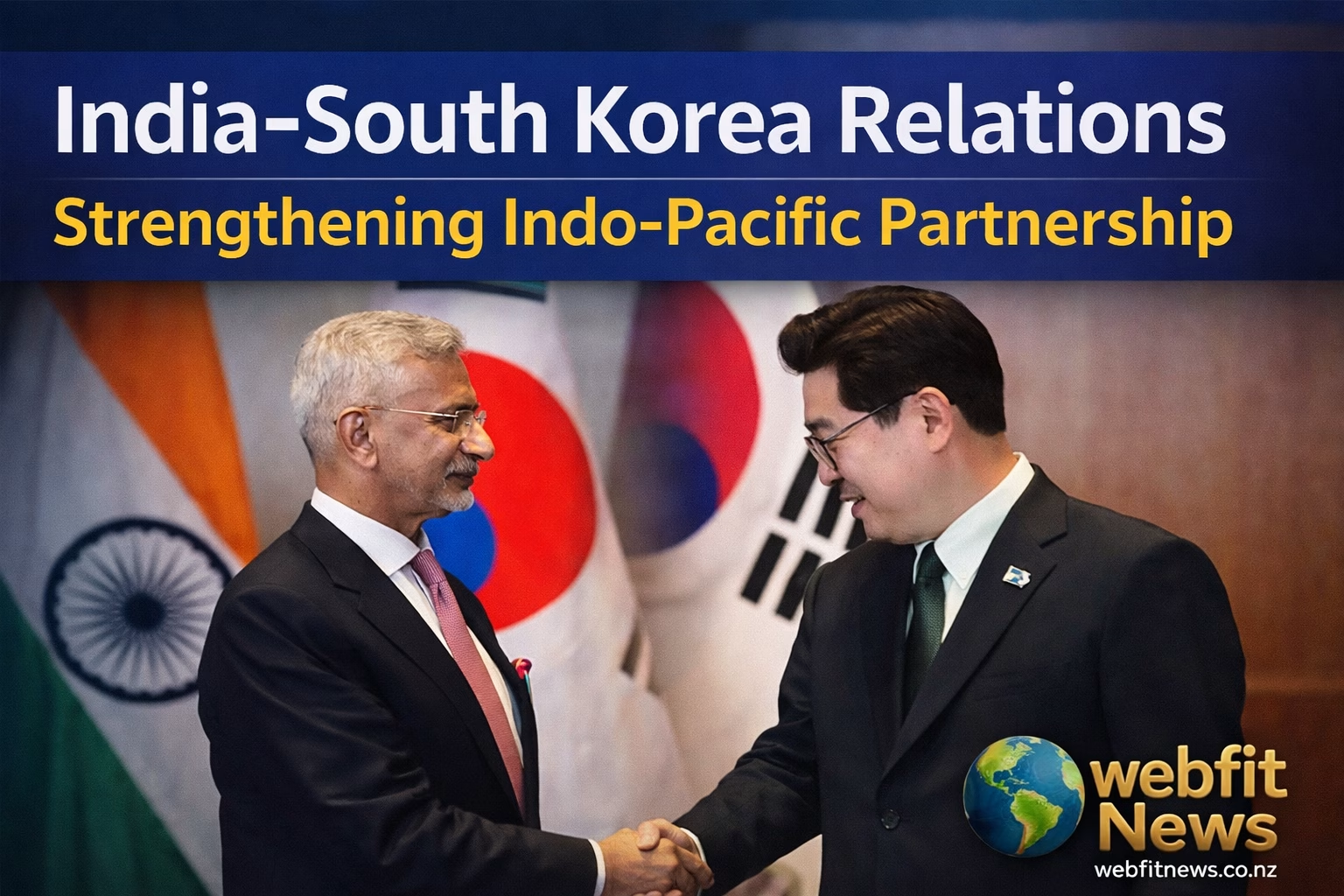
In a move that goes far beyond ceremonial diplomacy, South Korean President Lee Jae-myung has arrived in India for a three-day state visit, placing renewed focus on the growing India–South Korea “Special Strategic Partnership.”
At first glance, this may look like another routine diplomatic visit. But scratch the surface, and it becomes clear this is about something much bigger, a recalibration of influence in the Indo-Pacific region.
More Than a Visit, A Strategic Signal
Singapore Fixed Housing. Why Is New Zealand Still Struggling to Catch Up? – WebfitNews
High-level state visits are rarely just symbolic. They are deliberate signals.
President Lee’s presence in India is being viewed as a strategic move to strengthen ties at the highest level, reinforcing shared priorities between the two major Asian democracies.
For India, this visit reinforces its position as a central player in the Indo-Pacific.
For South Korea, it is a clear attempt to deepen engagement beyond traditional economic ties.
This is diplomacy with intent.
What “Special Strategic Partnership” Really Means
The phrase sounds formal, but in global politics, words matter.
A “Special Strategic Partnership” is not casual terminology. It reflects a deeper level of trust, long-term alignment, and shared geopolitical thinking.
Behind the scenes, this partnership is expected to focus on:
- Stronger economic collaboration
- Technology and innovation exchange
- Regional security coordination
- Long-term policy alignment in the Indo-Pacific
In simple terms, this is two countries deciding they are better off moving forward together than separately.
Why Three Days Matter
The duration of this visit is not accidental.
A three-day state visit signals depth, not just optics. It allows time for serious conversations, ministerial-level meetings, and long-term planning discussions.
This is where real decisions get shaped, beyond press conferences and photo opportunities.
It also sends a message to the world:
This partnership is not temporary. It is structural.
The Bigger Picture: Indo-Pacific Power Balance
This visit comes at a time when the global landscape is becoming increasingly complex.
With rising tensions between major global powers, countries like India and South Korea are quietly building their own strategic pathways.
Instead of choosing sides, they are strengthening bilateral relationships that allow them to maintain independence while still influencing regional stability.
This “middle power alignment” is becoming one of the most important trends in global politics.
Why This Matters to New Zealand
From a Kiwi perspective, this development is not distant.
New Zealand operates within the same Indo-Pacific framework. Stronger cooperation between India and South Korea contributes to regional stability, trade opportunities, and a more balanced geopolitical environment.
For Kiwi businesses, this could mean:
- Expanded trade corridors
- Stronger regional partnerships
- Increased economic collaboration across the Asia-Pacific
In short, what happens between India and South Korea does not stay between them.
The Human Angle: A Growing Indian Global Presence
For the Indian community in New Zealand and worldwide, this visit reflects something deeper.
India is no longer just participating in global conversations.
It is shaping them.
Partnerships like this reinforce India’s role as a key decision-maker in international affairs, something that resonates strongly with the Indian diaspora across countries like New Zealand.
Webfit News Perspective
This visit is not about headlines. It is about direction.
India and South Korea are quietly building a partnership that reflects a new kind of global order, one that is less about dominance and more about collaboration between strong, independent nations.
For communities in New Zealand, especially those with deep ties to India, this is a moment to watch closely.
Because the future of the Indo-Pacific is not being decided in one place.
It is being shaped through partnerships like this.