DUNEDIN, 30 July 2026
The next phase of the South Dunedin Future programme will place equal emphasis on near-term infrastructure investment and longer-term climate adaptation, as councils work to reduce flood risk while assessing how the area should respond to changing conditions over coming decades.
The revised approach follows council decisions in June to examine a more engineering-focused “pipes and pumps” option and reflects emerging Government direction on climate adaptation planning.
Under the proposed workplan, the programme will be divided into two connected workstreams.
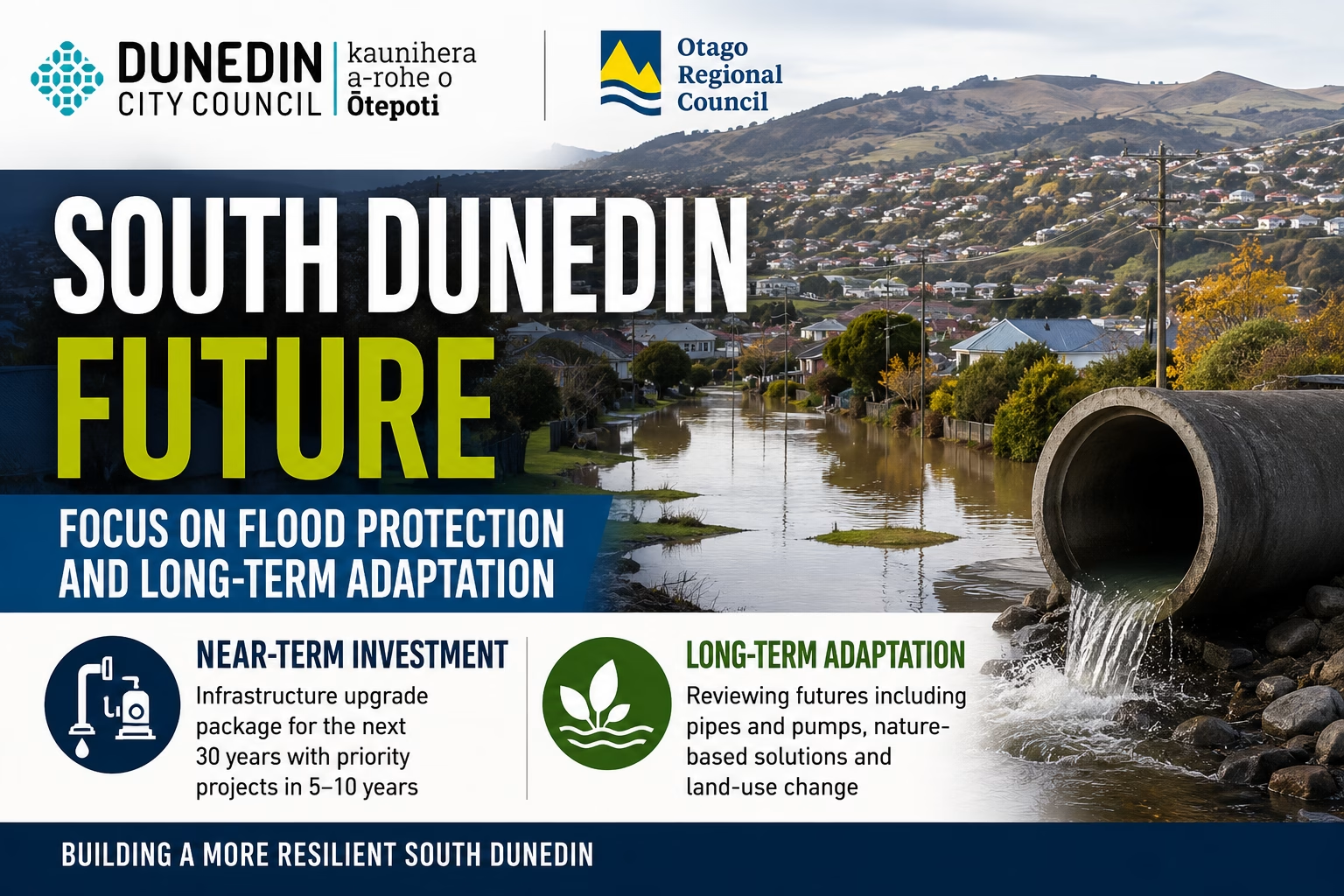
The first will develop a 30-year infrastructure investment package, including priority projects that could be advanced during the next five to 10 years.
The second will examine adaptation options beyond the initial 30-year period, including infrastructure-led solutions, nature-based approaches and possible land-use changes.
Horowhenua Tertiary Education Scholarship Opens for 2027 Students – WebfitNews
Two workstreams to proceed together
Dunedin Mayor Sophie Barker said the revised structure would allow practical work on flood protection to move forward without forcing councils to make premature decisions about South Dunedin’s long-term future.
“South Dunedin communities have told us they want to see progress on reducing flood risk while also ensuring longer-term adaptation options are thoroughly tested,” Mayor Barker said.
“This approach allows both to happen at the same time. Councils can continue progressing work on immediate infrastructure needs while taking the time to carefully assess longer-term options and understand their costs, benefits and implications.”
South Dunedin is particularly vulnerable to flooding because of its low-lying geography, high groundwater levels and exposure to heavy rainfall and coastal hazards.
The area has experienced repeated flooding events, increasing pressure on councils to strengthen stormwater systems and develop a clear long-term response.
Infrastructure package to cover the next 30 years
The first workstream will focus on identifying and sequencing infrastructure projects that could reduce flood risk during the next three decades.
This work will build on stormwater investment already underway and further develop a list of approximately 10 to 15 flood protection projects previously identified through the South Dunedin Future programme.
Additional modelling, engineering design and constructability assessments will be undertaken to determine which projects are practical, how much they could cost and what level of protection they may provide.
The objective is to produce a costed programme showing how projects could be staged over time.
Priority will be given to identifying projects that could begin during the next five to 10 years.
The programme will also be designed to remain compatible with several possible long-term adaptation pathways, reducing the risk that early investment could limit future choices.
Existing $29.2 million stormwater programme continues
The new planning work will complement existing Dunedin City Council three waters projects.
In January 2025, the council approved a $29.2 million package covering three stormwater projects in South Dunedin.
Those projects are already being progressively delivered and form part of the wider effort to improve drainage capacity and reduce the impact of heavy rainfall.
The new infrastructure investment package will look beyond those projects and consider what further measures may be required.
Possible engineering responses could include upgraded pipes, pumping stations, storage systems, improved drainage routes and other flood management infrastructure.
Each option will need to be assessed against its cost, expected lifespan, construction difficulty and ability to perform under different climate scenarios.
December deadline for investment advice
Work on the 30-year infrastructure package is expected to be completed by December 2026.
The timing is intended to support council deliberations on upcoming Long Term Plans.
The findings will also inform Dunedin City Council’s Infrastructure Strategy and Water Services Strategy.
A proposed package, including priority projects for the first five to 10 years, is expected to be considered by city councillors in December.
Subject to council approval, projects could then be included in the draft Long Term Plan 2027 to 2037 for public consultation in early 2027.
This process would give residents an opportunity to comment on proposed investment levels, priorities and funding decisions.
Longer-term futures to be reviewed
The second workstream will focus on adaptation beyond the first 30 years.
The South Dunedin Future programme has previously developed several possible long-term futures for the area.
These are now expected to be reviewed and refined to reflect council feedback and Government direction on climate adaptation.
The revised options are expected to represent three broad approaches:
| Long-term approach | Potential focus |
|---|---|
| Infrastructure investment | Pipes, pumps, drainage upgrades and engineered flood protection |
| Nature-based solutions | Wetlands, water storage, green spaces and natural flood management |
| Land-use change | Changes to development patterns, property use or settlement over time |
An engineering-focused “pipes and pumps” option will be designed as part of the revised work.
It could supplement or potentially replace one of the three long-term futures previously developed.
Costs, protection and property impacts to be assessed
The revised long-term options will be tested against a range of possible climate scenarios.
Councils are seeking more information about how each pathway would perform, how much protection it could provide and what trade-offs may be involved.
The assessment will include estimated costs, benefits, levels of flood protection and any potential need for property acquisition.
This is likely to be one of the most sensitive areas of the programme.
Long-term adaptation can involve difficult decisions affecting homes, businesses, public infrastructure and the future use of land.
The programme will also examine how investments made during the first 30 years could transition into different long-term pathways.
That work is intended to ensure near-term infrastructure is not planned in isolation.
Councillors seek clearer information
Otago Regional Council Chair Hilary Calvert said the revised approach would build on the substantial work already completed while responding to issues raised during council discussions.
“Councillors need more information about the options available to reduce flood risk in South Dunedin, the benefits and costs involved, and the trade-offs associated with different approaches,” Calvert said.
“This next phase of work will provide that information, enabling Councillors to make informed decisions about both near-term infrastructure investment and longer-term adaptation planning.”
Staff are preparing further advice on the long-term workstream, including the proposed method for reviewing the adaptation futures.
That advice is expected to be presented to Dunedin City Council and Otago Regional Council in September.
Subject to council decisions, the additional assessment could proceed later in 2026, with revised long-term options returning to both councils in early 2027.
Community consultation will follow council decisions
No final long-term adaptation pathway has been selected.
Any future public engagement or formal consultation will depend on decisions made by the two councils after receiving further technical and financial advice.
The immediate focus is on producing reliable information that allows councillors and residents to compare the available choices.
For South Dunedin communities, the revised programme represents an attempt to balance urgency with careful planning.
Flood protection projects cannot be delayed indefinitely, but decisions that could shape the future of the area for generations require detailed analysis and meaningful community involvement.
The two-track approach is intended to provide visible progress in the near term while keeping longer-term options open as climate risks, government policy and technical evidence continue to develop.