AUCKLAND, 11 August 2026
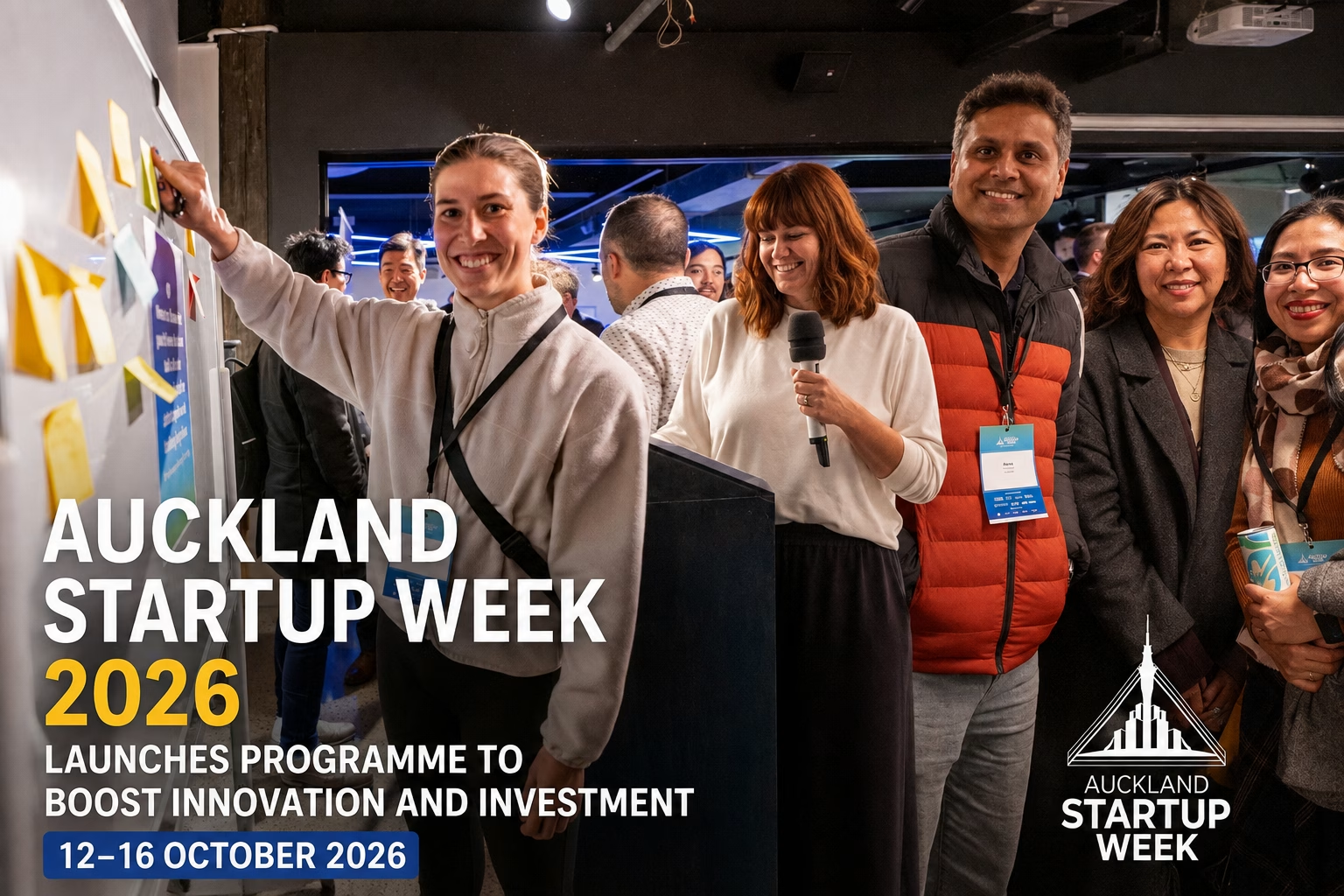
Auckland Startup Week is returning this October with a larger ambition than simply celebrating new businesses.
The five-day festival, running from 12 to 16 October 2026, is designed to connect founders with investors, corporates, research organisations and industry leaders in an effort to strengthen Auckland’s startup ecosystem and help more local companies move from promising ideas to scalable businesses.
The 2026 programme has now been released, with most events set to take place at GridAKL in Wynyard Quarter and other venues across the city.
This year’s theme, “the rebellion in our DNA”, is deliberately provocative. Organisers want participants to challenge established markets, question conventional business models and pursue ideas that could create entirely new categories.
That language may sound bold, but the underlying economic objective is serious.
Auckland wants to become a stronger technology and innovation hub, attract more investment, create higher-value jobs and support businesses capable of growing beyond the domestic market.
Man Arrested After Reported Firearms Incident in Timaru – WebfitNews
Building on a strong first year
Auckland Startup Week was first held in 2025 and quickly established itself as a significant gathering for the city’s innovation community.
According to Auckland Council, last year’s festival delivered:
- 32 events across 10 venues
- 135 startups showcased
- More than 4,000 attendees
- More than 12,500 connections between founders, investors, corporates and ecosystem leaders
The audience was heavily founder-focused, with 46 percent of attendees identified as early-stage founders.
A further 35 percent were described as ecosystem enablers, 11 percent were investors, and 8 percent were startup or scale-up employees and founders.
The event also reached beyond Auckland.
While 67 percent of attendees were Auckland-based, 24 percent came from other New Zealand regions and 9 percent were international visitors.
Those numbers matter because one of the biggest challenges for startup ecosystems is not simply generating ideas. It is creating enough density of talent, capital and expertise for those ideas to turn into sustainable businesses.
What makes a startup different?
A startup is not simply another name for a small business.
A new café, accounting practice or local retail operation can be successful without necessarily being considered a startup.
Startups are usually built around a model designed for rapid growth and scale.
They may begin without a proven market or established business model and often need significant early-stage capital to test, develop and commercialise their products.
That is why investors, particularly angel investors and venture capital funds, play such an important role.
The challenge for founders is convincing those investors that a business can grow far beyond its initial customer base.
Auckland Startup Week is intended to help bridge that gap.
Mayor Wayne Brown puts startups in the spotlight
Auckland Mayor Wayne Brown has also been promoting local founders through his “100 Days of Startups” social media campaign.
The initiative features the Mayor wearing branded shirts from local startups while highlighting companies working on issues ranging from healthcare and environmental problems to power prices and even head lice.
Brown said Auckland’s economic future would increasingly depend on people willing to take risks and build new companies.
“Auckland’s future is being built by the bold ideas of our local entrepreneurs,” he said.
“These are our creators and risk-takers who put their careers on the line to found companies to solve the problems of today.”
Brown said many of Auckland’s startup companies remain largely unknown to the wider public despite the work they are doing.
He wants Auckland Startup Week, alongside the Auckland Tech & Innovation Alliance, to help position Auckland as the technology and innovation hub of the South Pacific.
That is an ambitious goal.
Auckland competes not only with Wellington and Christchurch for talent and investment, but also with cities such as Sydney, Melbourne, Singapore and increasingly other Asia-Pacific innovation centres.
Building a successful startup ecosystem therefore requires more than promotional campaigns.
It requires capital, skilled workers, research capability, infrastructure and clear pathways for companies to grow internationally.
Speakers include Facebook Marketplace founder
This year’s programme brings several prominent names into the city.
Confirmed speakers include Bowen Pan, founder of Facebook Marketplace, and entrepreneur Derek Handley.
More speakers are expected to be announced closer to the event.
Another headline session will be hosted by Mayor Brown.
His event, titled “Unfiltered Opportunities with Mayor Wayne Brown”, is being promoted as a direct, no-frills conversation where participants can ask questions about Auckland, business and the city’s economic direction.
The session will be moderated by Frances Valintine, founder and chief executive of academyEx.
Ngāti Whātua Ōrākei will also host sessions during the week.
Workshops, pitches and networking
The programme is structured around a mix of workshops, pitch competitions and networking opportunities.
Most events will be free.
That matters particularly for early-stage founders who may have limited capital and cannot afford expensive conferences or advisory services.
Sessions will be designed for different stages of business development.
Some participants may still be testing an idea.
Others may already have customers and be looking for investment.
For more mature startups, the challenge may be expanding internationally or building leadership teams capable of supporting rapid growth.
Challengers’ Expo returns with a new identity
One of the most popular components of last year’s event was the Startup Expo.
Founders were given free exhibition space to demonstrate products and services to attendees, potential customers and investors.
This year the event has been renamed the Challengers’ Expo.
It will take place on 12 October at GridAKL.
Organisers are now seeking expressions of interest from founders wanting to showcase their companies.
Applications close at 11.59pm on 3 September.
For startups with limited marketing budgets, opportunities like this can be valuable.
A good product does not automatically attract customers or investors.
Founders still need visibility, credibility and access to the right people.
Auckland wants higher-productivity businesses
Behind the festival sits a broader economic question.
New Zealand has struggled for years with relatively weak productivity growth compared with many other advanced economies.
Startups alone will not solve that problem.
But technology-led businesses that can scale internationally can contribute disproportionately to productivity, exports and high-value employment.
Unlike many conventional businesses, successful digital and technology companies can expand revenue without increasing physical costs at the same rate.
That ability to scale is why governments and cities around the world compete aggressively to attract founders, investors and highly skilled workers.
Auckland Council’s Economic Development Office sees startup development as part of that wider strategy.
Pam Ford, General Manager of the office, said Auckland Startup Week was designed to support people at different stages of the entrepreneurial journey.
“We want all participants to succeed, whether it’s someone who’s curious about making that smart idea of theirs a reality, someone else who wants to take their business to the next level, or an angel or institutional investor who is looking for the next big thing,” Ford said.
Webfit News perspective: the real test comes after the festival
Startup events are easy to celebrate.
The more difficult question is what happens six or twelve months later.
Do founders secure investment?
Do companies create jobs?
Do startups survive?
Do they remain headquartered in Auckland, or do they eventually move overseas to access larger pools of capital?
Those are the numbers that ultimately matter.
Last year’s 4,000 attendees and 12,500 connections show strong interest in Auckland’s startup ecosystem.
But connections need to turn into deals, partnerships, customers and investment.
Auckland already has strong universities, research institutions, a large professional workforce and a concentration of New Zealand’s corporate sector.
Its biggest weakness is scale.
New Zealand’s domestic market is small, meaning ambitious founders need to think internationally almost from the beginning.
That makes investor access and global networks particularly important.
The 2026 Startup Week programme appears designed around that reality.
It is not simply asking people to start businesses.
It is asking them to build businesses capable of challenging established markets.
A week for founders, investors and the curious
Auckland Startup Week is not restricted to technology companies.
While technology startups remain a major focus, the programme is open to founders from other sectors.
That broader approach may help bring new ideas into the ecosystem from industries that do not traditionally describe themselves as part of the technology sector.
For Auckland, the opportunity is clear.
The city does not need every startup to become the next global technology giant.
It needs enough successful businesses to create a cycle where experienced founders become investors, employees become entrepreneurs, and capital generated by one successful company helps fund the next generation.
That is how mature startup ecosystems develop.
Auckland Startup Week cannot create that ecosystem by itself.
But it can bring together many of the people needed to build it.
And if the city genuinely wants to become a leading innovation hub in the South Pacific, converting those October conversations into long-term companies will be the real measure of success.
Auckland Startup Week 2026
Dates: 12 to 16 October 2026
Primary venue: GridAKL, Wynyard Quarter, Auckland
Challengers’ Expo: 12 October
Founder applications close: 3 September 2026
Most events: Free to attend
Image captions:
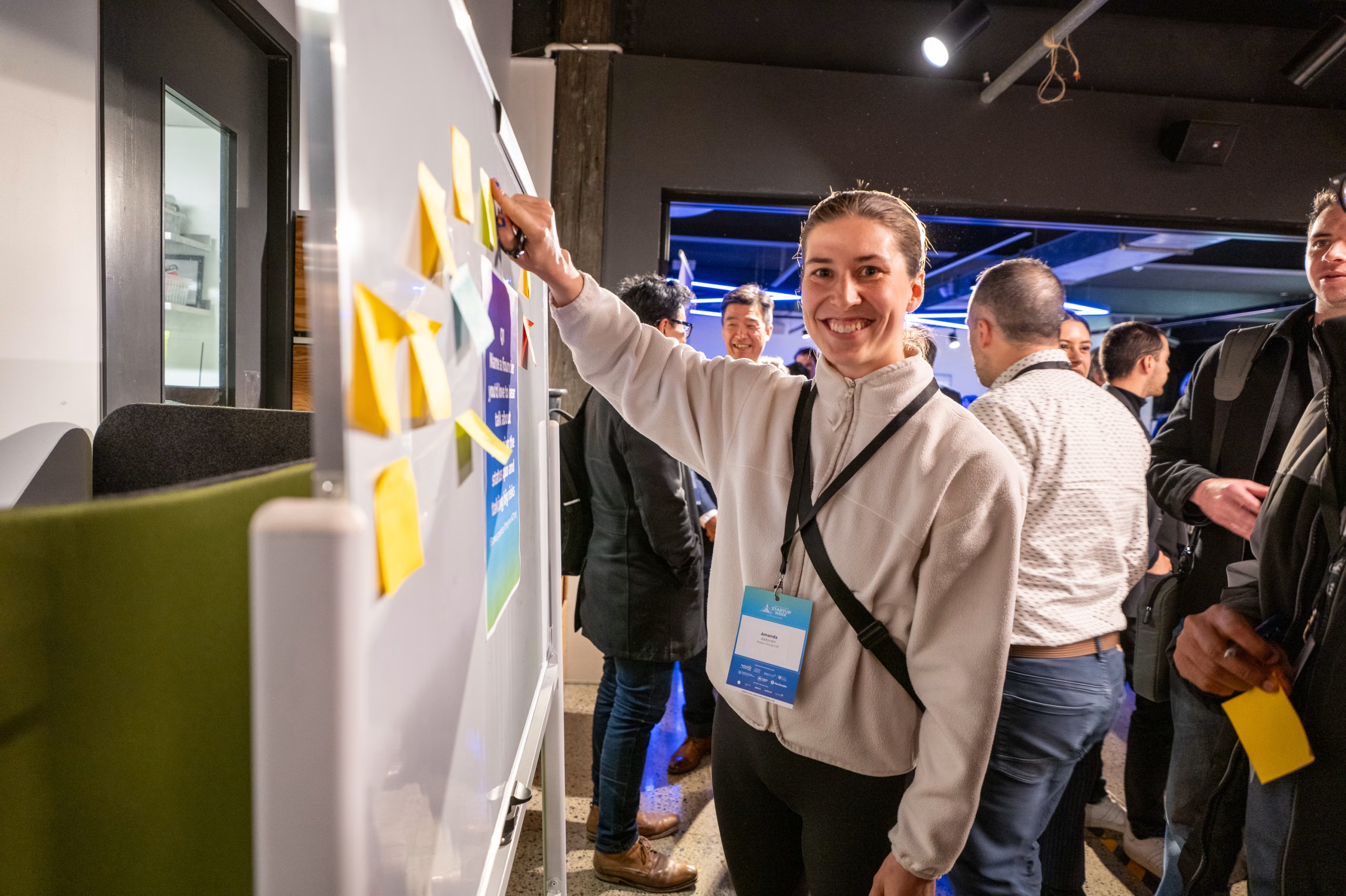
Amanda Aaltonen, co-founder and CEO of startup Noar, at the Auckland Startup Week programme launch.
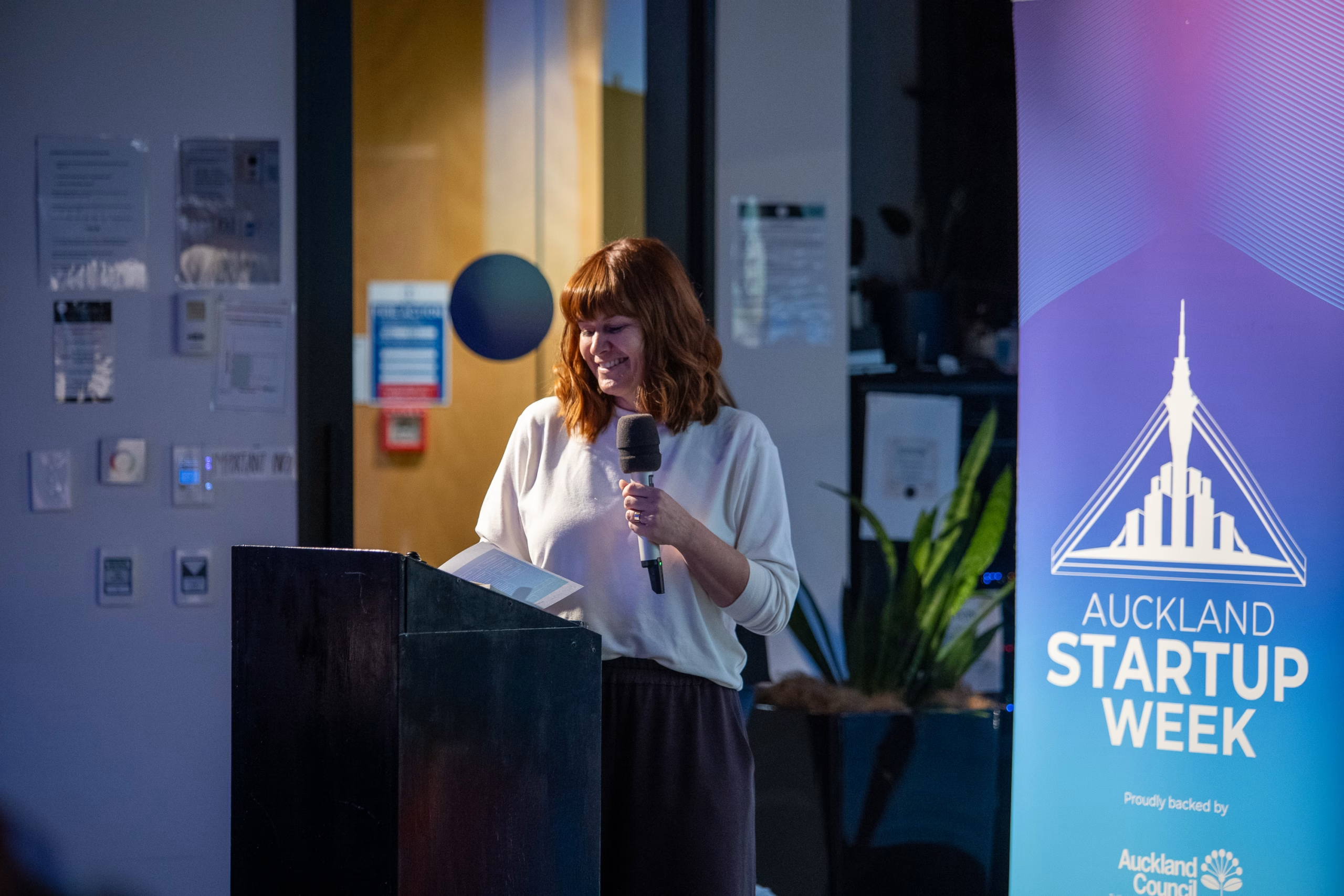
Keren Phillips, Programme Manager for Auckland Startup Week.
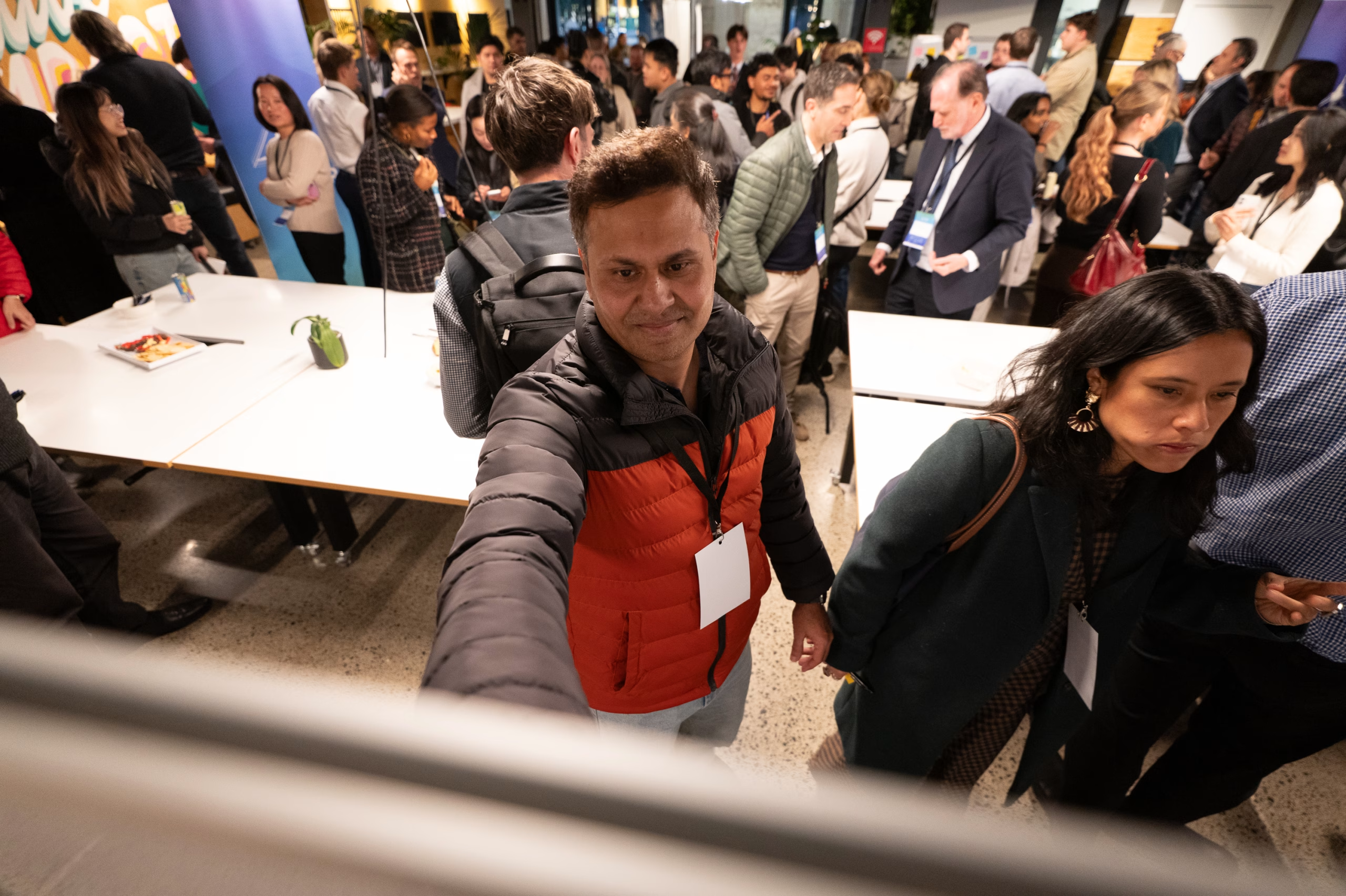
Local founders sharing ideas at the Auckland Startup Week 2026 programme launch.
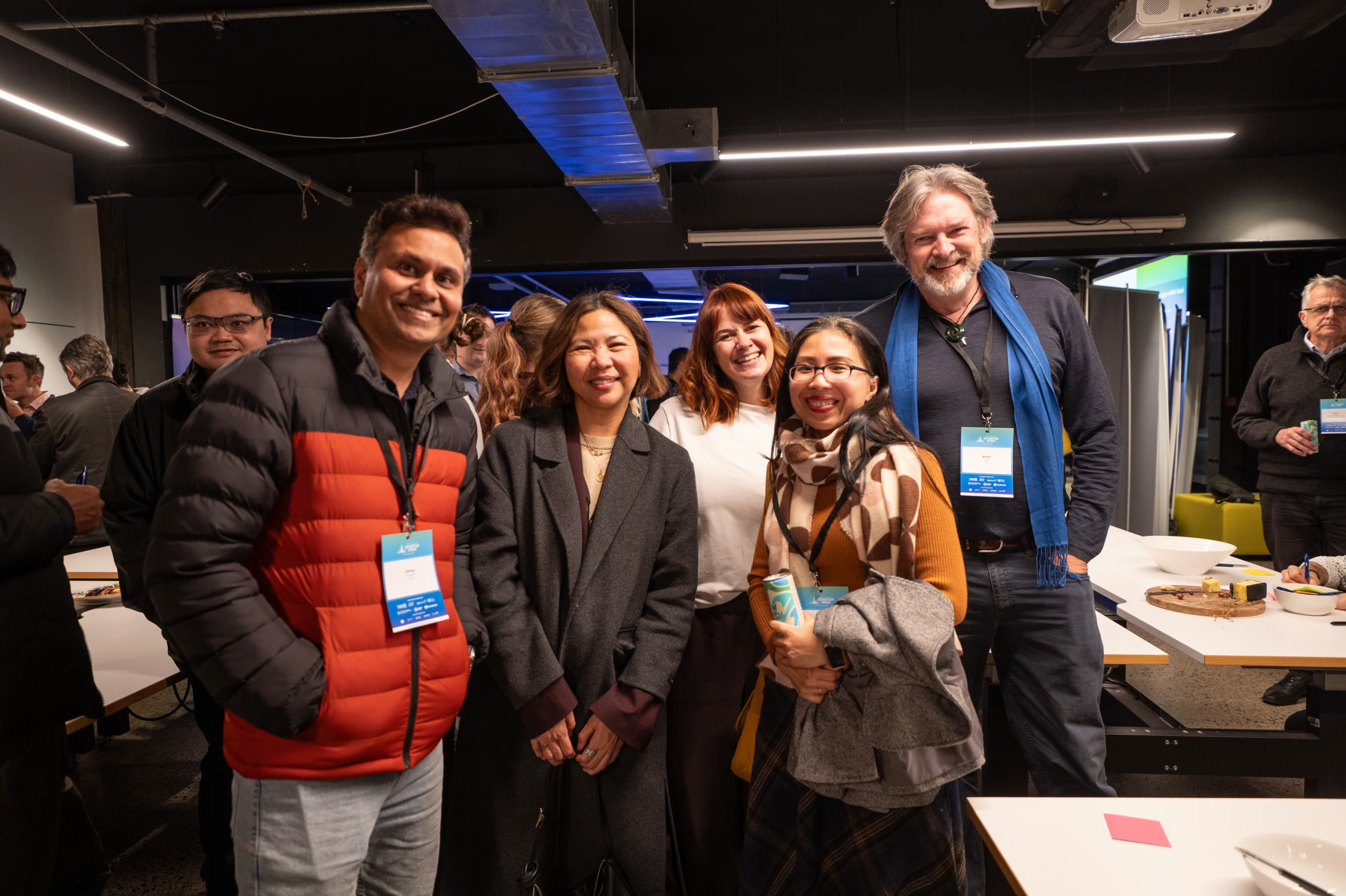
Local founders with Keren Phillips at the programme launch.
Image credit: Auckland Council / Auckland Startup Week.