
Webfit News | 26 November 2025 | Source: Scoop Media
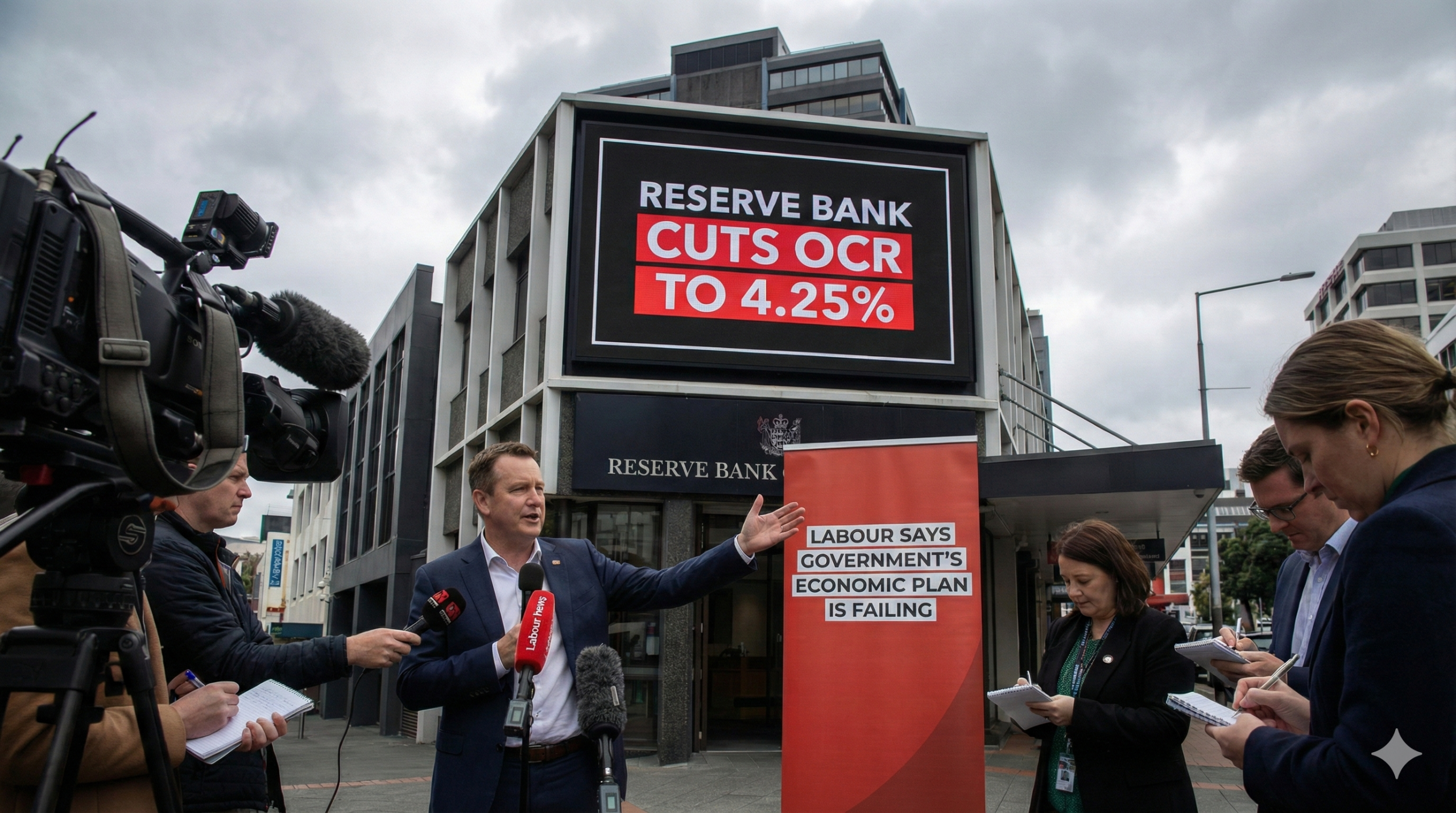
The Reserve Bank of New Zealand has reduced the Official Cash Rate (OCR) to 2.25 percent. This is the ninth consecutive cut since July 2024. The move aims to boost economic activity by making borrowing cheaper, and it has also triggered fresh tension between the Government and the Opposition.
What Is the OCR and Why Does It Matter
The OCR is the interest rate set by the Reserve Bank that influences almost every other interest rate in the economy, including mortgages, business loans, and savings accounts. When the OCR is lowered, banks often respond by cutting their own interest rates. As a result, borrowing and investing become less expensive for households and businesses.
Here is how it may affect you:
- If you already have a mortgage on a floating interest rate, your monthly repayments may go down.
- If you plan to buy a house, you may get access to lower mortgage rates, which can make repayments more affordable.
- If you are a first-home buyer, this could be your chance to enter the market, especially since 23,600 households stepped onto the property ladder in the past year.
- If you are a saver, expect lower returns on term deposits and savings accounts as banks reduce their deposit rates.
- If you run a small business, borrowing may become easier, helping with investment, cash flow, or expansion.
Example: How Mortgage Relief Looks in Real Life
Imagine you have a 600,000 dollar mortgage on a floating rate of 6.5 percent. With the OCR now at 2.25 percent, lenders may reduce your rate to around 5.5 percent. Your monthly payments could drop by several hundred dollars. That extra money can go toward savings, groceries, or other bills.
The Government’s View
Finance Minister Nicola Willis welcomed the Reserve Bank’s decision and the bank’s forecast for 2026. “It is clear previous reductions in the OCR are flowing through into stronger economic activity,” she said. “The bank is forecasting falling inflation and rising growth. That means more money in Kiwi pockets.”
Willis pointed out that 80 percent of mortgage lending has come up for renewal since rate cuts began in August 2024. This has eased pressure on many households. “In the 12 months to September, 23,600 households bought their first home, which is the highest number since 2021,” she said.
The Government says this shows its economic strategy is working. “Our economic management is helping inflation fall, which in turn is allowing interest rates to ease,” said Willis.
Opposition Says Government Is Coasting
Labour finance spokesperson Barbara Edmonds strongly disagreed and said the OCR cut is not a sign of success.
“The Reserve Bank is propping up a stalling economy while Christopher Luxon sits on his hands,” Edmonds said. “Interest rate cuts are not something to celebrate. They are a signal that the economy is weak.”
Edmonds also argued that monetary policy cannot replace active government intervention. “It is government choices that determine whether people can find a job, afford a home, or get ahead. Christopher Luxon promised to fix the economy and the cost of living. Instead, he has made both worse.”
According to Labour, the Prime Minister is taking credit for something outside his control while ignoring the issues he does control. “He has no plan to turn the economy around and is instead relying on the Reserve Bank to do the job he cannot,” Edmonds said.
So, Who Is Right?
While political debate continues, many economists agree that the Reserve Bank is cutting rates to support demand and prevent a hard economic landing after a period of high inflation and tight monetary policy. Whether the recovery grows stronger and whether all groups benefit equally will become clear over time.
For now, the Reserve Bank is giving the economy extra support, and many Kiwi households may begin to feel some relief.
Source: Scoop Media