Why New Zealanders Feel Poorer Even When the Economy Says It Is Growing
By Webfit News | Explainer
Wellington | January 2026
If you talk to people across New Zealand right now, you hear the same thing again and again:
“Everything costs more, but my pay has not gone up. So how can the economy be growing?”
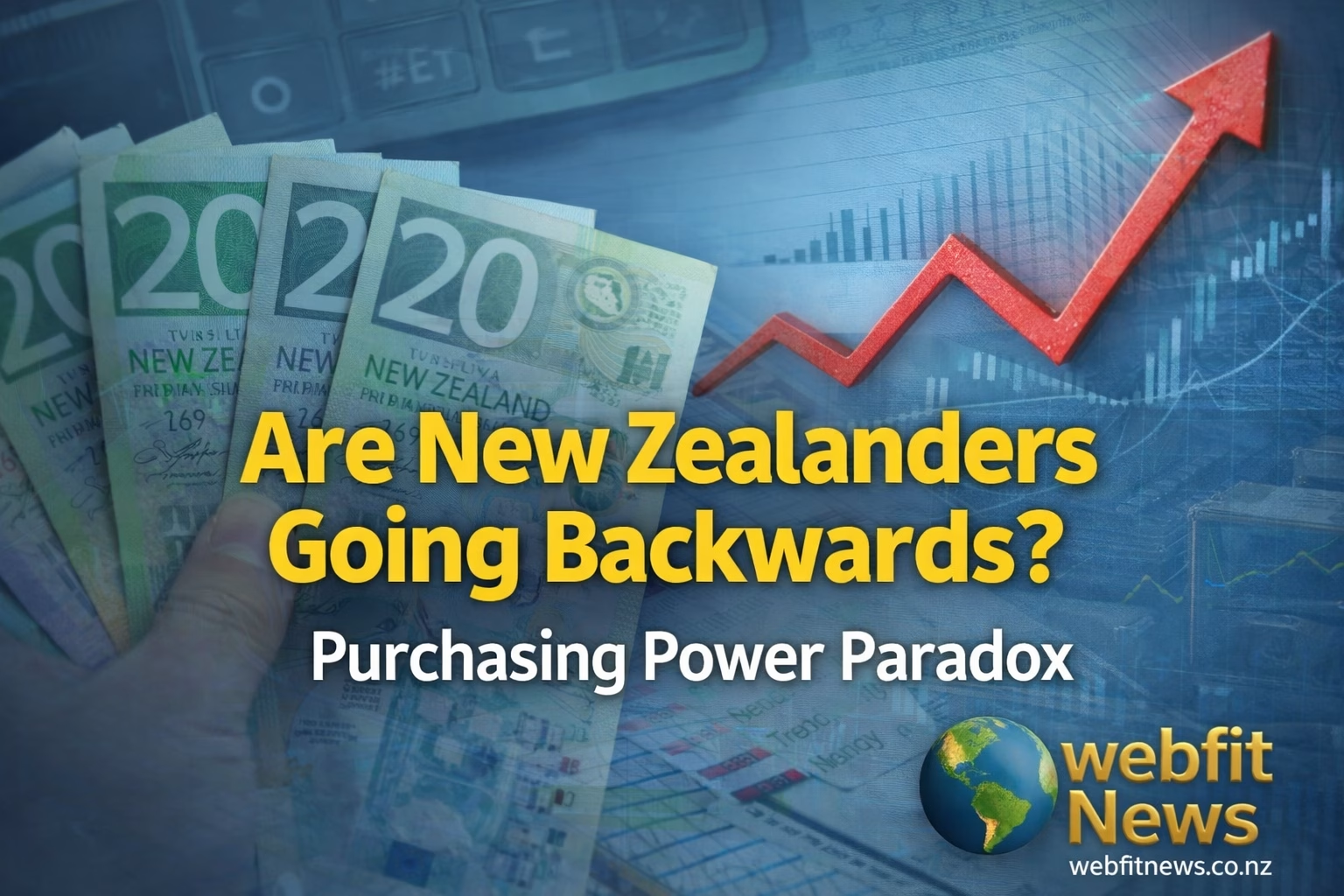
It is a fair question. It is also the heart of what many economists are now calling New Zealand’s purchasing power paradox.
On paper, the economy is not collapsing. Stats NZ reported that the economy grew by 1.1 percent in the September 2025 quarter. Yet inflation is sitting at 3.1 percent, wages are rising slowly, and many households feel like they are sliding backwards.
So what is really going on? Are we actually going backwards, or does it just feel that way?
This explainer breaks it down in simple terms.
First Things First: What Does “Economic Growth” Actually Mean?
When people hear that the economy is “growing,” they often assume that life should feel easier. More money. More opportunity. Less stress.
But economic growth does not automatically mean people are better off.
Nominal vs Real Growth (In Plain English)
- Nominal GDP is the total value of everything produced, measured in today’s prices.
- Real GDP removes inflation and shows whether the country is actually producing more goods and services.
Stats NZ and the Reserve Bank report real GDP, not nominal. So when you hear “1.1 percent growth,” inflation has already been taken out.
That means, technically, New Zealand produced more stuff than before.
But here is the catch.
Why It Still Feels Like We Are Going Backwards
Economic growth looks good in total, but life is lived per person.
The Per-Person Problem
In the year to September 2025:
- Total GDP fell 0.5 percent
- GDP per person fell 0.8 percent
This means that when population growth is taken into account, each New Zealander’s share of the economy got smaller.
That is a key reason why households feel squeezed.
The Real Pain Point: Prices vs Pay
This is where the paradox becomes very real.
Inflation Is Higher Than Wage Growth
- Inflation: 3.1 percent
- Average wage growth: 1.4 percent
That means most people are losing purchasing power every month.
Put simply:
Your money buys less than it did last year, even if you got a pay rise.
Over the past three years, many full-time workers are estimated to be over $4,000 worse off in real terms.
This is not a feeling. It is maths.
Why Some People Are Doing Fine While Others Are Struggling
New Zealand is now a two-speed economy.
Who Is Moving Forward
- Export industries like dairy and agriculture
- Some tech and professional services
- Businesses linked to global markets
Who Is Falling Behind
- Retail workers
- Hospitality staff
- Renters
- Families facing rising power bills, rates, and food costs
If you own assets or work in a high-income sector, inflation hurts less.
If you live week to week, it hurts immediately.
The Hidden Driver: Domestic Costs You Cannot Avoid
Not all inflation is the same.
The Big Problem Is Local Costs
Domestic inflation is running at 3.5 percent, higher than imported inflation.
Key pressure points:
- Electricity prices up 12.2 percent
- Council rates up 8.8 percent
- Rents continuing to rise
- Insurance premiums climbing
These are not optional expenses. Interest rate cuts do not fix them quickly, if at all.
This is why many people feel that no matter what the Reserve Bank does, life is not getting cheaper.
Why People Are Leaving New Zealand
Another warning sign is migration.
- Tens of thousands of New Zealanders left in 2025
- Around half moved to Australia
- The main reasons: higher wages and lower living pressure
When skilled workers leave, the economy loses productivity. That puts more pressure on those who stay.
So Are We Actually Going Backwards?
The honest answer is: it depends on how you measure it.
Technically
- The economy grew in the September quarter
- New Zealand is producing more than before
In Real Life
- GDP per person is falling
- Wages are not keeping up with prices
- Households feel poorer
- Essential costs keep rising
By everyday standards, many New Zealanders are going backwards.
Why This Matters Going Into 2026
This is not just an economic issue. It is a political and social one.
When people feel the system is not working for them:
- Trust drops
- Emigration rises
- Social pressure builds
- Elections become more volatile
Unless productivity improves, energy costs stabilise, and wages start beating inflation, this paradox will not disappear.
The Bottom Line
New Zealand’s problem is not just growth.
It is who benefits from that growth.
Until economic progress shows up in pay packets, power bills, rent, and groceries, charts and headlines will continue to feel disconnected from real life.
That is the purchasing power paradox.
And for many households, it is not theoretical. It is daily life.
Webfit News
Explaining what the numbers really mean for everyday New Zealanders