By Geet G | Webfit News
A Morning That Never Returned
On a quiet April afternoon in 2025, the valley of Pahalgam was doing what it has always done.
Tourists were laughing.
Families were taking photos.
Newlyweds were dreaming of a future.
And then, in a matter of minutes, everything changed.
Gunshots replaced laughter.
Fear replaced silence.
And 26 lives were taken in a place that once symbolised peace.
One year later, India is still trying to understand how a place so beautiful could witness something so brutal.
Not Just Numbers. People.
It is easy to say “26 people died.”
It is much harder to sit with who they were.
A young Navy officer on his honeymoon.
A father is travelling with his three-year-old child.
A government officer is enjoying a rare family holiday.
These were not headlines. These were lives in motion.
One of the most haunting stories is that of a newly married couple. Just days into their marriage, they had chosen Kashmir over Europe, believing they would find beauty closer to home.
He never returned.
She returned with a story no one should have to tell.
And then there was a local Kashmiri man, a pony operator, who tried to fight back. He did not ask who the tourists were. He just tried to protect them.
He died alongside them.
That moment alone tells you everything about what terrorism tries to divide, and what humanity still refuses to.
A Different Kind of Wound
This attack was not just violence.
It was designed to break something deeper.
Survivors spoke about how people were asked questions.
Not about who they were as individuals, but what they believed.
That changes the nature of the crime.
It is no longer just an attack on people.
It becomes an attack on identity, on coexistence, on the very idea of India.
And that is why the pain has lasted longer than the headlines.
From Grief to Resolve
India did not respond quietly.
Within weeks, the country shifted from mourning to action. Military operations were launched. Policies were reconsidered. Lines were redrawn.
But beyond strategy and response, something else changed.
A sense of clarity.
A feeling that some boundaries, once crossed, cannot be ignored anymore.
The message was not just political.
It was emotional.
This time, India would not just remember.
It would respond.
The Valley Today
Today, Pahalgam is open again.
Tourists are returning.
Photos are being taken again.
Life is slowly trying to move forward.
But something has changed.
There are more checks.
More security.
More silence in certain corners.
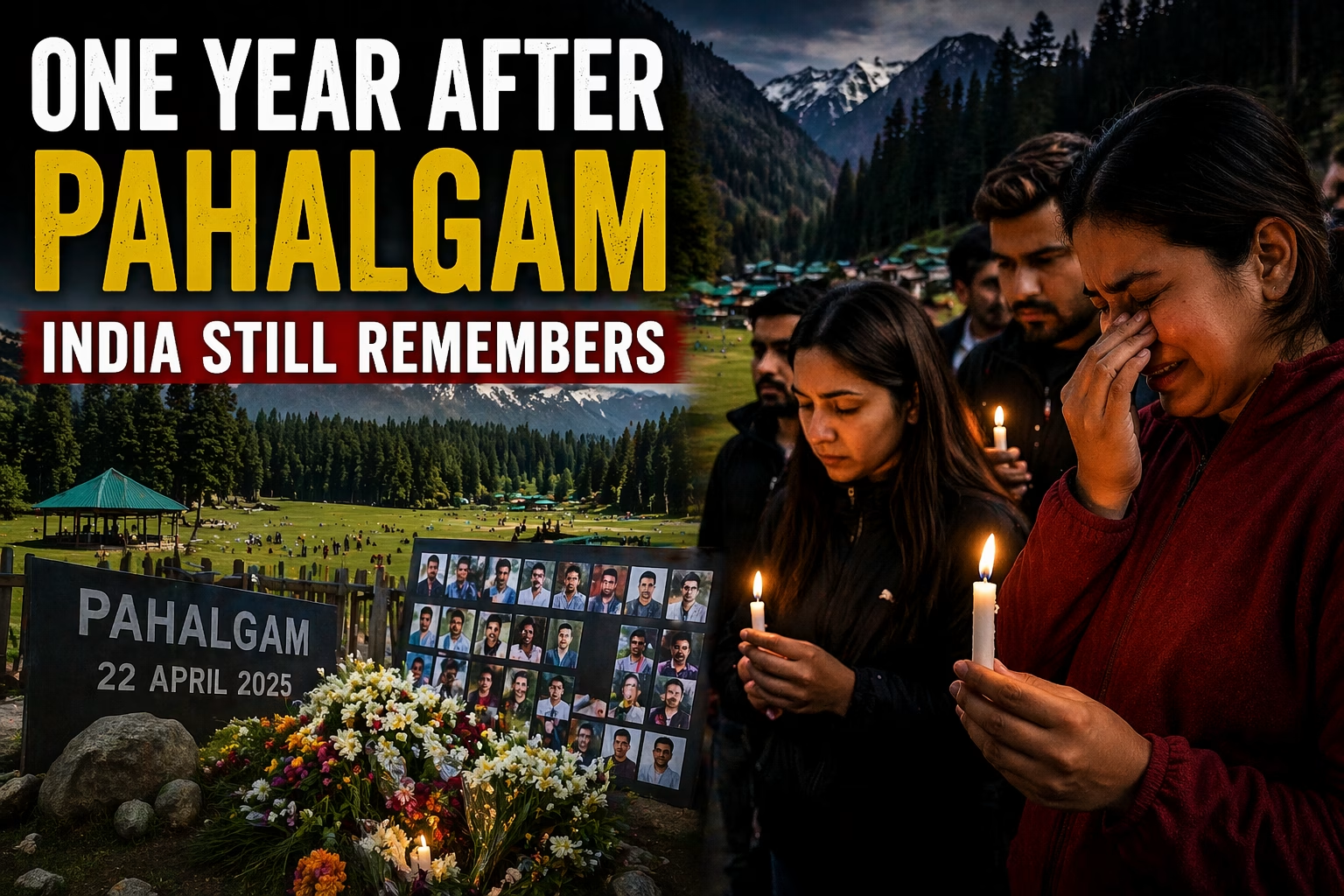
And by the Lidder River, a black marble memorial now stands.
Names carved in stone.
Stories that cannot be erased.
From Kashmir to Auckland
For Indians living far away, including here in New Zealand, this anniversary feels different.
You are not physically there.
But emotionally, you are.
You remember the news alerts.
The calls home.
The uneasy silence in WhatsApp groups.
You remember thinking,
“That could have been someone I know.”
Community groups here held prayers. People gathered quietly. Not for politics, but for people.
Because distance does not reduce grief.
Sometimes, it deepens it.
Webfit News Perspective
There is something uncomfortable we need to say.
If we only remember these events on anniversaries, we are not really remembering them.
We are scheduling grief.
The real question is not what happened in Pahalgam.
The real question is:
What are we doing to ensure it never happens again, anywhere?
Because terrorism does not just test governments.
It tests societies.
It asks whether we become divided or whether we stand together even stronger.
One Year Later
The mountains of Kashmir still stand.
The river still flows.
The valley is still beautiful.
But it is no longer untouched.
And maybe that is the reality India must live with.
Not forgetting.
Not moving on too quickly.
But learning to carry both grief and strength at the same time.
Because some places do not just hold memories.
They hold reminders.
References
- Official reports and survivor accounts related to the 2025 Pahalgam incident
- Government and defence briefings on post-incident actions
- Community responses and diaspora engagement insights