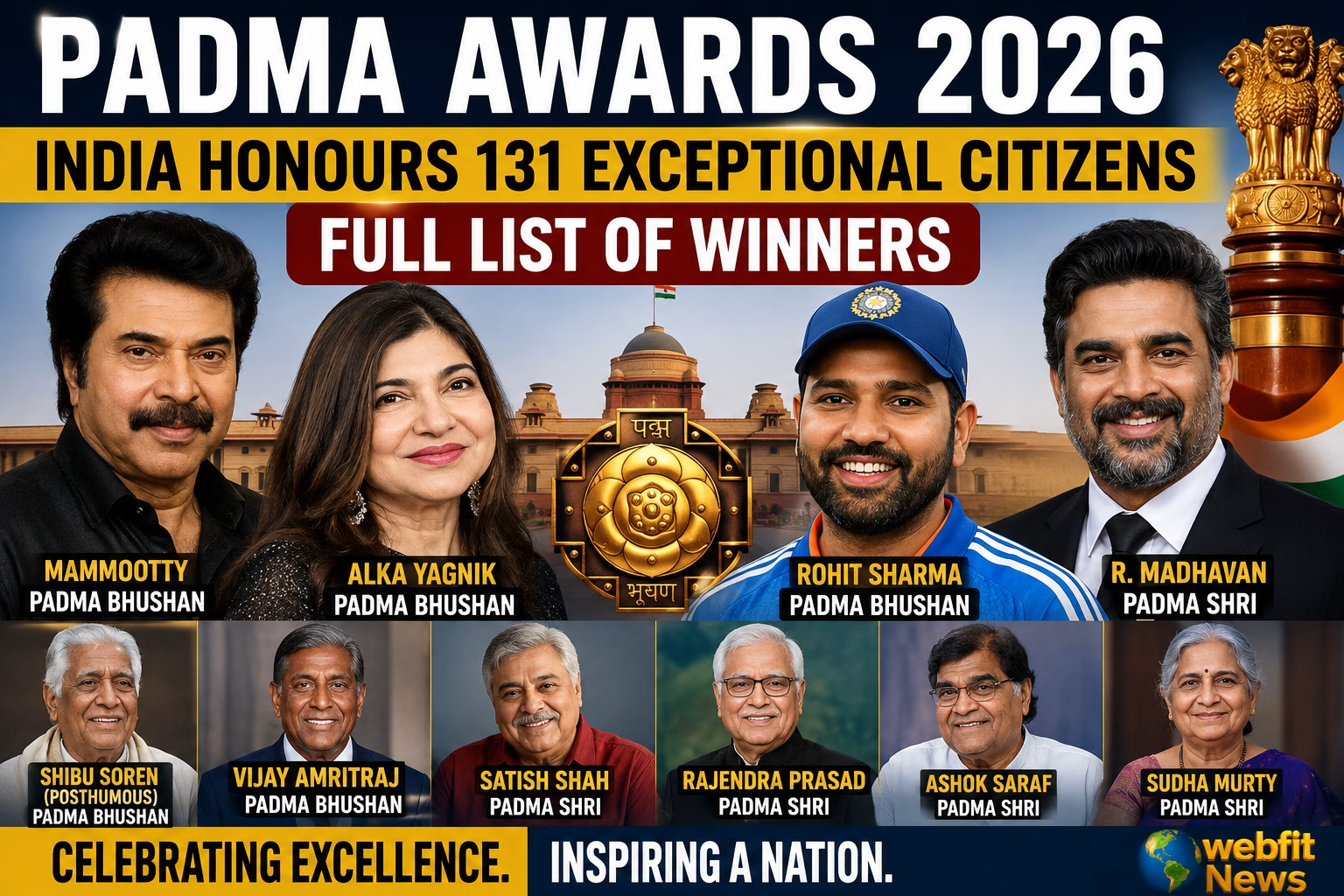
India celebrated some of its finest achievers this week as President Droupadi Murmu conferred the prestigious Padma Awards on distinguished personalities from across the country during the second Civil Investiture Ceremony held at Rashtrapati Bhavan in New Delhi.
The ceremony, held on 23 June 2026, recognised outstanding contributions in fields including arts, literature, education, medicine, sports, public affairs, science, engineering, social work and industry. It marked the second and final investiture ceremony for the Padma Awards 2026, completing this year’s honours for 131 remarkable individuals.
Often regarded as one of India’s highest civilian honours, the Padma Awards recognise people whose work has created a lasting impact on society, often extending far beyond their professional achievements.
What Are the Padma Awards?
Instituted in 1954, the Padma Awards are among India’s most respected civilian honours. They are announced every year on the eve of Republic Day and presented by the President of India at ceremonial functions held at Rashtrapati Bhavan.
The awards are presented in three categories:
- Padma Vibhushan for exceptional and distinguished service.
- Padma Bhushan for distinguished service of a high order.
- Padma Shri for distinguished service in any field.
Recipients come from diverse backgrounds, ranging from internationally recognised artists and athletes to grassroots social workers, scientists, doctors, teachers and community leaders who have dedicated their lives to serving society.
Second Ceremony Completes the 2026 Honours
While the first Civil Investiture Ceremony took place in May, the second ceremony on 23 June honoured the remaining recipients, bringing this year’s total to 131 Padma Awardees.
The Government of India approved:
- 7 Padma Vibhushan awards
- 19 Padma Bhushan awards
- 105 Padma Shri awards
The recipients represent the rich diversity of India, with awardees coming from nearly every state and several Indian citizens living overseas.
Familiar Faces Among This Year’s Honourees
Several well-known personalities received honours during this year’s ceremonies.
Mammootty Receives Padma Bhushan
Legendary Malayalam cinema icon Mammootty was conferred the Padma Bhushan for his extraordinary contribution to Indian cinema spanning more than four decades.
Widely regarded as one of India’s greatest actors, Mammootty has appeared in hundreds of films across multiple languages and continues to inspire generations of filmmakers and audiences alike.
Alka Yagnik Honoured for Musical Excellence
Celebrated playback singer Alka Yagnik received the Padma Bhushan in recognition of her remarkable contribution to Indian music.
With thousands of songs recorded across numerous Indian languages, her voice has defined Bollywood music for more than three decades and remains one of the most recognisable in Indian cinema.
Rohit Sharma Recognised for Sporting Excellence
Indian cricket captain Rohit Sharma was awarded the Padma Bhushan for his outstanding contribution to Indian cricket.
Known for his elegant batting and calm leadership, Rohit has led India to several memorable victories while establishing numerous international batting records.
R. Madhavan Awarded Padma Shri
Actor, filmmaker and producer R. Madhavan was honoured with the Padma Shri.
His versatile career spans Hindi, Tamil and international cinema, earning widespread appreciation for performances that have connected with audiences both in India and around the world.
Satish Shah Among Padma Shri Recipients
Veteran actor Satish Shah, admired for his memorable performances in television and films, also received the Padma Shri.
His decades-long contribution to Indian entertainment has earned him a special place in the hearts of millions of viewers.
More Than Celebrity Recognition
Although film stars and sporting legends often attract the biggest headlines, the Padma Awards are equally known for recognising unsung heroes whose work transforms lives away from the spotlight.
Every year, doctors serving remote villages, environmental conservationists, teachers, tribal artists, scientists, social reformers and grassroots volunteers are honoured alongside nationally recognised public figures.
This unique approach makes the Padma Awards one of India’s most respected honours, celebrating service rather than popularity alone.
A Reflection of India’s Diversity
One of the defining features of the Padma Awards is the extraordinary diversity of the recipients.
Awardees come from every region of India and represent countless languages, cultures and professions. Many recipients have spent decades working quietly in their communities without seeking recognition.
The awards acknowledge excellence regardless of fame, reinforcing the message that meaningful contributions to society can emerge from every corner of the country.
Why the Awards Matter to the Indian Diaspora
For millions of Indians living overseas, including the large Indian community in New Zealand, the Padma Awards remain an important reminder of India’s rich cultural, scientific and social achievements.
Many recipients have become global ambassadors for Indian talent, whether through cinema, music, literature, medicine or sports. Their achievements inspire younger generations of overseas Indians to remain connected to their heritage while striving for excellence in their own communities.
The awards also highlight India’s growing global influence by recognising individuals whose work has crossed international borders and earned worldwide respect.
Celebrating Service Above Self
Beyond the glamour of the ceremony at Rashtrapati Bhavan, the Padma Awards continue to represent something deeper.
They celebrate dedication, perseverance, innovation and public service. Whether it is an internationally acclaimed actor, a renowned scientist, a pioneering doctor or a community volunteer working quietly in rural India, each recipient reflects the values of commitment and contribution.
As India honoured 131 exceptional individuals in 2026, the message remained clear: true success is measured not only by personal achievement but by the positive impact one leaves on society.
References
- Ministry of Home Affairs, Government of India
- Rashtrapati Bhavan
- Press Information Bureau (PIB)
- President of India Secretariat