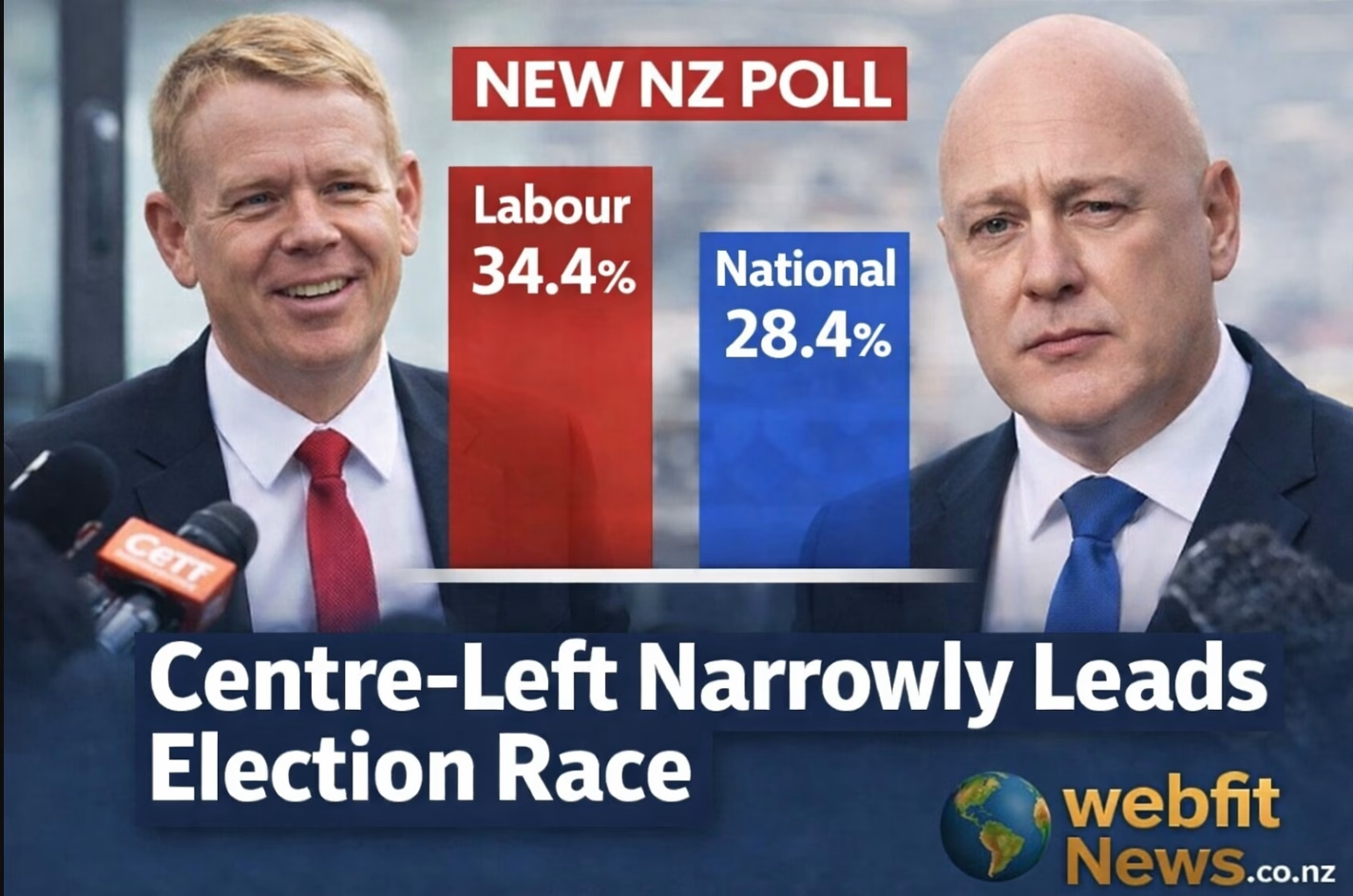
A new political poll suggests New Zealand’s next election could be extremely close, with the centre-left bloc holding a narrow advantage over the centre-right. The latest Taxpayers’ Union–Curia poll, released in early March 2026, indicates that if voting happened today, a centre-left coalition could potentially form the next government, but only by a very slim margin.
For everyday voters, the numbers highlight how divided the electorate currently is, with small shifts in support capable of changing the balance of power.
Key Party Support Numbers
According to the poll results:
- Labour Party: 34.4% support
- National Party: 28.4%
- Green Party: 10.5%
- New Zealand First: 9.7%
- ACT Party: 7.5%
- Te Pāti Māori: 3.2%
Support for smaller parties was lower but still noteworthy:
- TOP (The Opportunities Party): 1.9%
- NZ Outdoors & Freedom: 1.7%
- New Conservatives: 0.8%
- Vision NZ: 0.2%
Compared with the previous poll conducted in February 2026, Labour gained slightly while National saw a noticeable drop.
What This Means for Government Formation
Under New Zealand’s Mixed Member Proportional (MMP) system, political parties often need coalition partners to form a government.
Based on the poll’s projections:
Centre-Left Bloc
- Labour
- Greens
- Te Pāti Māori
Projected seats: 61
Centre-Right Bloc
- National
- ACT
- New Zealand First
Projected seats: 59
Because Parliament has 120 seats, a government usually needs at least 61 seats to command a majority.
That means the centre-left coalition could theoretically form the government with just a two-seat advantage, making it one of the closest possible outcomes.
Seat Projection Breakdown
If these polling numbers translated directly into election results, the estimated parliamentary seats would look like this:
- Labour: 44 seats
- National: 36 seats
- Greens: 13 seats
- New Zealand First: 13 seats
- ACT: 10 seats
- Te Pāti Māori: 4 seats
This shows how coalition politics remains essential in New Zealand.
Even small shifts in voter support could quickly flip the result.
Which Party Do Voters Trust on Key Issues?
The poll also asked voters which party they believe handles specific policy areas better.
National Leads On
- Economic management
- Government spending
Labour Leads On
- Health services
- Poverty reduction
- Inflation response
- Education
- Public safety
- Housing
- Environmental protection
- Keeping taxes low
The final point surprised some political observers because the National traditionally campaigns as the party focused on lower taxes.
Why the Tax Debate Matters
Tax policy is one of the biggest issues influencing voter decisions.
When voters were asked which party they trust not to increase taxes, Labour came out ahead in the poll.
According to Taxpayers’ Union spokesperson James Ross, that result could be concerning for National’s election strategists.
He said the poll again confirms that the political race in New Zealand is “as close as it can be.”
Understanding How the Poll Was Conducted
The poll was carried out by Curia Market Research and commissioned by the New Zealand Taxpayers’ Union.
Key details include:
- Sample size: 1,000 adults aged 18+
- Method: Phone interviews and online panels
- Dates conducted: 1 to 3 March 2026
- Maximum margin of error: ±3.1%
Researchers randomly selected New Zealand phone numbers and online participants to ensure a representative sample of likely voters.
As with any poll, results should be seen as a snapshot of public opinion at a specific moment rather than a prediction of the final election outcome.
What This Means for New Zealand Voters
For the public, the poll signals three important realities:
- The election race is extremely tight.
Small shifts in voter opinion could change which bloc forms the government. - Coalition partners will again be crucial.
Parties like the Greens, ACT, and New Zealand First could hold significant influence. - Policy issues remain decisive.
Voters appear to be evaluating parties based on practical concerns such as health, housing, inflation, and taxation.
Webfit News Perspective
From a broader perspective, the latest polling reflects a country still debating its economic direction and social priorities after several years of global economic pressure, inflation challenges, and shifting geopolitical relationships.
For voters across New Zealand, the coming election is likely to focus heavily on cost-of-living issues, public services, and economic stability. The narrow margin highlighted in this poll suggests that every vote could matter more than usual, making political engagement and informed decision-making especially important in the months ahead.
References
- Taxpayers’ Union – Curia Poll Report (March 2026)
- Curia Market Research Methodology Summary
- New Zealand Electoral Commission – MMP voting system