By Geet G | Webfit News | webfitnews.co.nz
A Different Kind of Election Is Taking Shape
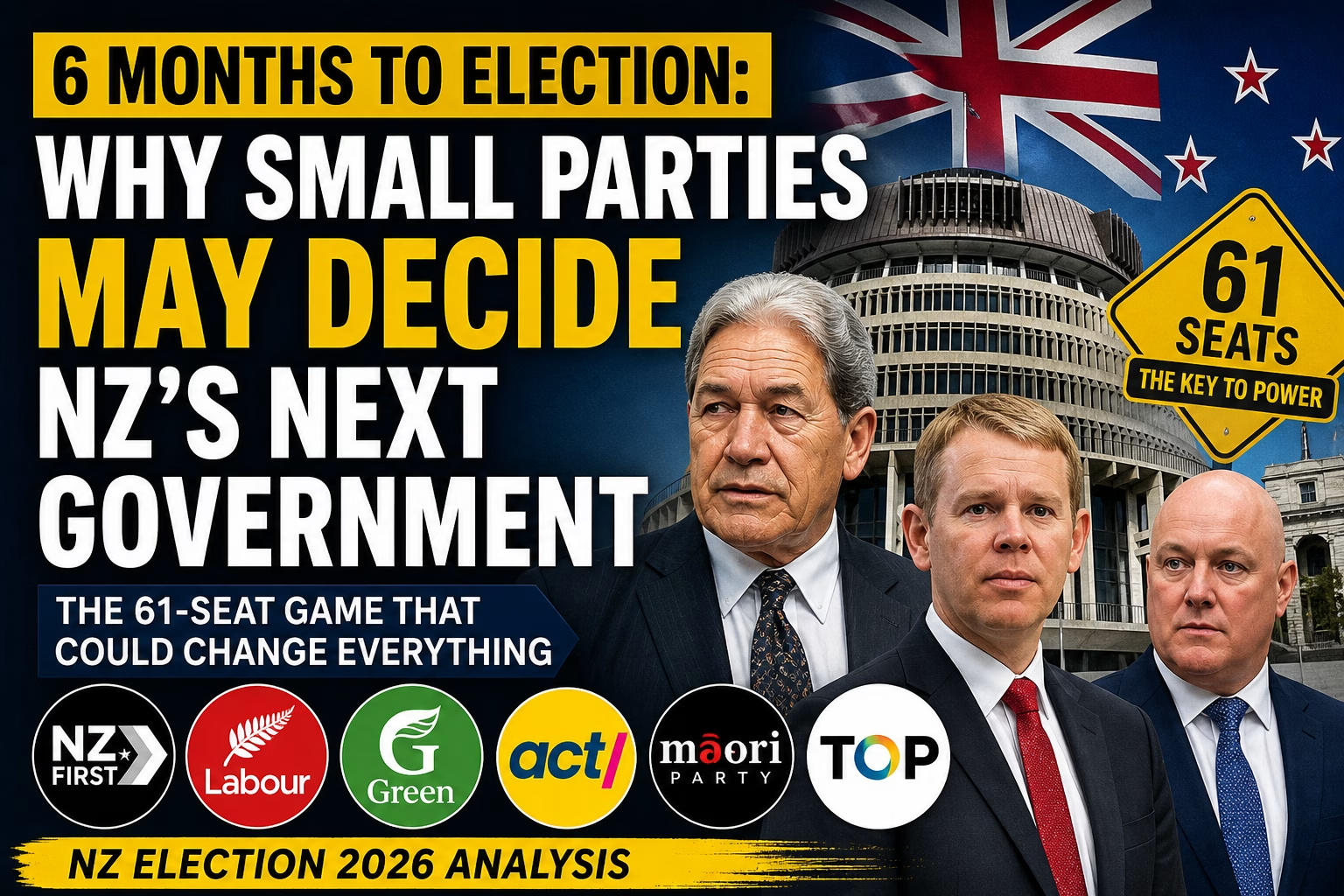
With just six months to go before New Zealand heads to the polls in November 2026, the race is no longer a simple National versus Labour contest.
Something more complex is unfolding.
Recent polling shifts suggest that neither major party is on track to govern alone. Instead, the balance of power is drifting toward smaller parties, whose decisions after election night could ultimately decide who becomes Prime Minister.
This is not unusual under New Zealand’s MMP system. But this time, the margins look tighter than usual, and that makes the role of smaller parties far more significant.
Current parliamentary seat counts
| Party | Current seats | Basis |
|---|---|---|
| National Party | 49 | 48 from official 2023 result, plus Port Waikato by-election/list replacement |
| New Zealand Labour Party | 34 | Official 2023 result |
| Green Party of Aotearoa New Zealand | 15 | Official 2023 result |
| ACT New Zealand | 11 | Official 2023 result |
| New Zealand First | 8 | Official 2023 result |
| Te Pāti Māori | 6 | Official 2023 result; Tāmaki Makaurau by-election kept seat with Te Pāti Māori |
| Total House | 123 | Current Parliament |
The 61-Seat Reality Most Voters Ignore
Under MMP, the goal is simple on paper: secure at least 61 seats in Parliament.
In practice, it is anything but simple.
- Winning the most votes does not guarantee forming the government
- Parties must build coalitions or secure support agreements
- A small shift in numbers can change the entire outcome
Right now, most polling suggests:
- National and ACT together are short of a majority
- Labour and the Greens are also not comfortably over the line
That leaves a gap. And in that gap, smaller parties become decisive.
NZ First’s Return to the Centre of Power
Among all smaller parties, one stands out.
New Zealand First has re-emerged as a serious political force in 2026. After a modest showing in 2023, recent polls place the party firmly back in double digits.
That changes everything.
Unlike most parties, NZ First has a track record of working across political lines. That flexibility, combined with rising support, puts it in a familiar position: the party that can choose which bloc forms the next government.
If the election remains close, NZ First may once again hold the deciding cards.
Polling snapshot and trend
The table below compares the official 2023 party vote with the latest major public polls available before 3 May 2026, plus a five-poll average using 1News April, Curia April, Roy Morgan March, RNZ-Reid March, and Talbot March. I exclude Talbot’s later private April corporate poll from the average because the full public tables were not available in a standard public release.
| Party | 2023 official vote | 1News Apr | Curia Apr | Roy Morgan Mar | Five-poll avg | Read |
|---|---|---|---|---|---|---|
| National | 38.1% | 30.0% | 29.8% | 26.5% | 29.8% | clear downtrend |
| Labour | 26.9% | 37.0% | 33.4% | 34.0% | 35.0% | clear uptrend |
| Greens | 11.6% | 11.0% | 7.8% | 11.0% | 10.2% | volatile, slightly soft |
| ACT | 8.6% | 7.0% | 9.0% | 10.0% | 8.0% | roughly stable |
| NZ First | 6.1% | 10.0% | 13.6% | 11.0% | 11.2% | strongest riser |
| Te Pāti Māori | 3.1% | 2.0% | 2.6% | 3.0% | 2.5% | sub-threshold, electorate-reliant |
| TOP | 2.2% | 3.0% | 2.6% | 4.0% | 2.8% | improving, still short |
| Others | 3.4% | 0–1% public minor-party remainder* | 3.9% | 0.5% other + 4.0% TOP | — | fragmented |
Why Māori Electorates Could Shift the Outcome
Another factor often overlooked in mainstream coverage is the role of Māori electorates.
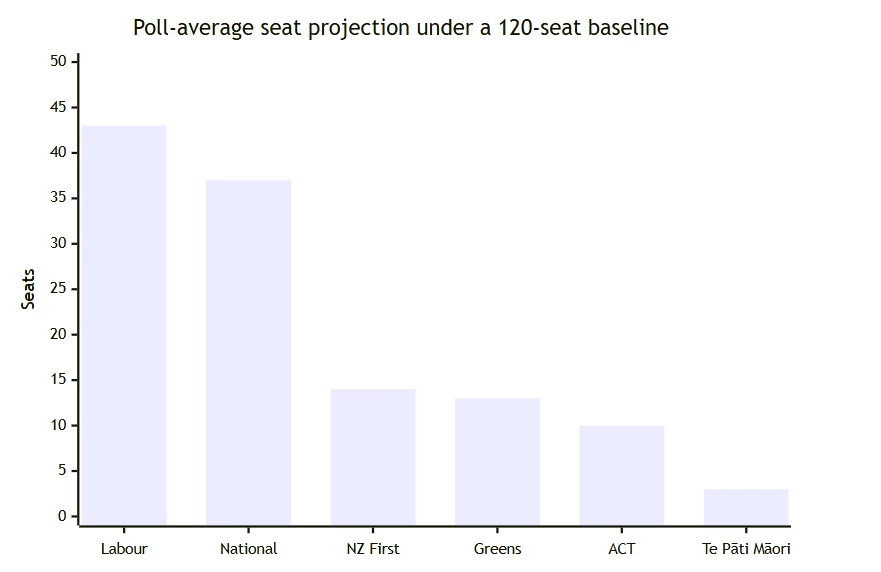
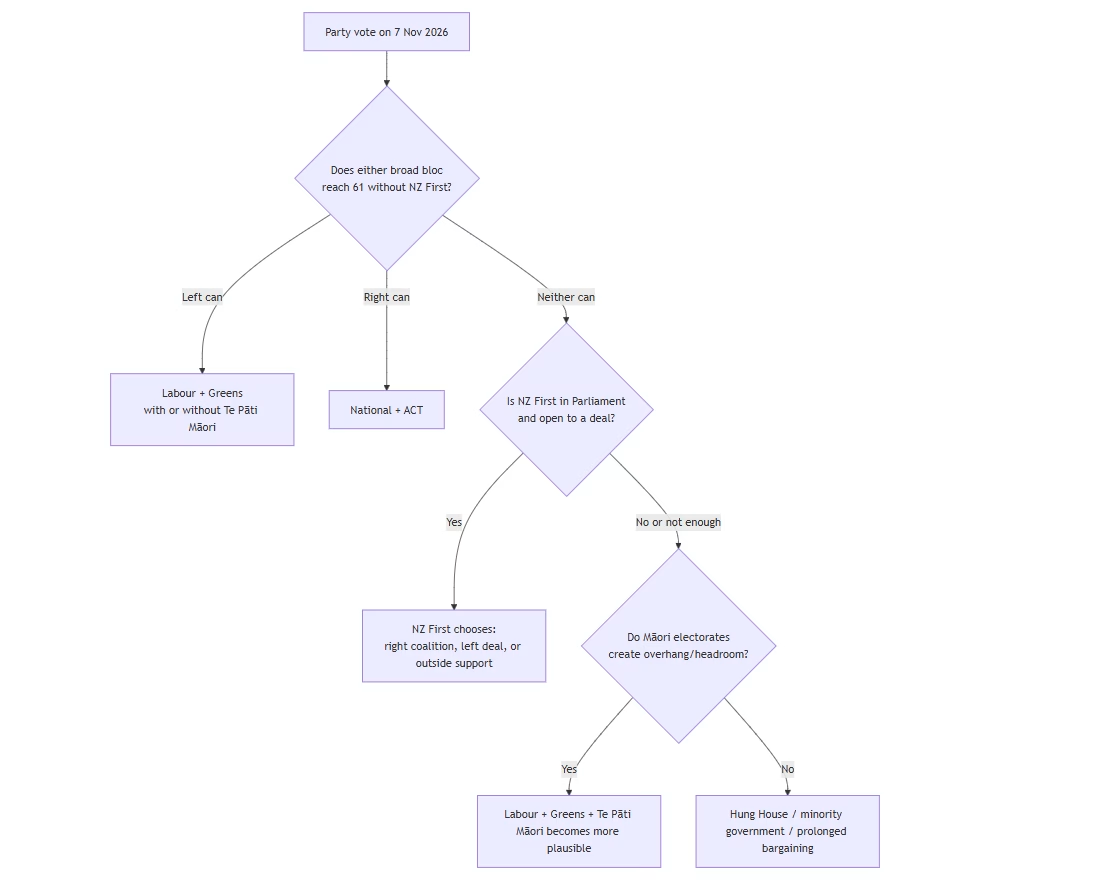
Te Pāti Māori is currently polling below the 5 percent party vote threshold. But under MMP rules, winning electorate seats allows a party to enter Parliament regardless of its overall vote share.
That matters more than it seems.
If Te Pāti Māori retains or expands its presence in Māori electorates:
- It can increase the total number of seats in Parliament through what is known as “overhang.”
- This changes the number required to form a majority
- It can open a path for a Labour-led government that might otherwise fall short
In a tight election, these electoral results could prove decisive.
ACT and Greens: Essential but Predictable
ACT and the Green Party remain critical to their respective blocs.
- ACT continues to support a National-led government
- Greens remain aligned with Labour
Both parties are likely to play key roles in coalition negotiations. However, neither is expected to cross political lines, which limits their ability to act as true “kingmakers.”
Their importance lies in strengthening their side, not switching it.
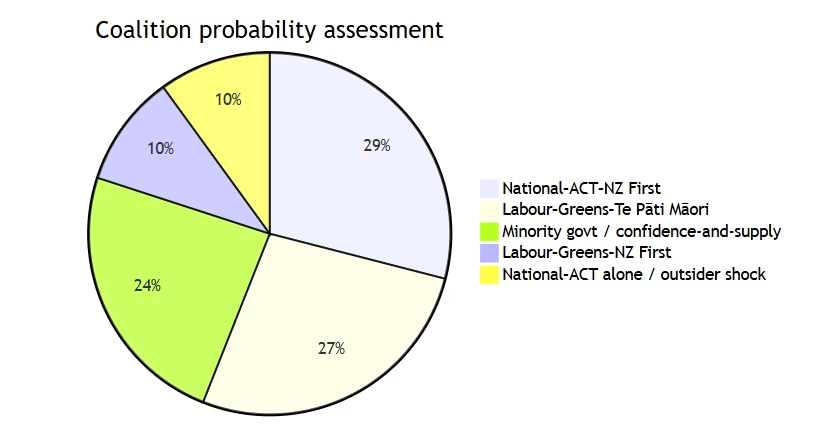
Multiple Paths, No Clear Winner
At this stage, several outcomes remain possible:
- A National–ACT–NZ First coalition
- A Labour–Greens–Te Pāti Māori arrangement
- A minority government supported from outside
- Less likely but still possible cross-bloc negotiations
The key takeaway is simple: no single pathway is dominant.
That uncertainty is what makes this election different.
What to Watch Over the Next Six Months
Three factors are likely to shape the final result:
1. NZ First’s momentum
If current polling trends continue, it will be difficult to form a government without it
2. Māori electorate outcomes
Te Pāti Māori’s performance could alter the final seat count significantly
3. Threshold effects
Whether smaller parties cross the 5 percent mark or win electorates will influence the balance of power
Each of these variables sits outside the control of the major parties.
Webfit News Perspective
The conversation around the 2026 election is still too focused on personalities.
But this election is not just about leadership. It is about structure.
It is about how New Zealand’s electoral system distributes power, and how smaller parties can shape outcomes far beyond their size.
The real contest is not only about who wins the most votes.
It is who can build a workable majority.
And right now, that question remains open.
Conclusion
As New Zealand moves closer to election day, the picture is becoming clearer in one respect.
The next government is unlikely to be decided by one party alone.
Instead, it will be shaped by negotiations, numbers, and strategic alliances.
In that environment, smaller parties are not just participants.
They are potential decision-makers.