By Geet G | Webfit News
In a week shaped by global uncertainty and rising economic pressure, New Zealand Finance Minister Nicola Willis quietly advanced what could become one of the most consequential economic shifts for the region.
Her visit to Brisbane was not just another diplomatic stop. It was a calculated move to strengthen New Zealand’s economic resilience at a time when global fuel disruption, inflation risks, and geopolitical instability are converging.
A Meeting Framed by Crisis, Not Ceremony
Māori in Business: The Quiet Force Powering New Zealand’s Economy – WebfitNews
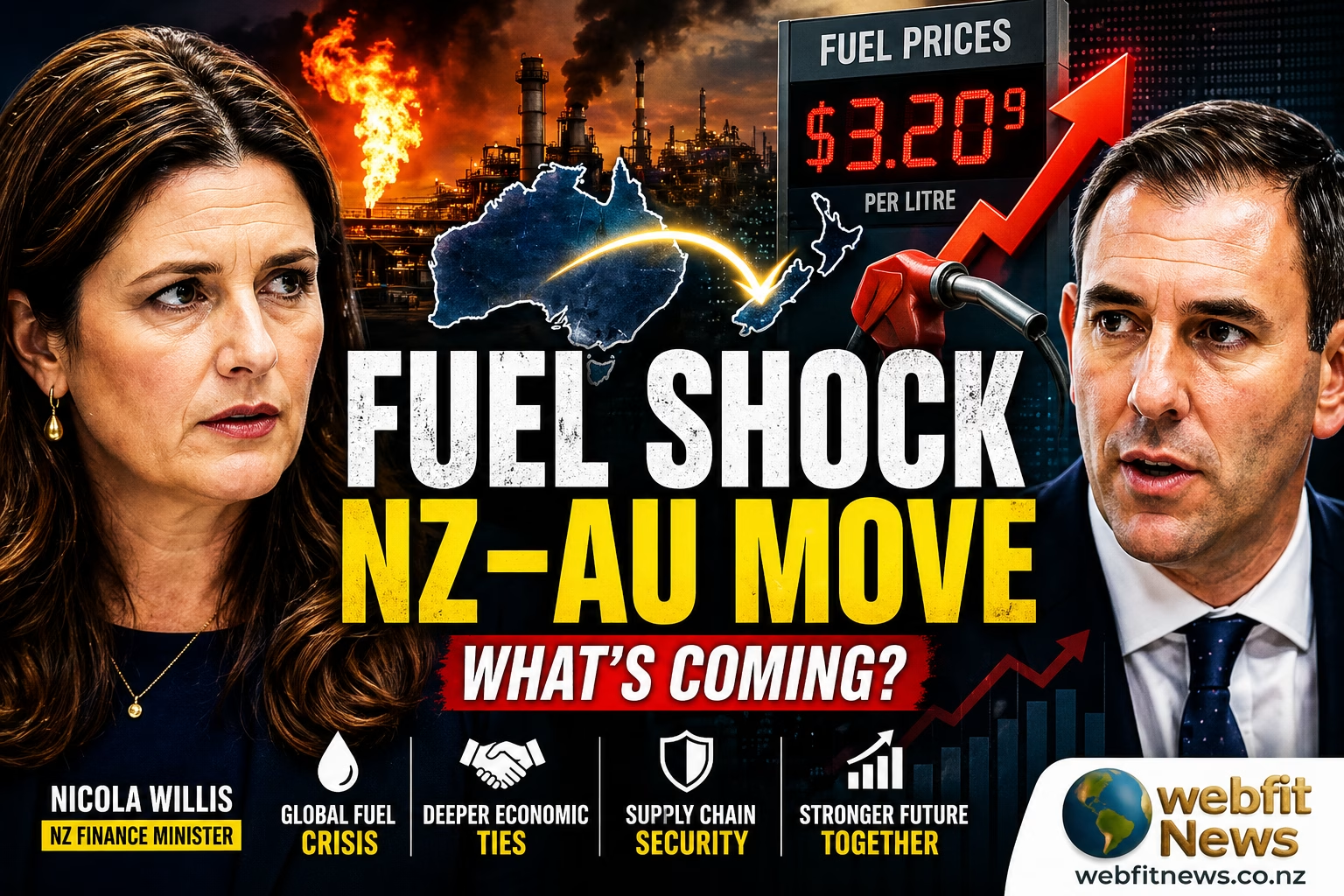
Willis met Australian Treasurer Jim Chalmers as both countries confront a worsening global fuel situation triggered by conflict in the Middle East. The impact is already visible in rising fuel costs, supply chain strain, and pressure on household budgets across both nations.
Behind closed doors, the conversation was direct. Fuel security, supply chain coordination, and economic shock preparedness dominated the agenda.
Officials from both sides agreed to intensify cooperation on monitoring fuel markets, managing supply disruptions, and preparing financial systems for further volatility.
This was not routine coordination. It was crisis management at a regional scale.
The Bigger Play: Deepening Economic Integration
Beyond the immediate fuel concerns, the Brisbane talks revealed a broader ambition. New Zealand and Australia are accelerating efforts under the long-standing Single Economic Market framework to deepen economic integration.
That means more than trade. It signals closer alignment on investment, supply chains, and strategic industries.
Both governments are now exploring:
- Joint approaches to fuel and energy security
- Stronger supply chain coordination across industries like aviation, agriculture, and logistics
- Increased cross-border investment opportunities
- Development of sustainable fuel systems for future resilience
In simple terms, this is about making the two economies function more like one system during global shocks.
Fuel Crisis Driving Urgency
The timing is no coincidence.
Australia has described the current situation as one of the largest energy shocks in its history, with global tensions affecting key shipping routes and oil supply chains.
New Zealand, heavily dependent on imported fuel, is particularly exposed.
The government has already activated planning under its National Fuel Plan, outlining staged responses to potential shortages, including prioritising fuel for essential services if disruptions worsen.
Officials have also warned that even if geopolitical tensions ease, supply chain impacts could linger for months.
This is not a short-term issue. It is a structural vulnerability.
Domestic Pressure at Home
While Willis focuses on international coordination, the domestic backdrop remains fragile.
Fuel prices are feeding into broader cost-of-living concerns. Businesses are watching logistics costs rise. Households are already adjusting their spending.
The government’s challenge is balancing reassurance with realism.
Public messaging has stressed that New Zealand remains prepared and that there is no immediate need for panic. But internally, planning has clearly shifted toward worst-case scenarios.
Pacific Implications
The conversation in Brisbane extended beyond just New Zealand and Australia.
Both leaders acknowledged the impact of rising fuel and freight costs on Pacific Island nations. There is growing recognition that regional stability depends on coordinated support, including engagement with institutions like the World Bank and Asian Development Bank.
In a crisis like this, smaller economies feel the shock first and hardest.
What This Means Going Forward
The Brisbane meeting signals a shift in how New Zealand is positioning itself.
This is no longer just about trade agreements or diplomatic ties. It is about building economic resilience through deeper regional integration.
If executed effectively, this approach could:
- Reduce vulnerability to global supply shocks
- Strengthen investor confidence
- Improve long-term energy and economic security
- Create a more unified trans-Tasman economic zone
But there is a catch.
Closer integration also means closer exposure. When one economy faces stress, the other feels it faster.
Webfit News Perspective
This moment is bigger than a fuel crisis.
What we are seeing is a test of how small, open economies survive in a volatile world. New Zealand cannot control global conflicts or oil prices. But it can control how prepared it is.
The move toward deeper alignment with Australia is pragmatic. It reflects reality. Geography, trade, and shared risk are forcing both countries to act as a bloc.
The real question is not whether integration will happen. It is how fast, and whether it will be enough.
Because if the current crisis deepens, this will not just be about fuel. It will be about economic stability itself.
Source references: Government releases, Australia–New Zealand Treasury dialogue updates, and regional economic briefings.