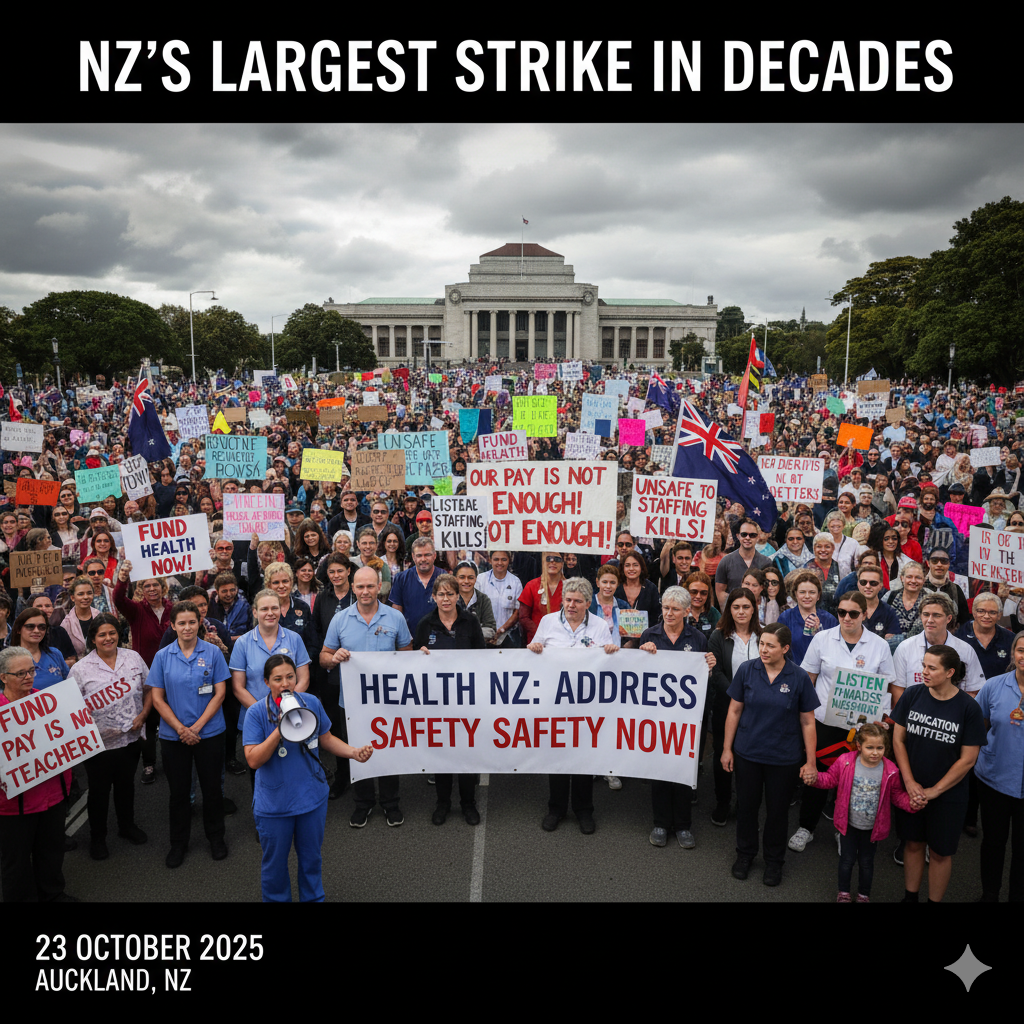
New Zealand’s public health system is facing one of its most serious periods in decades. Across the country, hospitals are struggling with staff shortages, rising patient demand, long waiting lists, and growing frustration from both patients and frontline workers. Recent events at Wellington Regional Hospital have brought these issues into sharp focus, but the problems extend far beyond one city or one hospital.
Emergency Departments Under Pressure
In late January, Wellington Regional Hospital’s emergency department experienced repeated “code red” situations. A code red is declared when the number of patients needing care exceeds the available staff and beds. On one night alone, the department entered this status multiple times within a few hours.
Patients reported long waits, overcrowded corridors, and a lack of available space. Some people said they waited eight hours or more without being seen. Nurses described an environment where staff are constantly stretched, moving between patients without enough time to provide the level of care they believe is needed.
Official figures released under the Official Information Act show that Wellington’s emergency department recorded hundreds of code red events over the past year. In many cases, only about half of patients were treated within the government’s six-hour target. Thousands left without being seen at all.
These figures highlight a system operating beyond its limits, not just during winter peaks but throughout the year.
Patients Left Waiting or Walking Away
Radio New Zealand recently reported on a woman who spent more than 11 hours in severe pain at the Wellington emergency department before leaving without seeing a doctor. On that day, the department was operating at more than double its intended capacity.
Staff reportedly told her that even if she was assessed, there was no bed available to admit her. She eventually left in the early hours of the morning, still unwell and without treatment.
Stories like this are becoming more common. They reflect not individual failures, but a system that cannot meet demand with its current resources.
Staff Shortages Across the Country
The crisis is not limited to Wellington. Hospitals and urgent care clinics across New Zealand are facing similar challenges.
At Kenepuru Hospital near Porirua, an overnight urgent care clinic was left without a doctor when a rostered doctor called in sick and no replacement was available. In parts of regional New Zealand, including Napier, nurse-led clinics have closed overnight for extended periods due to staffing gaps.
Health New Zealand, the national body responsible for running public hospitals, has increasingly turned to telehealth services to fill gaps. While telehealth can help in some cases, it is not suitable for all patients or conditions, and it has faced resistance from communities who feel it cannot replace in-person care.
Surgical Delays and Growing Waiting Lists
The pressure is also being felt outside emergency departments. In Tauranga, a patient waited more than a week for urgent gallbladder surgery after being admitted by ambulance. Each day, he was told to prepare for surgery, only to be informed later that it had been postponed due to lack of capacity.
Health New Zealand has acknowledged that surgical departments in several regions are under “significant pressure” due to high acute demand and limited theatre availability.
Nationally, waiting lists continue to grow. More than 200,000 people are waiting for their first specialist appointment, and tens of thousands have been waiting longer than four months. For many patients, delays mean prolonged pain, worsening conditions, and reduced quality of life.
Funding Choices and Workforce Concerns
Health Minister Simeon Brown has described some hospital situations as unacceptable, but has also pointed to performance issues at individual facilities. Critics argue that focusing on hospital-level performance ignores deeper structural problems, including funding decisions and workforce planning.
While health spending has increased in recent budgets, many in the sector say the increases have not kept pace with inflation, population growth, and rising demand. At the same time, thousands of health sector roles have been cut or left unfilled as part of cost-saving measures.
One striking example is the nursing workforce. Despite ongoing shortages, less than half of newly qualified nurses in 2025 secured jobs by the end of the year. This has raised serious questions about workforce planning at a time when hospitals say they cannot find enough staff.
Expansion of Private Healthcare
In response to growing backlogs, the government has increased the use of private providers for elective surgeries. Thousands of procedures have been outsourced, with long-term contracts designed to expand private sector capacity.
Supporters say this helps reduce waiting lists. Critics argue it risks weakening the public system by diverting staff and resources, while creating a two-tier system where those who can pay or access private services are treated faster.
A System at a Crossroads
Health experts widely agree that New Zealand’s public health challenges did not emerge overnight. Years of underinvestment, repeated restructures, and difficulty retaining skilled staff have all contributed to the current situation.
Frontline workers continue to warn that without sustained investment, better workforce planning, and realistic expectations, the system will remain in crisis. Patients, meanwhile, are increasingly losing confidence that they will receive timely care when they need it most.
The Webfit News Perspective
At Webfit News, we believe this issue goes beyond statistics and political debate. It is about people waiting in pain, staff working under extreme pressure, and communities losing trust in a system meant to protect them.
The public health system is one of New Zealand’s most important shared institutions. Addressing its problems requires long-term thinking, honest conversations about funding priorities, and decisions that put patient care ahead of short-term savings.
As this story continues to unfold, Webfit News will focus on explaining what is happening, why it matters, and how policy choices today will shape healthcare access for years to come.