Introduction
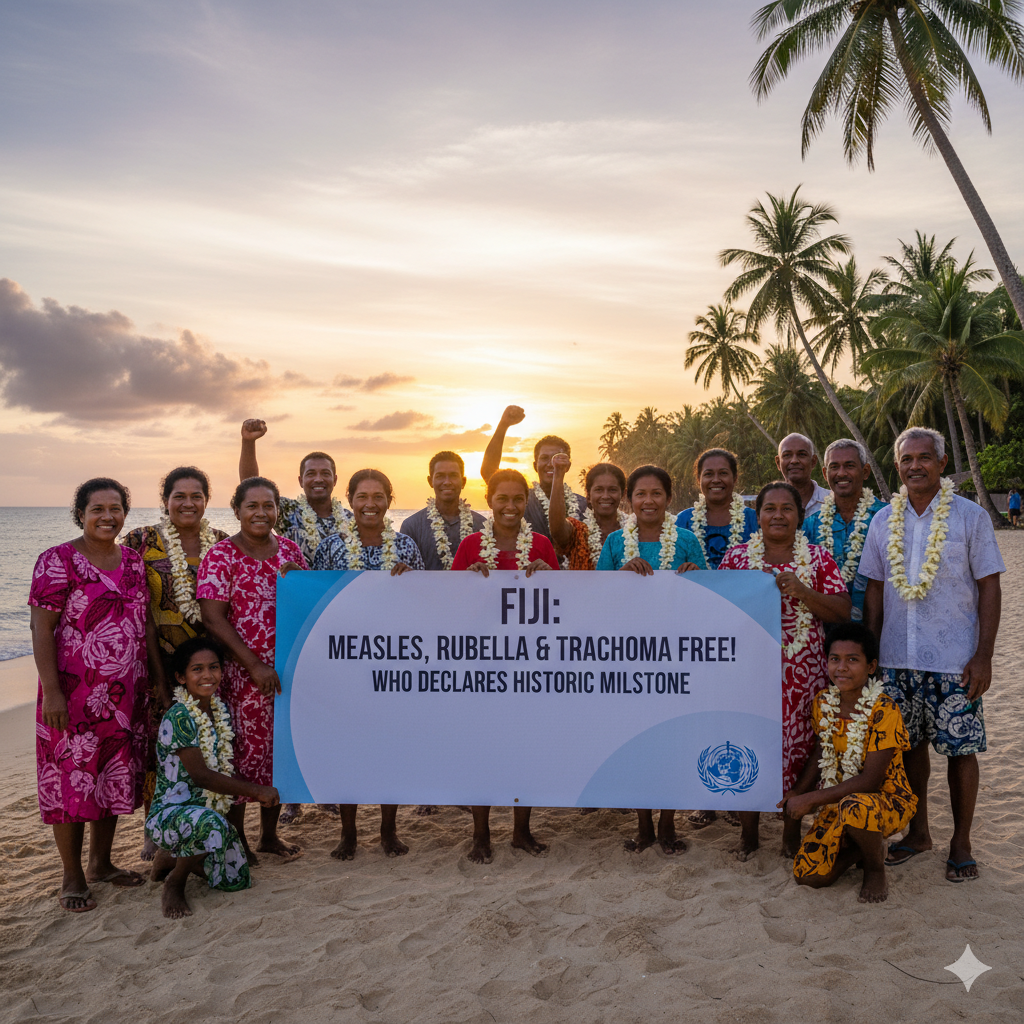
Fiji has achieved a remarkable public health victory.
The World Health Organization (WHO) has officially declared the Pacific island nation free of measles, rubella, and trachoma. This recognition places Fiji among a select group of countries that have eliminated these diseases. The announcement also comes at a time when New Zealand and Australia are reporting new measles cases.
Background
For more than a century, measles was one of Fiji’s most dangerous diseases.
The 1875 outbreak wiped out nearly one-quarter of the entire population. Smaller outbreaks continued through the 1900s, affecting thousands of families.
The last case of measles was recorded in March 2020. Since then, Fiji has built strong vaccination programs and community awareness campaigns.
The same efforts also wiped out rubella and trachoma—two conditions that once caused birth defects and preventable blindness.
What the WHO Declaration Means
Fiji’s Health Minister, Dr Ratu Atonio Lalabalavu, called the WHO declaration “unprecedented.”
He praised decades of effort by health professionals, saying:
“This recognition reflects the dedication of our health workers who have worked tirelessly to save our people from preventable diseases.”
Fiji is now the 26th country in the world to eliminate trachoma as a public health problem.
The nation’s journey to this point included major immunisation drives, outreach in rural areas, and better access to clean water and sanitation.
Key Achievements
- Measles elimination: Last case in March 2020.
- Rubella elimination: Prevented through strong maternal vaccination programs.
- Trachoma elimination: Rates dropped from 22% among children (2007) to near zero today.
These results show how local commitment, community cooperation, and consistent health policies can save lives.
Regional Context
While Fiji celebrates, its neighbours face new challenges.
New Zealand has confirmed 17 measles cases this year, mostly linked to international travel.
Authorities are urging families to check that all vaccinations are up to date.
Fiji’s success story serves as a regional reminder of the importance of vaccination. Maintaining high coverage helps stop future outbreaks and keeps communities safe.
Expert View
Health experts say Fiji’s achievement proves that small island nations can lead by example.
Strong community networks, early intervention, and ongoing education were key.
According to public health researchers, the model used by Fiji could inspire other Pacific countries working to control similar diseases.
Dr Lalabalavu added:
“We may record an occasional case linked to travel, but our goal is to prevent any return of endemic transmission.”
Conclusion
Fiji’s elimination of measles, rubella, and trachoma shows what long-term public health commitment can achieve.
It demonstrates the value of consistent vaccination, trust in science, and collaboration between government and community.
As the world faces new outbreaks, Fiji stands as a symbol of hope—a nation that turned lessons from the past into lasting protection for its people.