
What It Means, What Changes, and Why Some Are Concerned
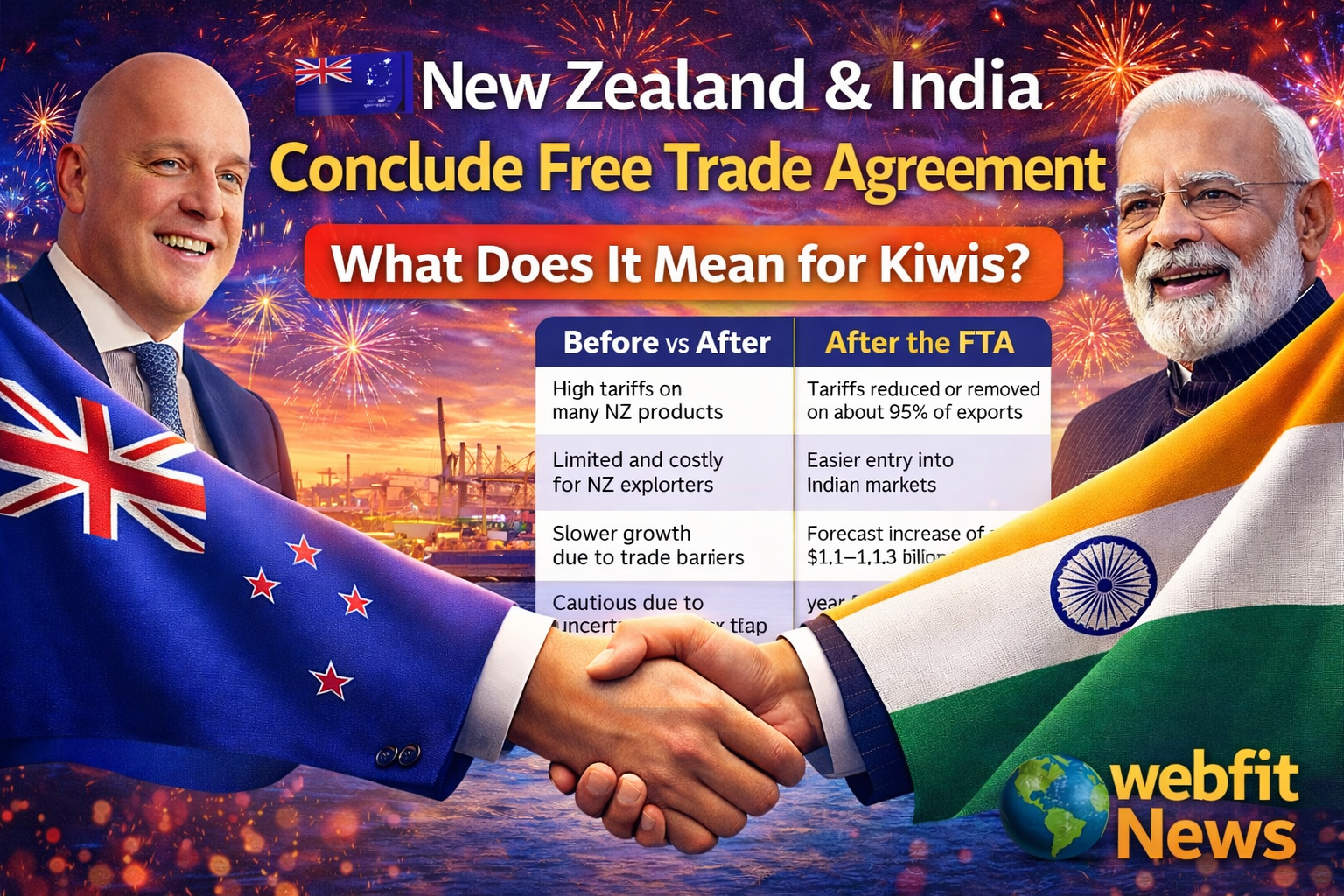
New Zealand and India have officially concluded a Free Trade Agreement (FTA), marking a significant development in the economic relationship between the two countries. The agreement follows direct discussions between the Prime Ministers of both nations and is being promoted by the Government as a major step toward expanding New Zealand’s access to one of the world’s largest and fastest-growing markets.
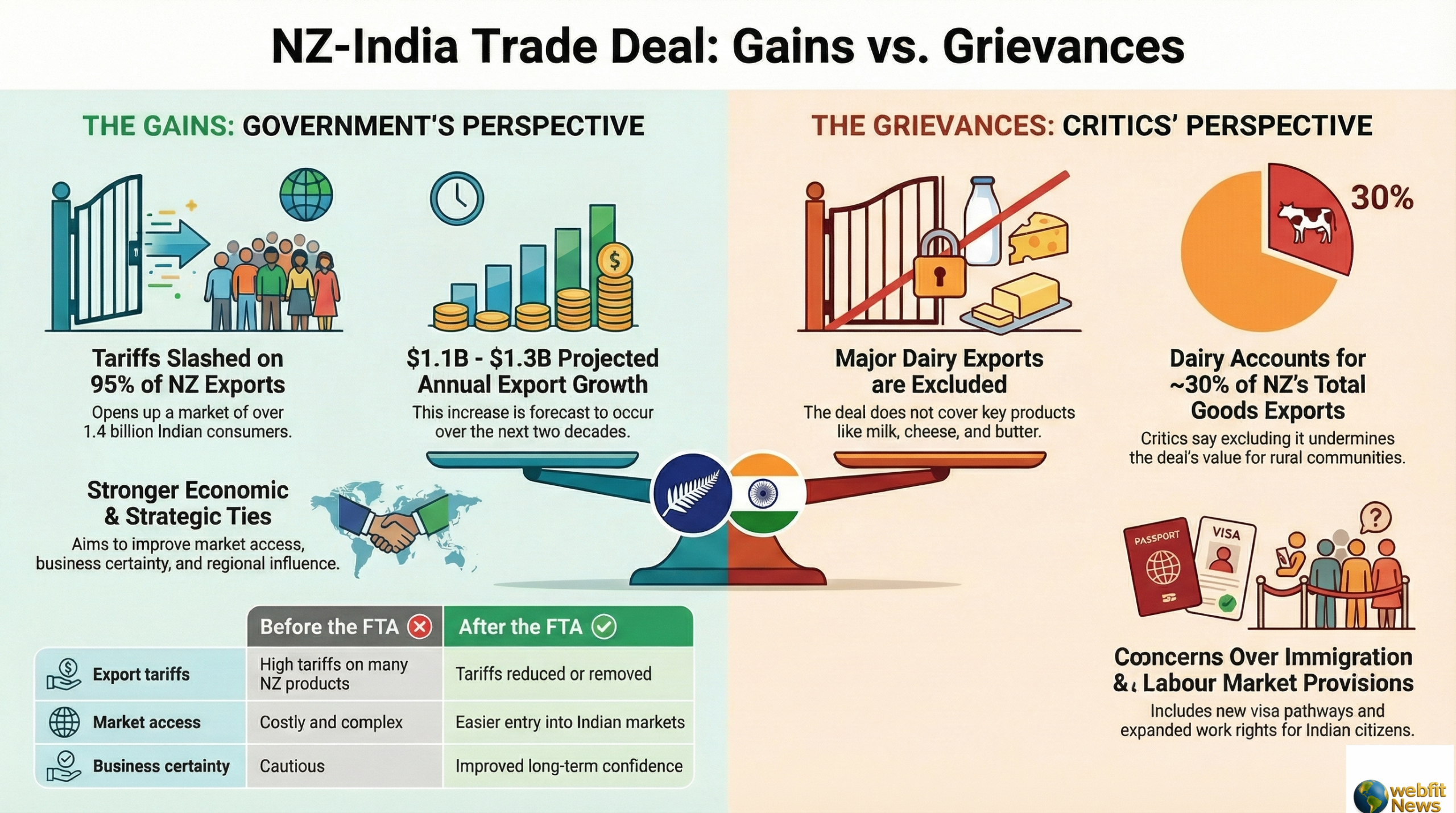
According to official statements, the agreement will reduce or remove tariffs on around 95 percent of New Zealand exports to India. The Government estimates that New Zealand exports to India could increase by NZ$1.1 billion to NZ$1.3 billion per year over the next two decades, opening access to a market of more than 1.4 billion consumers.
What the Government Says the Deal Delivers
The Government says the agreement is designed to:
- Improve market access for New Zealand goods and services
- Support job creation in export-driven industries
- Strengthen long-term economic ties with India
- Encourage business investment and cooperation
- Position New Zealand more strongly in the Indo-Pacific region
Officials argue that India has historically been a challenging market for New Zealand exporters due to high tariffs and complex trade rules, and that this agreement helps remove long-standing barriers.
Clear Gains for Horticulture Exports

One of the clearest areas of benefit is New Zealand’s horticulture sector. Under the agreement, several high-value fruit exports are expected to gain improved market access, including:
- Kiwifruit
- Cherries
- Avocados
- Persimmons
- Blueberries
Lower tariffs and clearer import rules could make New Zealand produce more competitively in the Indian market, particularly among middle-class consumers seeking premium food products. Industry observers say this could provide new growth opportunities for growers who have been looking to diversify beyond traditional export destinations.
Dairy: Limited but Symbolic Progress
Dairy remains a sensitive issue. While New Zealand’s major dairy products, such as milk, cheese, and butter, continue to face significant barriers in India, the agreement includes limited openings that some see as symbolic rather than transformational.
Supporters argue that even small steps in the dairy space may help establish trust and create a platform for future negotiations. Critics counter that excluding core dairy exports significantly weakens the deal’s value for rural New Zealand, given that dairy accounts for about 30 percent of total goods exports, worth around $24 billion annually.
Mobility: Limited but Structured Pathways
The agreement also includes provisions related to the movement of people, particularly in education and employment-linked areas. These pathways are described as limited and structured, rather than open-ended.
Supporters say the settings provide clarity for students and skilled workers while maintaining oversight. Critics argue that even structured pathways could increase pressure on New Zealand’s labour market and reduce future policy flexibility if economic conditions change.
Services, Investment, and Broader Cooperation
Beyond goods, the agreement emphasizes services, investment, and cooperation. This includes opportunities in areas such as education, technology, professional services, and business partnerships.
The Government says these provisions are designed to support two-way investment and collaboration, rather than just goods trade. Supporters believe this could strengthen long-term economic ties and innovation links between the two countries.
Before vs After: What Changes in Simple Terms
| Area | Before the FTA | After the FTA |
|---|---|---|
| Export tariffs | High tariffs on many NZ products | Tariffs reduced or removed on about 95 percent of exports |
| Market access | Costly and complex | Easier entry into Indian markets |
| Export growth | Slower due to trade barriers | Forecast growth of $1.1–$1.3b per year |
| Business certainty | Cautious | Improved long-term confidence |
| Political consensus | Divided | Remains contested |
Why Some Critics Oppose the Deal
Despite government support, the agreement has attracted opposition from some political leaders and sector representatives, who argue it makes major concessions without delivering sufficient returns for New Zealand.
One of the key concerns raised is that the agreement excludes major dairy products, including milk, cheese, and butter.
- Dairy exports were worth around $24 billion in the year to November 2025
- Dairy accounts for about 30 percent of New Zealand’s total goods exports
- India is maintaining high tariff barriers on these products
Critics argue that excluding dairy makes the deal difficult to justify for rural communities and farming regions that rely heavily on export income.
Immigration and Labour Market Concerns
Another area of concern relates to immigration and labour market provisions linked to the agreement.
Opponents say the deal includes:
- A new employment visa pathway specifically for Indian citizens
- Expanded work rights for Indian students during and after study
- Labour market access that exceeds what comparable countries have offered India
Critics argue these changes could place additional pressure on New Zealand’s labour market at a time when unemployment and cost-of-living pressures remain significant. There are also concerns that the agreement may limit the ability of future governments to adjust immigration and employment policies in response to changing economic conditions.
Not a Rejection of the Relationship
Importantly, those opposing the deal have stressed that their concerns are not a rejection of India as a partner. They acknowledge India’s importance as a strategic and economic partner and support continued diplomatic, educational, and business engagement between the two countries.
Their opposition, they say, is focused on the balance and structure of the agreement itself, rather than on India or its government.
What Happens Next
As the agreement moves toward parliamentary processes and implementation, debate is expected to continue. Supporters argue that trade agreements require compromise and that long-term gains may outweigh short-term concerns. Critics counter that major concessions should only be made when core export sectors and domestic workers are clearly protected.
The real impact of the agreement will become clearer over time, as exporters begin using the new rules and data emerges on sector-by-sector outcomes.
📰 Webfit News will continue to follow developments, public response, and economic impacts as more details become available.
💬 What do you think?
Is this deal a long-term opportunity for New Zealand, or does it carry risks that need closer scrutiny?
Independent. Neutral. Community-focused.