What the latest QV data really means for everyday New Zealanders
Published: 14 January 2026
Source: Quotable Value (QV House Price Index, December 2025)
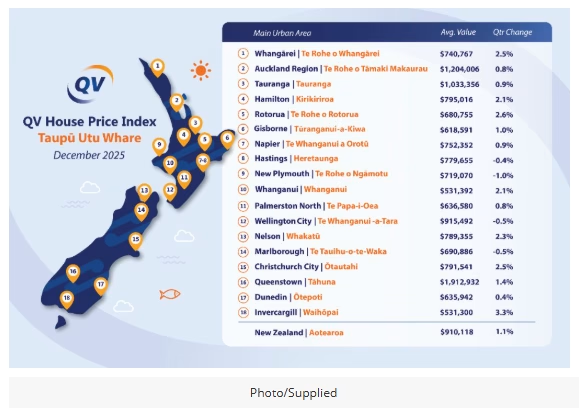
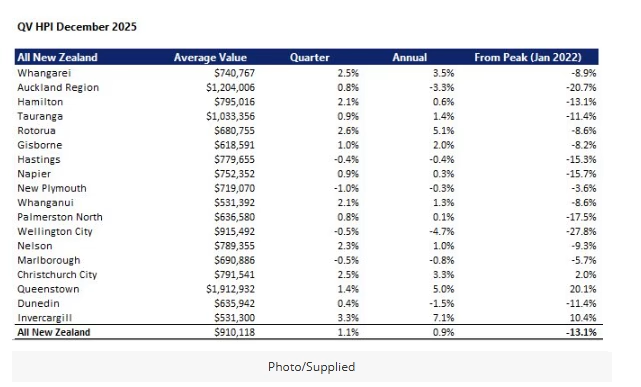
After nearly two years of uncertainty, New Zealand’s housing market is showing early signs of stabilising. According to the latest QV House Price Index, average residential property values across Aotearoa rose 1.1 percent in the three months to December 2025.
The national average home value now sits at $910,118. That is 0.9 percent higher than a year ago, though still 13.1 percent below the market peak seen in January 2022.
In simple terms, prices are no longer falling in most places. They are not booming either. The market is slowly finding its feet.
What changed in the December quarter
The December quarter matters because it confirms a shift seen late in 2025. Instead of values slipping or flatlining, more regions are now recording small but steady increases.
Here is what stood out:
- Christchurch City led the main centres with 2.5 percent quarterly growth
- Hamilton followed with 2.1 percent growth
- The Auckland Region returned to growth at 0.8 percent
- Dunedin edged up 0.4 percent
- Wellington City was the only major centre to decline, down 0.5 percent
Outside the big cities, several regional centres performed strongly. Invercargill again topped the list with 3.3 percent growth, followed by Rotorua, Whangārei, Nelson, and Whanganui.
At the same time, a handful of areas, including New Plymouth, Marlborough, and Hasting,s saw small declines.
Auckland: a cautious return to growth
For Auckland homeowners and buyers, the headline is simple. Prices have stopped falling.
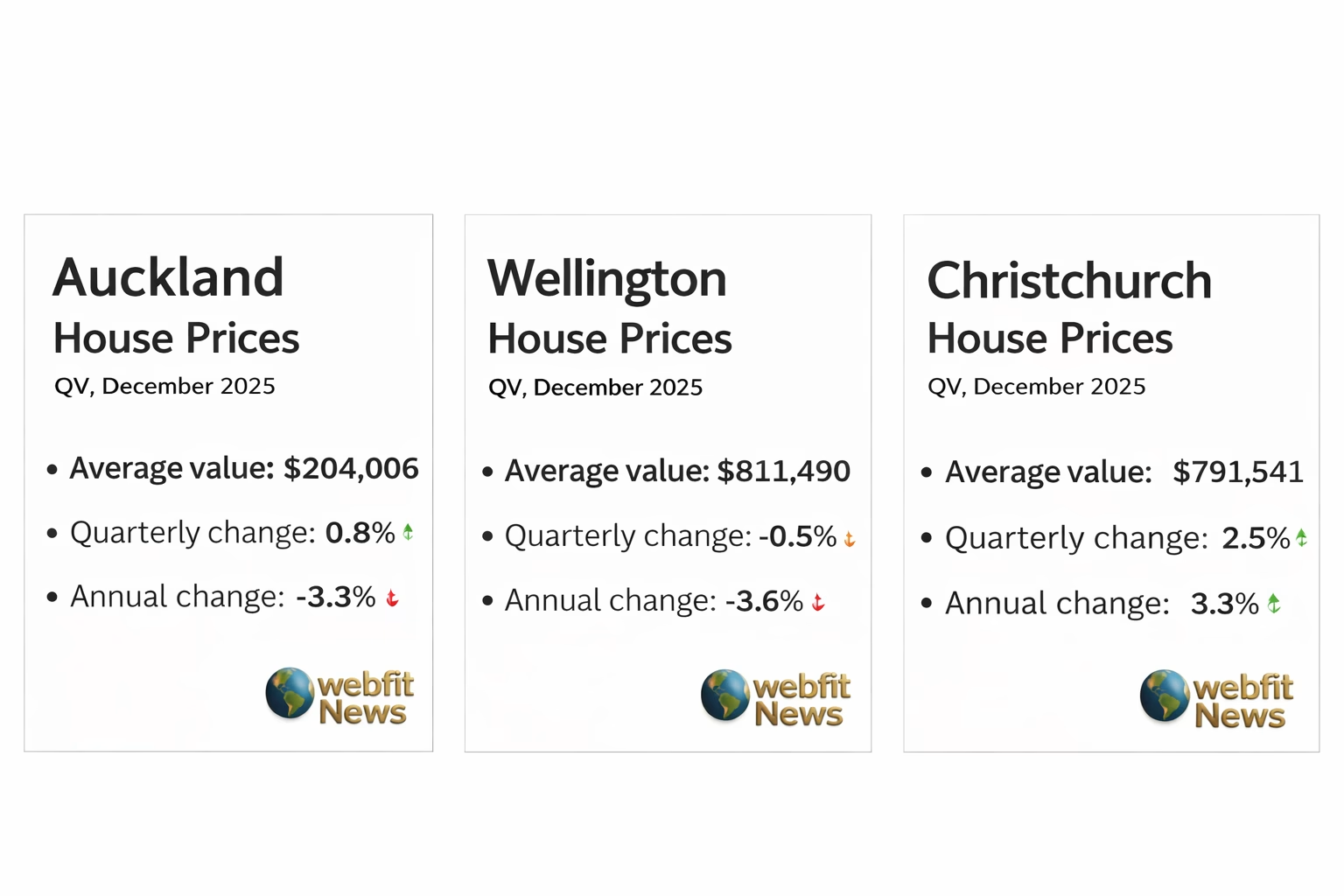
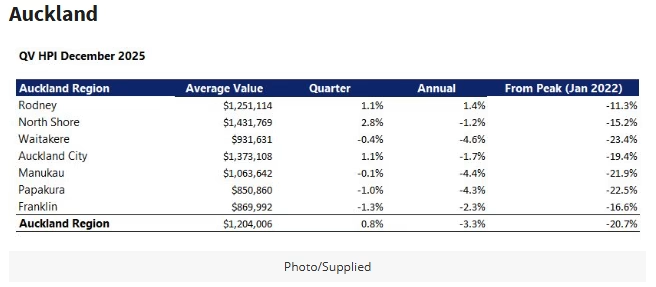
The average Auckland home value is now $1,204,006, after rising 0.8 percent over the December quarter. That follows consecutive quarterly declines earlier in 2025.
However, perspective matters:
- Auckland values are still 3.3 percent lower than last year
- They remain about 20 percent below the January 2022 peak
What this means in real life
If a South Auckland home was worth $1.2 million at the peak, it may still be closer to $950,000 to $1 million today. The recent uptick does not erase that drop. It simply suggests prices may have bottomed out.
Growth has been most noticeable in higher-priced homes, particularly in the $2 million to $3.5 million range, where sales activity has picked up.
In contrast, areas with heavy townhouse and development land exposure such as Waitākere, Manukau, and Papakura, remain under pressure. Many developers paid peak prices for land during COVID. With higher interest rates and building costs, some projects no longer stack up, forcing land resales at lower prices.
Wellington: still searching for a floor
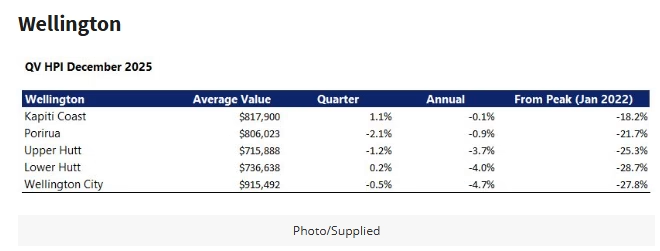
Wellington continues to lag behind the rest of the country.
The average home value across Greater Wellington is now $811,490, down 0.5 percent for the quarter and 3.6 percent over the year.
Several suburbs remain close to 30 percent below their 2022 peak, which helps explain why first home buyers are re-entering the market.
However, affordability gains are being offset by:
- Higher mortgage interest rates compared to the peak years
- Soft employment conditions, particularly after public sector job cuts
- Easing rental demand as people leave the region for work elsewhere
The result is a market that feels flat rather than distressed. Buyers have choice, but urgency is still low.
Christchurch: steady and confident
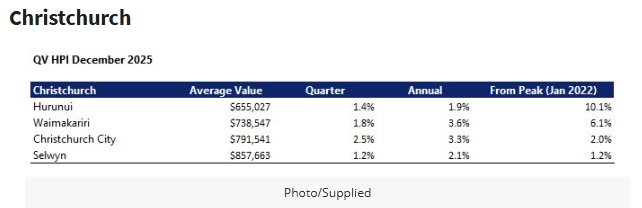
Christchurch continues to be one of the country’s more balanced markets.
Average values rose 2.5 percent in the December quarter and are now 3.3 percent higher than a year ago. The city’s average home value sits at $791,541.
Demand has been strongest in the $1 million to $2 million range, with shorter selling times and competitive bidding reported. While townhouses still face pricing pressure due to supply, stand-alone homes with land remain popular.
For many buyers, Christchurch feels predictable and functional. That stability is exactly what some Auckland and Wellington buyers are looking for.
Why prices are rising slowly, not sharply
QV points to one key factor shaping the market nationwide. Housing supply is high.
New Zealand currently has the highest number of homes for sale in more than a decade. That gives buyers leverage.
What this means for everyday people:
- Buyers can negotiate harder
- Sellers cannot rely on urgency to drive prices
- First home buyers have more choices than they have had in years
At the same time, interest rates remain well above the levels seen during the boom. Even if prices soften slightly, monthly repayments are still a stretch for many households.
Houses versus townhouses: a clear preference
One clear pattern has emerged across multiple cities. Buyers are favouring stand-alone homes over apartments and townhouses.
The reasons are practical, not emotional:
- More storage
- Better parking
- Private outdoor space
- Often not much more expensive than a townhouse
Developments that offer these features continue to sell. Those that do not are facing price pressure, particularly in Auckland and parts of Christchurch.
What to expect in 2026
QV expects 2026 to be a year of gradual change, not sudden movement.
Key factors to watch:
- An election year, which often makes buyers andжаў sellers cautious
- High supply continues to limit sharp price rises
- Interest rates are still acting as a brake on affordability
In short, the market is no longer sliding, but it is not sprinting either.
Before stepping into the market, it helps to run the numbers properly.
This free mortgage calculator lets you estimate repayments, interest impact, and affordability based on your situation.
👉 https://www.kiwihelp.co.nz/renting-housing/mortgage-calculator
The bottom line
For homeowners, this data suggests that values have stabilized after a long period of correction. For buyers, especially first home buyers, conditions remain relatively favourable compared to recent history.
The housing market is behaving more like a normal market again. That may not excite speculators, but for most New Zealanders, normal is not a bad place to be.